As an Amazon Associate, we earn from qualifying purchases. Some links on this site are affiliate links at no extra cost to you. Our recommendations are based on thorough research and editorial judgment.


Resistance Band Exercises for Glute Activation

Premium resistance bands arranged in gradient intensity colors on sleek white surface. Professional studio shot captures textured fabric loops with reinforced stitching, metal clasp details gleaming under controlled lighting. Bands cascade diagonally across frame, showcasing varying resistance levels through color coding – mint green to deep purple. Soft shadows emphasize three-dimensional form and quality construction. Clean composition highlights durable elastic material, grip-enhanced handles, and professional-grade ankle straps. Shot demonstrates equipment versatility for glute training routines with sharp focus on product craftsmanship and commercial appeal.
# Resistance Band Exercises for Glute Activation
Resistance band exercises are an effective way to activate our glutes. They create dynamic stabilization, improve proprioception, and ensure sustained muscle engagement. By placing bands around thighs or ankles, we can target the gluteus maximus, medius, and minimus for increased hip stability and muscle coordination. Exercises like banded lateral walks and standing hip abductions enhance strength efficiently. With continuous tension, resistance bands aid in improving balance and movement efficiency. Discover more about their versatile benefits.
Key Takeaways
- Band placement at ankles maximizes overall glute activation during exercises.
- Banded Lateral Walks enhance hip and knee stability, addressing knee valgus effectively.
- Progressive resistance bands cater to all fitness levels, enhancing glute strength.
- Smooth, controlled movements in Standing Hip Abduction maximize muscle engagement.
- Resistance bands provide continuous tension, promoting sustained glute strength and muscle activation.
Benefits of Resistance Band Exercises for Glute Activation
When it comes to enhancing our workout routines, resistance band exercises for glute activation offer a host of benefits that shouldn’t be overlooked. These exercises enhance dynamic stabilization, which is crucial for maintaining proper joint alignment and preventing injuries. By improving proprioception, we can better coordinate our movements, leading to enhanced athletic performance and reduced injury risk.
With resistance bands, we also experience improved muscle balance and hip stability. This is vital for reducing joint strain and preventing muscle imbalances, which can lead to poor movement patterns. Moreover, increased muscle coordination supports complex lifts, enhancing our overall workout effectiveness. The emphasis on proper alignment and muscle engagement helps us maintain safety, ensuring that our fitness journey is both productive and injury-free. Just as a quality yoga mat provides stability and comfort during practice, resistance bands offer the consistent support needed for effective glute activation exercises.
Targeting Glute Muscles Through Band Placement

While exploring the optimal methods for glute activation, band placement emerges as a pivotal factor that can drastically influence the effectiveness of our workouts. By strategically placing bands at various points, we can target specific muscle groups more effectively. Different band types allow for customizable resistance levels, enhancing muscle activation during exercises like Monster Walks and Sumo Walks. Placing bands around the knees can maximize gluteus medius engagement, while moving them to the ankles or feet heightens overall gluteal activation. This distal placement particularly enhances gluteus maximus involvement due to increased hip external rotation demands. By understanding how band placement influences muscle recruitment, we can tailor our workouts to better target and develop our glute muscles, optimizing both strength and form. The VRTX Swift Bands, with their resistance range from 24 to 44 lbs, are specifically designed for lower body exercises and provide the ideal resistance levels for glute-focused workouts like hip thrusts and squats.
Banded Lateral Walks for Gluteus Medius Activation

Banded lateral walks, an essential exercise for targeting the gluteus medius, are crucial for enhancing hip and knee stability. By incorporating these into our routine, we can effectively address common issues like knee valgus. The key to maximizing muscle activation lies in understanding muscle placement and maintaining constant band tension. Depending on where we position the band—above the knees, at the ankles, or around the feet—different muscles engage, with the gluteus medius consistently activated. For example, placing the band at the ankles increases the involvement of the gluteus maximus and TFL, enhancing overall effectiveness. To ensure proper execution, we must focus on posture, perhaps adopting a mini-squat position, to optimize neuromuscular control and improve lower limb function. Using a door anchor allows for versatile positioning and height adjustments, making it possible to perform banded lateral walks with varied resistance angles for enhanced glute activation.
Recommended Products

Engineered for rescue experts in harsh conditions

Durable 3-Layer TriTon Fabric: Dependable Waterproof-Breathable Protection

Highly adaptable for all types of workouts, such as higher intensity workouts, small group training, group sessions, and personalized training programs, catering to fitness enthusiasts
Standing Hip Abduction With Resistance Bands

Standing hip abduction with resistance bands is an effective exercise for targeting the hip abductor muscles, particularly the gluteus medius and minimus, which play a vital role in maintaining hip stability and balance. We can perform this exercise at home or in the gym with minimal equipment—just a resistance band. Exercise modifications, like using a chair for support, help maintain balance and avoid common errors. When executing, maintain a straight spine, engage the core, and ensure the leg moves directly sideways. Avoid pelvis rotation and hiking the hip. Start with a light band, adjusting resistance as strength improves. Aim for 10 to 15 repetitions to enhance strength, balance, and injury prevention. Smooth, controlled movements maximize muscle engagement and performance. This exercise is also excellent for physical therapy applications, as resistance bands provide adjustable resistance suitable for gradual recovery and muscle activation during therapeutic exercises.
Recommended Products
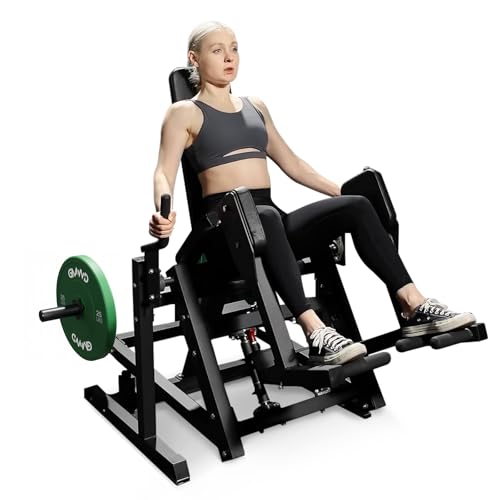
3D Abductor Training: The Hip Abductor Machine supports hip abduction, external rotation, and extension, replicating the hip joint’s optimal mechanics to maximize glute activation and effectiveness. Its multi-planar 3D motion and optimized resistance profile ensure that the glutes are consistently challenged throughout the entire range of motion

【CREATE IDEAL BUTTOCKS AND THIGHS】The hip abduction machine can help you pursue a perfect butt and strong thigh muscles. Intensive training by strengthening the hip abductors and adductors, gluteus maximus, gluteus medius and gluteus minimus.After exercise and shaping, the inner and outer thigh muscles are tighter and stronger, improving personal charm.

Commercial-Grade Durability:The hip abduction machine features a thick steel frame and powder coating treatment, providing commercial grade durability. It supports heavy loading and daily use, with weight storage pins on both sides and the back, and can accommodate standard 2-inch barbell plates. Equipped with anti slip foot pedals and stable footings, it can maintain stability even under maximum weight.
Monster Walks and Sumo Walks

Monster walks and sumo walks are essential exercises in our glute activation routine, providing a targeted approach to strengthening the gluteus medius, minimus, and maximus. Using resistance bands, these exercises emphasize glute engagement and stability. For monster walks, we place mini bands around our ankles or just above the knees, maintaining an athletic stance with slight knee bend. We perform lateral or forward/backward steps, avoiding knee valgus by pushing knees outward. Sumo walks use a wider stance, focusing on pushing through the rear leg, with band placement at the knees, ankles, or forefeet altering glute activation. These band exercises improve hip and knee stability, allowing us to safely increase endurance and muscle control through higher repetition volumes. Wider bands distribute pressure more evenly across the muscles, minimizing discomfort and reducing skin irritation during these dynamic movements.
Recommended Products

THREE-MOTOR 4D VIBRATION PLATFORM MACHINE: Combines oscillating, pulsating, and lateral motors to create a unique 4D motion that activates all muscle fibers simultaneously; seven training modes and 60 speed levels let you dial in any whole body vibration plate machine workout from beginner to advanced

COMPACT, SPACE-SAVING DESIGN: Easily mounts to most doors without tools, making it ideal for home workouts. The lightweight and portable design allows for easy storage and travel convenience.

MULTIPLE WEIGHT OPTIONS: The Cuff offers 20 color-coded ankle and wrist weights ranging from 0.25 lbs. all the way up to 25 lbs., making them versatile for all strength levels. Multiple options allow for a customized workout or for physical therapy.
Performing Clamshells and Glute Bridges With Bands
Clamshells and glute bridges with resistance bands are frequently underrated exercises that effectively enhance our glute activation routine. When performing clamshell variations, we position a light to moderate resistance band just above our knees, ensuring the legs stay close to maintain tension. This position intensifies muscle activation in the hip abductors, including the gluteus medius and minimus, vital for stability. We aim for 2-3 sets of 10-15 reps per side, focusing on controlled movements.
For glute bridge modifications, a resistance band around the thighs increases glute engagement by demanding more hip abduction and external rotation. We should squeeze our glutes at the top, maintaining a neutral spine. Like clamshells, perform 2-3 sets of 10-15 reps, adjusting band tension as needed. These exercises minimize joint stress compared to free weights while still providing effective muscle activation for strengthening and rehabilitation purposes.
Recommended Products

𝐌𝐮𝐬𝐜𝐥𝐞 𝐆𝐫𝐨𝐰𝐭𝐡 & 𝐒𝐭𝐫𝐞𝐧𝐠𝐭𝐡: Professional-grade inflatable blood flow restriction cuffs engineered in the USA for safe and precise occlusion training. Our blood flow restriction bands are backed by 15+ years of research, designed to support muscle growth, strength and endurance using lighter weights and shorter workouts.

THE ORIGINAL ALL-IN-ONE PORTABLE GYM - Get the ultimate full body workout with the original Gymproluxe All in One Portable Gym resistance band & bar set. This resistance band & bar set provides greatly varied resistance through each movement, enabling you to recruit more muscle and drive greater gains. Our superior quality set is durable, reliable and safe, so choose the original.

CORE-STRENGTH TRAINING EQUIPMENT: Improve core strength like never before with this bungee workout trainer kit that includes the TRX RIP Trainer, a door anchor, a medium resistance band, a safety strap, a carrying bag, and access to the TRX Training Club App.
Fire Hydrants and Kickbacks for Enhanced Glute Recruitment
When it comes to maximizing glute recruitment, fire hydrants and kickbacks are essential exercises in our repertoire. These movements specifically target the gluteus maximus, crucial for activating our hips effectively. Fire hydrant variations, like banded or weighted, emphasize hip abduction and external rotation, enhancing our glute development. By incorporating kickback progression, starting with bodyweight and advancing to resistance bands, we focus on hip extension, ensuring comprehensive glute work.
Maintaining proper form is vital—keep a quadruped position, engage the core, and avoid swinging. Using resistance bands, we can progressively overload our muscles, improving hip stability and reducing injury risk. These fabric resistance bands provide adjustable resistance levels ranging from 14 to 70 lbs, allowing for personalized muscle engagement and progressive training. Let’s prioritize these exercises to combat over-reliance on our quadriceps and hamstrings, restoring balance and enhancing performance.
Practical Advantages of Using Resistance Bands
Although resistance bands might seem simple, they offer a wealth of practical advantages that enhance our workout routines. Their versatility allows us to target various muscle groups, from glutes to upper and lower body, adapting to multiple band types like loop and tube. Adjusting resistance levels is easy by changing band thickness or length, catering to all fitness levels. Bands’ portability means we can workout anywhere—home, gym, or while traveling. They’re lightweight, compact, and affordable, allowing us to own multiple bands without breaking the bank. Joint-friendly and low-impact, bands reduce injury risk and are ideal for safe movement patterns. Their continuous tension promotes muscle activation, making them a valuable addition to our fitness regimen for both beginners and advanced users. Additionally, resistance bands provide progressive training opportunities that promote muscle growth and endurance development over time.
Physiological Effects on Glute Activation
While we’ve explored the practical advantages of resistance bands, it’s intriguing to examine their physiological effects, particularly on glute activation. Resistance bands offer constant tension, ensuring sustained glute strength throughout movements. They activate the gluteus maximus, medius, and minimus, promoting comprehensive engagement and preventing synergistic dominance, where other muscles might compensate for weak glutes. This resistance adaptation reduces injury risk and enhances movement efficiency. EMG studies reveal that band placement affects glute activation; positioning bands at the ankles increases gluteus maximus engagement during exercises like side-stepping. These exercises, coupled with increased load and complexity, boost neuromuscular activation and firing rates. By improving activation patterns, resistance bands not only enhance glute function but also contribute to core stability. Modern resistance bands feature adjustable resistance levels that accommodate different fitness levels and allow for progressive overload to maximize muscle growth and development.
Improving Biomechanics With Resistance Bands
Resistance bands are a game-changer for enhancing biomechanics, particularly in our glute training routines. By providing progressive resistance, bands ensure that biomechanical efficiency is maximized. As the band stretches, tension increases, which aligns with our muscles’ natural strength curve during exercises. This method challenges our glutes more at the end range of motion, where traditional weights may fall short. Additionally, band resistance helps protect our joints by minimizing stress at vulnerable points, such as the start of a squat. This reduces injury risk and enhances joint mobility, supporting overall lower-body biomechanics. Furthermore, bands allow us to target specific glute muscles, promoting isolated muscle recruitment and addressing imbalances for comprehensive biomechanical improvements. The adjustable resistance levels of quality bands accommodate user progression, making them suitable for both beginners starting their glute activation journey and advanced athletes seeking to refine their biomechanical patterns. Overall, bands are crucial for safe and effective glute strengthening.
Enhancing Balance and Stability
Incorporating resistance bands into our workout routines not only optimizes biomechanics but also significantly enhances balance and stability. These versatile tools engage multiple muscle groups, boosting balance improvement by activating the core and stabilizer muscles. The adaptable resistance they offer allows us to tailor exercises to our specific fitness levels, improving joint stability and reducing injury risks. Exercises like band squats and glute bridges activate the core and glutes while fortifying joint stability.
Scientific studies highlight that resistance bands enhance balance and gait function, particularly in older adults, making them instrumental in rehabilitation settings. They improve muscular endurance and coordination, both vital for maintaining stability. Lightweight and portable, resistance bands are perfect for enhancing flexibility and mobility, essential for overall balance.
Recommendations for Progressive Overload
To effectively achieve progressive overload and maximize glute development, we must thoughtfully manipulate resistance levels using resistance bands. By gradually increasing band tension—switching from light to medium to heavy bands—we can progressively challenge the glute muscles. Employing overload techniques like using multiple bands or layering them adds incremental progressive resistance without altering exercise form. Stretching bands further during exercises boosts tension, effectively overloading muscles as the bands elongate. Additionally, slowing down movement tempo or incorporating isometric holds at peak contractions enhances muscle time under tension, providing a substantial overload stimulus. Let’s not forget volume manipulation; increasing repetitions or sets per workout and varying exercise complexity can help us systematically apply progressive resistance, promoting strength and hypertrophy gains efficiently.
Recommended Products

ALL-IN-ONE HOME GYM SYSTEM: Gorilla Bow Original delivers full body strength training with one portable resistance system designed for home, travel, and outdoor workouts, train chest, back, arms, legs, and core without bulky gym equipment while maintaining consistent performance anywhere

WHAT’S IN THE BOX: Add an extra challenge to your training with TRX long resistance bands. This pack of full-body-size strength bands includes multiple levels of resistance from 5–70 lbs. for the 4 pack and 5–150 lbs. for the 6 pack.

Heavy (strong) resistance bands with 3+ adjustable levels.
Incorporating Bands Into Athletic Training
When we incorporate resistance bands into athletic training, we’re tapping into a versatile tool that enhances both strength and neuromuscular control. These bands provide continuous tension during dynamic movements, increasing muscle stimulation compared to traditional weights. With various resistance levels, bands cater to different training phases, allowing us to tailor exercises for optimal results.
Athletes benefit from improved muscle power and coordination, critical for performance and injury prevention. By enhancing strength gains, especially at the end range of movement, bands help boost muscle force production. Incorporating bands into warm-ups or prehabilitation routines improves muscle activation patterns and proprioception. This supports balance and reduces lower limb injuries, making them ideal for sport-specific drills. Bands are low-impact, versatile, and indispensable in athletic conditioning.
Frequently Asked Questions
How Often Should I Perform Resistance Band Exercises for Optimal Results?
We’ll aim for 3-5 sessions weekly, ensuring glute recovery by adjusting workout frequency based on our fatigue and response. Let’s progress gradually, monitoring performance and soreness to balance activation and prevent overtraining for optimal results.
Are There Specific Resistance Bands That Are Best for Glute Activation?
We recommend mini bands for targeted glute activation; they’re small yet mighty. Fabric bands offer durability and comfort, contrasting with rubber’s potential to roll. Choose based on your workout goals and experience for the best results.
How Can I Prevent the Bands From Rolling or Slipping During Exercises?
We can prevent bands from rolling or slipping by ensuring proper band placement and tension adjustment. Let’s center the band and adjust the tension until it’s snug, aligning it with our movement to maintain stability during exercises.
Can Resistance Bands Alone Build Muscle Mass in the Glutes?
Yes, resistance bands can indeed build muscle mass in the glutes. Coincidentally, the key is consistent use and progressive band resistance, which promotes muscle growth by challenging our muscles throughout the exercise range, enhancing hypertrophy.
What Are Common Mistakes to Avoid When Using Resistance Bands for Glutes?
Let’s avoid improper form and band positioning. Keeping bands at the right tension and maintaining proper form prevents injury and maximizes glute activation. Consistent tension and correct placement ensure we’re targeting the glutes effectively for optimal results.


