As an Amazon Associate, we earn from qualifying purchases. Some links on this site are affiliate links at no extra cost to you. Our recommendations are based on thorough research and editorial judgment.

How to Warm Up Properly Before Dumbbell Training

To warm up before dumbbell training, we start with 5-10 minutes of aerobic activities like jogging or jump rope to elevate heart rates and engage multiple muscle groups. Dynamic stretching follows, targeting the upper and lower body, with arm circles and lunges enhancing blood flow and muscle temperature. Light weights, around 5-10 lbs, prepare our shoulders while dynamic stretches improve joint mobility. A 10 to 15-minute routine optimizes muscle activation and minimizes injury risk, setting the stage for maximal performance. Looking ahead, we can explore deeper strategies.
Key Takeaways
- Begin with 5-10 minutes of aerobic activities like jogging or jump rope to elevate heart rate.
- Incorporate dynamic stretching exercises such as arm circles and walking lunges to engage muscle groups.
- Use light dumbbells or bodyweight exercises for multi-joint movements like squats to activate muscles.
- Gradually increase warm-up weights from light to medium, ensuring form and technique.
- Tailor warm-up duration and intensity to individual needs and exercise type.
Importance of a Warm-Up
When it comes to dumbbell training, understanding the importance of a proper warm-up can’t be overstated. We’ve all heard warm-up misconceptions, like it’s just a brief stretch or not necessary at all. However, the warm-up duration is crucial, and it should be more than just a quick activity. Elevating muscle temperature improves enzyme activity and muscle elasticity, enhancing our strength exercises. Our neuromuscular system gets activated, optimizing coordination and muscle recruitment patterns, which is essential before training. Additionally, increased muscle temperature boosts nerve conduction velocity, allowing faster and stronger contractions. A proper warm-up also improves joint lubrication and mobility, reducing stiffness. Let’s not underestimate these benefits—our bodies need this preparation to excel in dumbbell training safely. Incorporating tools like foam rollers into your warm-up routine can further enhance flexibility and prepare your muscles for the demanding movements ahead.
Benefits of Warming Up
Having established the importance of warming up, let’s delve into its tangible benefits, which are manifold and significant for anyone engaging in dumbbell training. A proper warm-up boosts muscle activation and prepares our bodies for the demands ahead. By increasing blood flow and muscle temperature, we enhance tissue elasticity and resilience, reducing the risk of strains and tears. Engaging target muscles, like activating glutes during squats, minimizes overcompensation and injury risk. Enhanced neural activation sharpens our focus and coordination, while improved joint mobility and flexibility ensure smoother movements and better form. Furthermore, warming up optimizes recovery strategies by elevating muscle temperature, accelerating energy production, and supporting endurance. Incorporating adjustable step platforms into your warm-up routine provides customizable height options that can enhance the intensity and effectiveness of your preparatory exercises. These benefits make warm-ups indispensable for safe and effective dumbbell training.
Aerobic Activities to Increase Heart Rate
While a proper warm-up is essential, aerobic activities to increase heart rate stand out as a pivotal component in preparing for dumbbell training. Aerobic exercises like jogging in place, marching, or light running elevate our heart rate, boost body temperature, and enhance blood flow to muscles, reducing injury risk by improving tissue elasticity. These activities should last 5–10 minutes, starting at a low intensity and gradually progressing to moderate levels tailored to our fitness. Jumping jacks and jump rope, when space allows, rapidly increase heart rate and engage multiple muscle groups. To add variety, we can incorporate side-to-side shuffles or step jacks. By the end, our heart rate should be near submaximal, ensuring our body’s ready for resistance work. For those who struggle with bodyweight movements during warm-up, resistance bands can provide assistance while still engaging multiple muscle groups and elevating heart rate effectively.
Recommended Products

6-in-1 Swingset: This versatile OLAKIDS outdoor playground includes 1 trampoline, 1 slide, 1 saucer swing, 1 EVA belt swing, 1 basketball hoop, and 1 dartboard (4 sticky balls included), supporting multiple kids for shared active play

SAFETY THAT LOOKS THE PART: Build a space that looks as good as it feels. With 5/8" of closed cell EVA foam rubber to offer loads of grip and a balanced impact profile, our printed fitness mat tiles are activity appeasing and aesthetically pleasing.

✅ 【Ultra-Compact & Portable Design】---Innovative box-style storage lets this home gym fold into a slim, space-saving unit (just 9kg/20lbs!). Perfect for apartments, travel, or tight spaces—store it effortlessly and free up room.
Dynamic Stretching Techniques
Dynamic stretching techniques are a vital element of any effective warm-up, ensuring our bodies are primed for the challenges of dumbbell training. By incorporating dynamic stretches, we target the upper body, lower body, and core engagement, significantly enhancing our performance. Arm circles, banded upright rows, and shoulder rolls effectively loosen the upper body. For the lower body, walking lunges, butt kicks, and hip circles improve flexibility and readiness. Core engagement is crucial, with exercises like jumping jacks and dynamic plank steps boosting our overall stability. These warm-up techniques not only promote flexibility improvement but also play a key role in injury prevention. By increasing blood flow and muscle temperature, we optimize our warm-up routine, making our training sessions more effective and safer. For those looking to add variety to their cardio warm-up, incorporating battle rope exercises can provide excellent full-body activation while targeting multiple muscle groups simultaneously.
Recommended Products

The Web Slide Difference. The Web Slide Professional System organizes your clinic and streamlines patient training sessions. Any resistance bands/tubing, pulley devices, or other exercise equipment that utilizes a Web Anchor Strap for door attachment can be set up and ready to go in seconds with a Web Slide Exercise Rail-no door required!

The Web Slide Difference. Web Slide Exercise Rails organize your space and streamline your training sessions. Any resistance bands/tubing, pulley devices, or other exercise equipment that utilizes a Web Anchor Strap for door attachment can be set up and ready to go in seconds with a Web Slide Exercise Rail—no door required!

🏠 Space-Saving Foldable Design for Home Use-The WNPANE Pilates Reformer is built for modern living. Its foldable design makes setup and storage effortless — perfect for apartments, small homes, or limited workout spaces. Transform any corner of your home into a personal Pilates studio in seconds.
Specificity in Warm-Up Routines
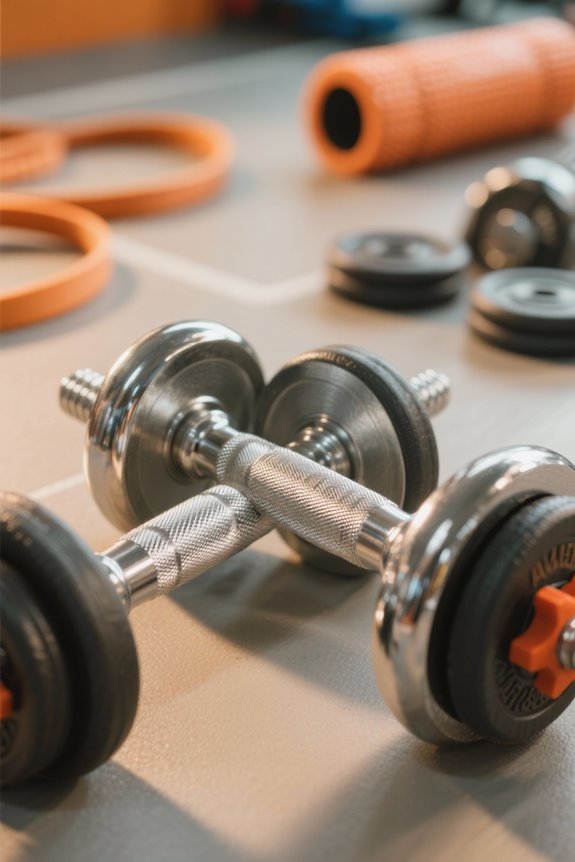
As we move from dynamic stretching techniques, it’s important to discuss the value of specificity in warm-up routines for dumbbell training. Tailoring warm-ups to specific movement patterns enhances neuromuscular readiness and maximizes performance. By focusing on exercises that mimic the biomechanical demands of the main lifts, we ensure targeted muscle activation, which significantly boosts strength and power, especially in upper-body exercises at efforts over 20% of our maximum. Initial lighter sets, progressing to heavier loads (around 80% of our working weight), allow us to prepare muscles effectively without unnecessary fatigue. For instance, using 5-8% of our 1RM in warm-ups induces post-activation performance enhancements, ensuring our muscles are primed for action while maintaining energy for the main workout. Modern adjustable dumbbells with quick-change mechanisms allow for seamless weight transitions during warm-up progressions, minimizing downtime between exercises and maintaining optimal muscle temperature throughout the preparation phase.
Optimal Warm-Up Duration
Determining the optimal warm-up duration is crucial for maximizing our performance and minimizing the risk of injury during dumbbell training. Warm-up timing is key; typically, a well-structured session lasts 10 to 15 minutes, incorporating light cardio, dynamic stretching, and muscle activation. These elements raise our body temperature, enhancing flexibility and readiness. For less intense exercises, a shorter duration of 3-5 minutes might suffice, while longer, more complex sessions could stretch to 15 minutes. Over 30 minutes, though, can lead to fatigue, reducing workout efficiency. We should tailor our warm-up based on exercise type, intensity, and personal factors like strength and mobility needs. By balancing timing and effects, we ensure our bodies are primed for the main workout. Consider using an exercise mat during your warm-up routine to provide cushioning and stability for floor-based stretching and activation movements.
Physiological Changes During Warm-Up
Warming up before dumbbell training brings about essential physiological changes that prepare our bodies for the demands of exercise. By gradually increasing our heart rate, we activate our cardiovascular system, reducing stress on the heart. This process, crucial for circuit training, ensures efficient blood flow and expands blood vessels, improving oxygen supply to muscles. As our muscle temperature rises, flexibility and energy system efficiency enhance, facilitating better exercise performance. Neuromuscular engagement primes specific muscle groups and sharpens coordination, making muscle contractions easier. These changes, including a boost in metabolic rate, help us adapt to physical stress and prevent injuries. By enhancing circulation and oxygen utilization, our warm-ups improve reflexes and performance, reducing post-exercise soreness and ensuring we’re ready for action. For those looking to add variety to their warm-up routine, incorporating fitness dice can provide engaging bodyweight exercises that further enhance neuromuscular activation and coordination.
Dumbbell-Specific Warm-Up Structure
Our bodies are primed for action through physiological changes, and now it’s time to focus on a dumbbell-specific warm-up structure. We’ll start with dynamic movement activation, incorporating multi-joint exercises like bodyweight squats and lunges. These dumbbell warm up techniques engage both upper and lower body muscles simultaneously. Dynamic stretches, such as hamstring pulses and hip rotations, enhance pre workout mobility, improving joint range of motion. To mimic upcoming dumbbell exercises, we’ll use light weights for movements like shoulder raises. Upper body routines, including arm circles and shoulder dislocates, prepare the shoulder complex. This structured approach, lasting 5-10 minutes, ensures global activation while avoiding early fatigue. When selecting dumbbells for your warm-up routine, prioritize those with rubber coatings as they provide better grip and handling during exercises while reducing noise during your preparation phase. Let’s get ready to maximize our dumbbell training potential efficiently and effectively.
Recommended Products

What's Included: 5, 10, 15, 20, 25, 30, 35, 40, 45, 50, 55, 60, 65, 70, 75, 80, 85, 90, 95, 100 lb pairs of urethane coated dumbbells and two 3-tiered racks

💪 Best Home Gym Equipment: Includes 5, 10, 15, 20, 25, 30, 35, 40, 45, 50, 55, 60, 65, 70, 75, 80, 85, 90, 95, 100, 105, 110, 115 and 120lb dumbbell pairs, (2) of 3-tier BLUE RACKs and (2) of MATs. You can use these solid dumbbells in a wide range of exercises, also a perfect choice for both beginners or athletes.

Home Gym Equipment Weight Set:Includes 5, 10, 15, 20, 25, 30, 35, 40, 45, 50, 55, 60, 65, 70, 75, 80, 85, 90, 95, and 100lb dumbbell pairs, (2) of 3-tier racks and (2) of mats. You can use these solid dumbbells in a wide range of exercises, also a perfect choice for both beginners or athletes.
Weight Selection for Warm-Up Sets
Selecting the right weights for warm-up sets is crucial to setting the stage for an effective workout. Our weight experience and warm-up intensity will guide us in choosing the appropriate load. Beginners should start with light weights, around 5-10 lbs, allowing for comfortable execution of 6-8 reps. This helps maintain form and focus on technique. For intermediate lifters, medium weights (10-30 lbs) offer a versatile challenge, leading to fatigue around 15 reps. Advanced lifters might increase to intermediate weights, approximately 60-70% of their working load, performing 2-3 sets of 3 reps. Gradually increasing weight, starting with an empty bar or light dumbbells, ensures muscle activation without fatigue, paving the way for enhanced performance during our main workout sets. For those without access to a full range of dumbbells, resistance bands can provide an effective alternative for warm-up exercises, offering adjustable resistance levels that accommodate various fitness levels and help prepare muscles for heavier loads.
Recommended Products

Multifunctional Smart Home Gym System: Speediance revolutionizes your workout by bringing the gym directly to your home. Our all-in-one home gym system seamlessly integrates cardio and strength training into your living room for a full-body workout

610LB Dumbbell Set: Pair of 5, 10, 15, 20, 25, 30, 35, 45, 55, 65 lb dumbbells. Perfect for staged strength training, supporting light warm-ups all the way to heavy lifting.

COMPLETE 550 LB DUMBBELL SET WITH 2-TIER RACK - 550 lb dumbbell set with rack includes pairs from 5–50 lb rubber hex dumbbells and a durable 2-tier rack—a complete home gym weight set for full-body strength training.
Movement Quality and Neuromuscular Activation
Movement quality and neuromuscular activation are pivotal elements in crafting an effective warm-up routine before dumbbell training. By reinforcing motor patterns, we can enhance our technique and minimize injury risk. Initiating our warm-up with lighter loads allows the neuromuscular system to practice precise muscle activation, laying the groundwork for our main lifts. This not only sharpens our coordination but also ensures our joints move fluidly.
Dynamic movements, such as bodyweight squats and lunges, are crucial. They stimulate our central nervous system, improve joint mobility, and engage multiple muscle groups, ensuring our body’s readiness for the workout. Through controlled progression, we achieve balanced muscle activation, promoting joint stability and neuromuscular efficiency—key factors for optimizing our dumbbell training sessions. Additionally, incorporating forearm trainers during your warm-up can further enhance grip strength and muscle control, which are essential for maintaining proper form throughout your dumbbell workout.
Enhancing Flexibility and Joint Health
When it comes to enhancing flexibility and joint health before our dumbbell training, we need to focus on dynamic movements that stimulate synovial fluid production, improving joint lubrication and overall mobility. Dynamic movements like arm circles and leg swings increase joint temperature, enhancing mobility and reducing injury risk. Joint activation through these exercises lubricates joints, ensuring a smoother range of motion. Incorporating multi-planar movements, such as hip circles, promotes balanced muscle engagement and comprehensive joint health. Dynamic stretches, controlled yet active, prepare our muscles and joints effectively, raising muscle temperature and elasticity. By activating smaller stabilizing muscles around joints, we support their alignment and health, making our workouts safer and more effective. This preparation is crucial for maintaining flexibility and joint function.
Adapting Warm-Ups for Individual Needs
Understanding how to adapt warm-ups for individual needs is crucial for maximizing our performance and reducing injury risks. Each of us responds differently to warm-ups, with variability even within the same person on different days. That’s why leveraging individual feedback is key. By listening to our bodies and observing readiness levels, we can employ adaptive strategies to tailor our warm-up duration and intensity. Some might need longer sessions, while others adapt quickly. As our fitness improves, our needs will shift, requiring periodic reassessment. Monitoring post-warm-up performance and injury rates helps fine-tune our approach. Additionally, incorporating diverse warm-up modalities prevents monotony and builds adaptability. This variety ensures we’re engaging effectively and can choose the best approach for any given day.
Practical Considerations for Effective Warm-Ups
A well-structured warm-up is essential for optimizing our workouts and ensuring safety during dumbbell training. We must carefully consider the duration and intensity, targeting 5 to 10 minutes to prepare our muscles without causing fatigue. Start with slow, controlled movements, gradually increasing intensity to boost blood flow and ensure effective muscle activation. It’s crucial to incorporate dynamic stretches, such as leg swings and shoulder circles, to enhance flexibility and activate key muscle groups. Common warm-up mistakes include skipping it altogether or starting with weights that are too heavy. Instead, use lighter weights for a smooth transition into our workout. Avoid static stretching, as it may reduce muscle strength temporarily. By focusing on these practical considerations, we can prevent injuries and enhance performance.
Recommended Products

1200 lbs Weight Set with Dumbbell Rack: Includes 15 pairs of rubber hex dumbbells from 5 to 75 lbs. Dumbbell pairs in 5, 10, 15, 20, 25, 30, 35, 40, 45, 50, 55, 60, 65, 70 and 75 lbs. offer a versatile range of strength training exercises that's perfect for home gyms or professional settings. These hand weights provide the right free weight for different fitness levels and exercises, helping you reach your fitness goals faster

COMPLETE 1200 LB DUMBBELL SET WITH 3-TIER RACK - 1200 lb dumbbell set with rack includes pairs from 5 lb to 75 lb rubber hex dumbbells and a heavy-duty 3-tier rack. A complete weight set for home or commercial gym strength training.
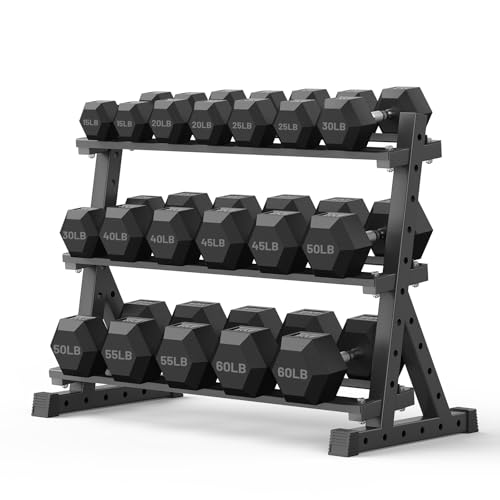
680 LB Dumbbell Set: Includes pairs of dumbbells (15, 20, 25, 30, 40, 45, 50, 55, 60 lbs), suitable for full-body strength training and targeted exercises. It accommodates users from beginners to experienced, supporting progressive overload and high-repetition workouts.
Frequently Asked Questions
Can I Use Resistance Bands for a Dumbbell Warm-Up?
Yes, we can use resistance band exercises for a dumbbell warm-up. They’re portable, versatile, and effective. The warm-up benefits include increased flexibility, enhanced performance, reduced injury risk, and mental readiness. Let’s warm up smart!
How Does Hydration Impact My Warm-Up Effectiveness?
Hydration impacts our warm-up effectiveness by ensuring hydration balance and optimal fluid intake, which aids in muscle function and thermoregulation. Staying well-hydrated helps us prevent cramps and overheating, enhancing our performance during the workout.
Should I Warm up Differently for Endurance vs. Strength Training?
Yes, we should warm up differently; endurance techniques focus on aerobic activities and gradual intensity increases, while strength strategies target dynamic movements and muscle activation. It’s not just about preference—each approach optimizes performance and minimizes injury risk.
What Role Does Breathing Play in a Warm-Up?
Breathing techniques are crucial in warm-ups as they enhance oxygen delivery and energy prep. By engaging the diaphragm, we improve core stability and coordination, ensuring our bodies are ready and aligned for the challenges of lifting.
Are There Mental Exercises to Enhance Warm-Up Focus?
Yes, we can enhance our warm-up focus with visualization techniques and mindfulness practices. Let’s mentally rehearse our exercises, visualize success, and practice mindfulness to sharpen our focus and prepare our minds for the session ahead.