As an Amazon Associate, we earn from qualifying purchases. Some links on this site are affiliate links at no extra cost to you. Our recommendations are based on thorough research and editorial judgment.


Arm Training: Biceps and Triceps With Dumbbells

Our dumbbell arm workouts effectively target both biceps and triceps, enhancing stabilizer muscle engagement, joint health, and control. Incorporating exercises like Standing Dumbbell Curls and Close-grip Dumbbell Bench Press ensures balanced muscle development. We recommend an 8-12 rep range for optimal hypertrophy, combining varied loads for enhanced muscle growth. Emphasizing controlled tempos and engaging the core improve stability and form. With these strategies, your training will advance competently, uncovering more effective techniques along the way.
Key Takeaways
- Dumbbell curls and hammer curls effectively target the biceps for balanced muscle development.
- Overhead extensions and close-grip presses primarily engage the triceps, enhancing upper arm mass.
- Engaging the core and maintaining stable elbow positioning ensures effective and safe dumbbell arm workouts.
- Varying repetition ranges and tempo enhances muscle growth and overcomes strength plateaus.
- Training frequency and recovery are crucial for muscle development, with at least two sessions weekly recommended for beginners.
Benefits of Dumbbell Arm Workouts
When it comes to arm training, dumbbell workouts offer a host of benefits that can’t be ignored. We find that dumbbells excel in muscle activation, engaging stabilizer muscles due to their free weight nature. This requires more control than machines, leading to improved overall muscle engagement. Additionally, dumbbell exercises enhance joint health, vital for longevity in training. Strengthening our triceps with dumbbells supports elbow joint health by reinforcing tendons and bones, reducing the risk of injury. The freedom of movement in dumbbell workouts also promotes a greater range of motion, supporting shoulder stability and flexibility. The ergonomic grips on quality cast iron dumbbells ensure secure handling during various arm workout routines, allowing for comfortable and safe execution of biceps and triceps exercises. By integrating these exercises into our routine, we can achieve balanced muscle development and enhanced strength while ensuring our joints remain healthy and resilient.
Essential Biceps Exercises

Biceps exercises are essential for building well-defined arms, and incorporating dumbbells can really elevate our workouts. By exploring various dumbbell variations, we can ensure effective muscle targeting for both the long and short heads of the biceps. The Standing Dumbbell Curl is a classic; it encourages a strong contraction and controlled release. For a twist, Hammer Curls engage the brachialis and brachioradialis, offering a unique stimulus. Alternating Dumbbell Curls help us focus on form, reducing momentum. To increase time under tension, the Alternating Bicep Curl with Iso-Hold is perfect. Finally, Reverse Curls, with a pronated grip, shift focus to the brachioradialis. By practicing these exercises with attention to form and control, we maximize our bicep growth potential. For those looking to add variety to their arm training, ab workout wheels can also engage the biceps and shoulders as stabilizing muscles during core-focused movements.
Recommended Products

2100 lbs Weight Set with Dumbbell Rack: Includes 20 pairs of rubber hex dumbbells from 5 to 100 lbs. Dumbbell pairs in 5, 10, 15, 20, 25, 30, 35, 40, 45, 50, 55, 60, 65, 70,75, 80, 85, 90, 95 and 100 lbs. offer a versatile range of strength training exercises that's perfect for home gyms or professional settings. These hand weights provide the right free weight for different fitness levels and exercises, helping you reach your fitness goals faster

RitFit Home Gym Package gets you everything you need in just one click. It helps you to customize a fully-functioning fitness space at home.

INDUSTRY LEADER: For 30+ years, Body-Solid has held the widest array of products designed to meet the demands of the ever-changing fitness industry (home gym, free weight machines, treadmills, bikes, ellipticals, weight plates, kettlebells, dumbbells, flooring, accessories and more). Our products are cutting edge and reliable and are built for Life……Your Life.
Key Triceps Exercises

To build well-rounded and powerful arms, it’s crucial to focus on key triceps exercises that target all three heads of the triceps brachii. By incorporating compound movements, we ensure maximal triceps engagement and overall muscle development. The close-grip dumbbell bench press is a prime example, allowing for heavy loading while targeting the medial and lateral heads through pressing motions. Additionally, the dumbbell upright dip effectively mimics parallel bar dips, utilizing both bodyweight and dumbbell load for enhanced triceps activation. For a dynamic approach, the overhead extension thruster combines an overhead press with a triceps extension, dynamically engaging the long head. These exercises not only build strength but also contribute significantly to the triceps’ two-thirds share of upper arm mass. To maintain optimal form and safety during heavy dumbbell movements, consider using adjustable squat stands that provide stable support and proper height positioning for your triceps training routine.
Recommended Products
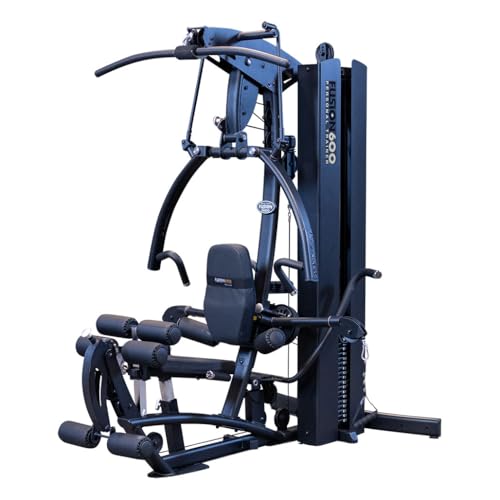
"INDUSTRY LEADER: For 30+ years, Body Solid has held the widest array of products designed to meet the demands of the ever-changing fitness industry (home gym, free weight machines, treadmills, bikes, ellipticals, weight plates, kettlebells, dumbbells, flooring, accessories and more). Our products are cutting edge and reliable and are built for Life……Your Life."

You don’t have to switch between various workout stations with this gym system that combines different strength building machines: a Power Tower, Utility Bench, and Squat Rack. It also has dedicated landmine exercise attachment
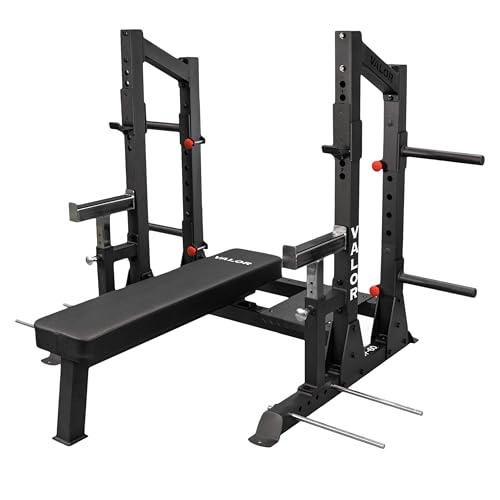
HEAVY-DUTY COMPETITION BENCH PRESS RACK - Built with 3” x 3” heavy-gauge steel uprights for serious powerlifting and strength training. Designed for stability during heavy bench press workouts with a max weight capacity of 1000 lbs.
Exercise Selection for Balanced Development

Selecting the right exercises for balanced arm development is crucial for achieving optimal strength and aesthetics in both the biceps and triceps. We need to focus on exercise variations to ensure muscle symmetry and prevent imbalances that might affect arm and shoulder function. For biceps, incorporating dumbbell curls and hammer curls can enhance muscle growth and arm thickness. Alternating curls reduce strength differences between arms, while single-arm curls improve unilateral strength. When it comes to triceps, exercises like overhead extensions and tricep dips target different angles, ensuring comprehensive development. Single-arm kickbacks help correct any imbalances, promoting symmetry. By structuring our workouts with these exercises, we can improve functional strength and boost fat burning, making our training both efficient and effective. Adding weighted jump ropes to your arm training routine can further increase workout intensity and provide additional resistance training for comprehensive upper body development.
Recommended Products

Home Gym Equipment Weight Set:Includes 5, 10, 15, 20, 25, 30, 35, 40, 45, 50, 55, 60, 65, 70, 75, 80, 85, 90, 95, and 100lb dumbbell pairs, (2) of 3-tier racks and (2) of mats. You can use these solid dumbbells in a wide range of exercises, also a perfect choice for both beginners or athletes.

Freight Delivery: You must provide an accurate phone number and delivery address on the order so the freight carrier can contact you to schedule the delivery.

CONTENTS: 5lb to 75lb Urethane Dumbbell Set (15 dumbbell pair total) with 3-tier commercial dumbbell rack.
Optimal Rep Range for Hypertrophy

When it comes to finding the optimal rep range for hypertrophy, understanding the key factors can be transformative for our arm training regimen. By utilizing optimal repetition strategies, we can target hypertrophy effectively. Research shows that the 8 to 12 repetition range, often called the “hypertrophy zone,” delivers significant results. This range provides a balance of muscle stimulus and fatigue while minimizing injury risk. Incorporating diverse hypertrophy training techniques, like switching between heavy (5-10 reps), moderate (10-20), and light (20-30) loads, allows us to engage different muscle fibers, maximizing hypertrophy and preventing plateaus. Evidence suggests that varied rep ranges not only enhance muscle growth but also improve mind-muscle connection, supporting consistent long-term development of our biceps and triceps. For those looking to add variety to their arm training routine, incorporating push-up boards with color-coded sections can provide targeted muscle group training and multiple exercise variations to complement dumbbell work.
Frequency and Recovery Considerations
Understanding frequency and recovery considerations is crucial for maximizing gains in our arm training routine. Training adaptation is influenced by how often we work our biceps and triceps, with muscle recovery playing a key role. For beginners, starting with two sessions a week helps build a foundation. As we progress, intermediate and advanced lifters might increase to two or three weekly sessions, adjusting based on training volume and muscle stress. Smaller muscles like biceps recover faster, often allowing more frequent sessions. However, high-volume workouts require at least four days of recovery due to muscle damage. By training on non-consecutive days and gradually increasing intensity, we can enhance our recovery capabilities over time, ensuring optimal training frequency and progress. To support recovery and enhance core stability during arm exercises, incorporating accessories like ab mats with lower back support can help maintain proper posture and reduce strain during compound movements.
Implementing Supersets for Efficiency
As we explore effective strategies for arm training, implementing supersets can significantly boost our workout efficiency. Supersets involve performing two exercises back-to-back with minimal rest, targeting antagonistic muscle groups like biceps and triceps. This muscle pairing, along with superset variations, enhances metabolic stress and hypertrophy, reducing total workout time. For instance, pairing dumbbell curls with skull crushers or hammer curls with overhead triceps extensions maximizes muscle fiber recruitment. Typically, we aim for 8-15 reps per exercise, using weights between 5kg to 15kg or more, adjusting as needed. Resting 60-120 seconds between supersets helps manage fatigue while maintaining intensity. Alternating bilateral and unilateral movements helps recruit different muscles, ensuring balanced growth and preventing imbalances. To maintain a secure hold on dumbbells during intense supersets, consider using lifting gloves with proper grip enhancement and wrist support features.
Recommended Products

Synthetic microfiber palms

Premium Material: Crafted from high-quality pig skin leather offering exceptional softness, durability, and superior grip with natural dimples that enhance texture and breathability

【360° Rotating Design for Real Boxing Motion】This burn machine arm workout equipment features a unique 360° spinning rotator design, simulating real boxing punches to fully activate your arms, shoulders, chest, and back. Unlike traditional dumbbells, the rotator burn machine provides dynamic resistance in every direction, keeping your muscles engaged and your training more realistic. Perfect for boxer arm workout and athletes seeking explosive performance.
Importance of Strict Form
To truly optimize our arm workouts, keeping a strict form is essential, as it directly impacts our muscle activation, injury prevention, and overall progress. By maintaining strict alignment in our movements—keeping elbows close during curls and arms stationary in tricep extensions—we ensure that our biceps and triceps are the primary muscles activated. This targeted muscle activation leads to greater hypertrophy and strength gains.
Strict form also minimizes injury risk; jerky movements or poor alignment can strain tendons and joints. Controlled, deliberate reps with a full range of motion engage more muscle fibers, increasing time under tension, a key factor for growth. As we progress, maintaining strict form ensures that our target muscles, not compensatory movements, drive our gains, enhancing long-term stability. For those experiencing wrist discomfort during traditional barbell curls, using an ergonomic design like an EZ curl bar can help reduce wrist strain while maintaining proper form.
Role of Muscle Anatomy in Training
When we dive into arm training, muscle anatomy plays a pivotal role, guiding our exercise selection and execution. The biceps and triceps are composed of different muscle heads and fiber types, each contributing uniquely to movement and strength. Biceps, with their long and short heads, require exercises like hammer and concentration curls to ensure balanced development. Similarly, the triceps’ three heads benefit from varied exercises, such as overhead extensions for the long head and kickbacks for the lateral head.
Our understanding of muscle fiber distribution, which includes slow-twitch and fast-twitch fibers, allows us to tailor our workouts for specific goals, like hypertrophy or endurance. Anatomical variations among individuals also influence how we select dumbbell exercises, accommodating unique joint mechanics for optimal results. Just as joint protection is crucial when selecting appropriate yoga mat thickness for sensitive areas, understanding individual joint mechanics helps us choose dumbbell weights and ranges of motion that protect our joints during arm training.
Effective Elbow Positioning
Understanding effective elbow positioning is crucial for optimizing arm exercises with dumbbells. Let’s dive into elbow alignment techniques and injury prevention strategies. For bicep exercises, maintaining straight elbows, especially during curls, focuses the movement on the biceps. By keeping elbows pinned to our sides, we enhance form and target muscles efficiently. Slightly bending the elbows can alleviate strain while still engaging the muscles. Controlled elbow flexion, where we move the dumbbells closer to our shoulders, builds strength and minimizes injury risk.
When working on tricep exercises, fully extending our arms targets the triceps. Proper elbow alignment with our body prevents shoulder strain. Controlled extensions and stable elbow positioning, particularly during tricep kickbacks, ensure effective engagement and reduce potential injuries. After intense arm training sessions, incorporating deep tissue massage with tools like foam rollers can help alleviate muscle tension and promote faster recovery.
Core Engagement for Stability
Shifting our focus from elbow positioning, let’s explore how core engagement plays a pivotal role in maintaining stability during arm exercises with dumbbells. By activating our core muscles—abdominals, obliques, lower back, and hips—we create a solid foundation for stability development. Engaging these muscles helps us maintain proper posture and balance, crucial for exercises like bicep curls and tricep extensions. When we stabilize our core, we’re not only enhancing performance but also reducing injury risk. Exercises like renegade rows and dumbbell plank rows further challenge our core, ensuring smooth execution and supporting integrated movement. By incorporating unilateral workouts and progressive overload, we can boost core strength over time, leading to improved overall fitness and muscle definition.
Controlled Tempo and Eccentric Focus
There’s something truly impactful about incorporating controlled tempo and an eccentric focus into our arm training regimen. By emphasizing eccentric training and utilizing tempo variations, we can enhance muscle growth and strength in our biceps and triceps. With tempo training, we set specific speeds for each phase of an exercise, which increases time under tension and promotes hypertrophy. For example, using a 1130 tempo for bicep curls focuses on the eccentric phase, where muscles are 20-50% stronger, boosting our strength and muscle mass.
In addition to muscle building, controlled tempos reduce injury risk by being gentler on joints and highlighting technique errors. This method also strengthens connective tissues, fostering overall muscular stability and allowing us to push past plateaus without adding more weight.
Utilizing Full Range of Motion
When we incorporate a full range of motion (ROM) into our arm training, we’re not just targeting biceps and triceps; we’re maximizing muscle fiber recruitment, ultimately enhancing our strength gains. Full ROM benefits include recruiting a greater number of muscle fibers compared to partial ROM, which leads to balanced adaptations across all joint angles. This approach ensures our muscles experience maximal tension, promoting more significant strength improvements. Moreover, full ROM training mimics real-world movements, enhancing functional strength for everyday activities. It also supports joint health by increasing flexibility and mobility while reducing stiffness. By starting biceps curls with arms fully extended and finishing with complete elbow flexion, or fully extending during triceps exercises, we ensure comprehensive muscle engagement and joint resilience.
Advantages of Unilateral Training
Have you ever considered the hidden benefits of unilateral training in your exercise routine? Let’s delve into why this approach is so effective. Unilateral training, which focuses on one side at a time, enhances balance and stability by engaging deep stabilizers and core muscles. It’s a great way to correct muscle imbalances, as it isolates each side, reducing overreliance on the dominant side. This method doesn’t just prevent injuries by addressing muscle discrepancies—it also boosts core strength significantly. Moreover, unilateral exercises stimulate neural pathways, offering cross-education benefits that enhance strength on both sides. This type of training is versatile and adaptable, engaging muscles in multiple planes of motion, making our bodies more resilient and performance-ready.
Progressive Overload Strategies
Unilateral training sets the stage for another powerful concept in fitness—progressive overload. By embracing progressive overload, we ensure our muscles adapt and grow. To apply this with dumbbell variations, we gradually increase weight, repetitions, or sets during different training phases. Instead of jumping to heavier weights, we might add 2-4 reps per set or include “finisher” rounds for extra fatigue. It’s vital to maintain manageable workload levels to prevent injury. Through structured workouts, we can track progress by noting weights, reps, or sets—ensuring we consistently challenge our muscles. Importantly, incorporating rest days between sessions allows our muscles to repair, fostering growth. Remember, the goal is steady and safe progression, not rapid escalation, for optimal arm development.
Recommended Products

💪 Best Home Gym Equipment: Includes 5, 10, 15, 20, 25, 30, 35, 40, 45, 50, 55, 60, 65, 70, 75, 80, 85, 90, 95, and 100lb dumbbell pairs, (2) of 3-tier BLUE RACKs and (2) of MATs. You can use these solid dumbbells in a wide range of exercises, also a perfect choice for both beginners or athletes.

What's included: 5, 10, 15, 20, 25, 30, 35, 40, 45, 50, 55, 60, 65, 70, 75 lb pairs of urethane coated dumbbells and two 3-tiered racks
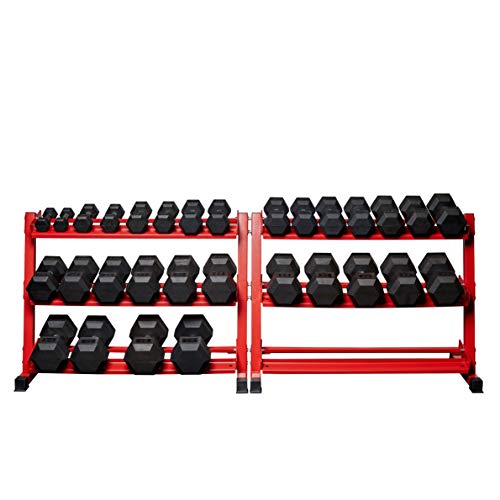
Premium Dumbbell + Rack Bundle: Get a complete strength training solution with REP Fitness rubber hex dumbbells and a sleek, durable 3-tier storage rack – built for both commercial and home gym setups.
Frequently Asked Questions
What Are the Benefits of Using Dumbbells Over Barbells for Arm Training?
We find dumbbells offer greater exercise variety and promote muscle symmetry. They enhance range of motion, improve joint mobility, and allow independent arm movement, leading to balanced muscle development and reduced risk of injury compared to barbells.
How Can I Prevent Wrist Strain During Dumbbell Arm Exercises?
We can prevent wrist strain during dumbbell exercises by maintaining proper wrist positioning and using grip support. Let’s ensure our wrists are straight, choose suitable weights, and incorporate wrist strengthening exercises to enhance stability and prevent injury.
Are There Specific Warm-Up Routines Recommended Before Starting Dumbbell Arm Workouts?
Let’s prioritize dynamic stretches and mobility drills before our dumbbell workouts. Arm circles, wrist extensor stretches, and shoulder dislocates are excellent choices. They’ll improve our flexibility, enhance performance, and reduce injury risk, setting us up for success.
Can Dumbbell Exercises Help Improve My Grip Strength?
Of course, dumbbell exercises can boost our grip strength. Coincidentally, by utilizing various grip variations, we enhance our overall strength. This not only improves our daily functionality but also supports long-term health benefits, including injury prevention.
How Should I Adjust My Diet to Support Arm Muscle Growth With Dumbbells?
We should increase our protein intake to 1-1.5 grams per pound of body weight and maintain a calorie surplus. Incorporate protein-rich foods and time meals around workouts for optimal growth and recovery of arm muscles.


