As an Amazon Associate, we earn from qualifying purchases. Some links on this site are affiliate links at no extra cost to you. Our recommendations are based on thorough research and editorial judgment.


Circuit Training Workout With Minimal Equipment

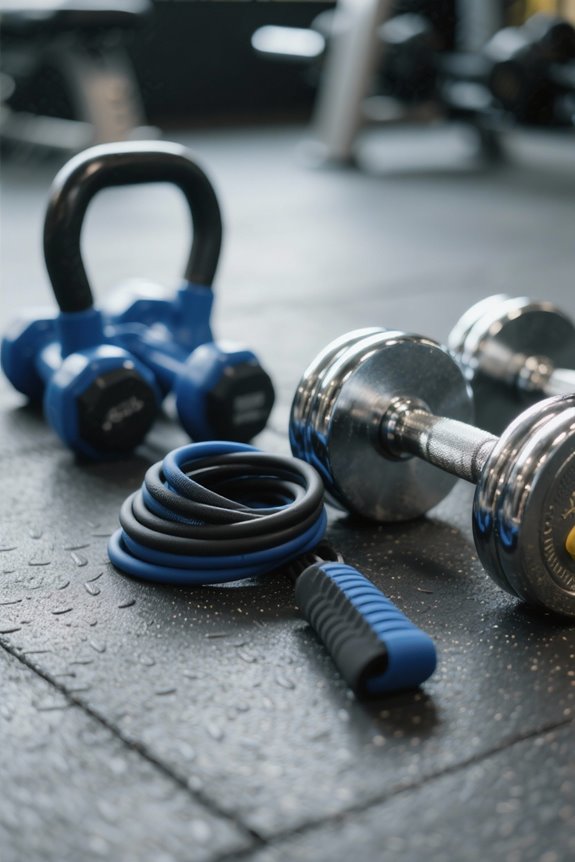
Professional studio photograph of essential circuit training equipment arranged on a sleek gradient backdrop. Featured items include adjustable dumbbells, resistance bands in varied tensions, a compact jump rope, exercise mat, and kettlebell positioned in an artistic composition. Shot with shallow depth of field highlighting the textured grip details and metallic finishes. Dramatic side lighting creates dimensional shadows while maintaining vibrant product colors. The minimalist setup emphasizes versatility and space-efficiency, perfect for home workouts. Clean, contemporary aesthetic with razor-sharp focus on premium build quality and functional design elements.
# Circuit Training Workout With Minimal Equipment
Let’s explore how circuit training with minimal equipment can transform your routine. Using resistance bands, adjustable dumbbells, and a jump rope, we can create a diverse workout that enhances strength, endurance, and flexibility. These tools offer versatile resistance, ensuring engaging and effective sessions. By alternating exercises with short rest periods, we can target different muscle groups efficiently. With a focus on proper form and progression, you’ll see improvements in strength and cardiovascular fitness. Discover how these simple tools can maximize your results.
Key Takeaways
- Utilize bodyweight exercises like push-ups and squats to minimize equipment needs while effectively targeting major muscle groups.
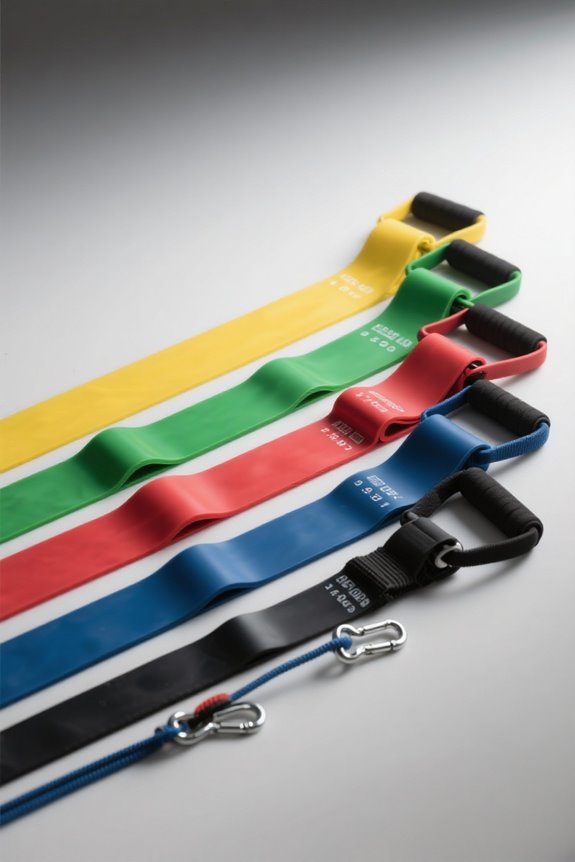
- Incorporate resistance bands for a versatile and portable option to add resistance and enhance strength exercises.
- Include a jump rope for an efficient warm-up and to boost cardiovascular fitness in the circuit routine.
- Design circuits with 6-10 exercises, alternating between upper-body, lower-body, and core movements for balanced workouts.
- Ensure each exercise station lasts 30 seconds to 3 minutes with 20-30 seconds of rest in between.
Benefits of Circuit Training
When it comes to fitness, circuit training offers a multitude of benefits that make it a versatile and effective workout option for all of us. By incorporating performance metrics, we can precisely track progress in improving body composition and muscular strength. Resistance circuit training reduces body fat by an average of 4.3% and enhances muscle mass by 1.9%. It’s not just about aesthetics; circuit training also supports injury prevention through improved functional strength and muscle endurance. With strength performance increasing by about 20-23%, we gain resilience and power, reducing injury risks. Additionally, this training method enhances cardiovascular fitness, boosting VO₂max by approximately 6.2%. The versatility of circuit training is further enhanced by incorporating resistance bands, which are adaptable tools suitable for users at all fitness levels and effective in strengthening muscles around joints for injury prevention. Overall, circuit training is a comprehensive approach to fitness, supporting our health and performance goals effectively.
Essential Equipment for Circuit Training

To maximize the benefits of circuit training and effectively track our progress, we need to equip ourselves with the right tools. Resistance bands are indispensable for their portability and workout versatility, allowing us to perform strength and flexibility exercises anywhere. Alongside them, adjustable dumbbells offer scalable resistance, essential for targeting various muscle groups progressively. For cardiovascular elements, a jump rope provides an efficient warm-up and high-intensity cardio option. An exercise mat ensures comfort during floor-based moves like planks and push-ups. Lastly, a kettlebell introduces dynamic movements such as swings and goblet squats, enhancing strength and power. To maintain a secure grip during intense workouts, consider adding workout gloves that feature breathable materials and ergonomic design for enhanced comfort and performance. By selecting these versatile tools, we can create comprehensive workouts that address strength, cardio, and flexibility efficiently, all while maintaining a minimal equipment setup.
Recommended Products

INDUSTRY LEADER: For 30+ years, Body Solid has held the widest array of products designed to meet the demands of the ever-changing fitness industry (home gym, free weight machines, treadmills, bikes, ellipticals, weight plates, kettlebells, dumbbells, flooring, accessories and more). Our products are cutting edge and reliable and are built for Life……Your Life.

💥 610 lb COMPLETE DUMBBELL SET WITH RACK – Pair of 5, 10, 15, 20, 25, 30, 35, 45, 55, 65 lb dumbbells. Ideal for progressive strength training, from light warm-ups to heavy lifting—all in one set, no need to buy more.
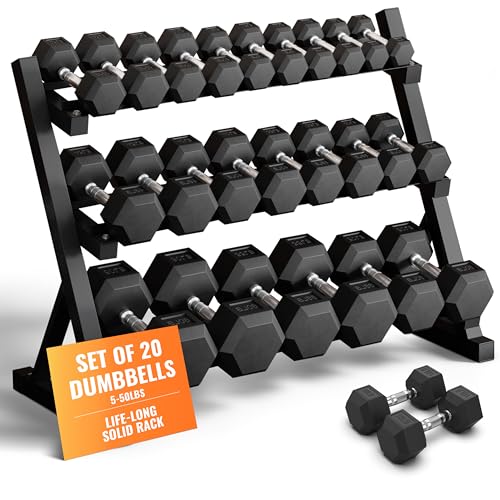
Complete 10-Pair Dumbbell Set – This all-in-one set features 10 pairs of rubber-coated hex dumbbells, including 5LB, 10LB, 15LB, 20LB, 25LB, 30LB, 35LB, 40LB, 45LB, and 50LB weights, totaling 550 lbs. Perfect for progressive strength training and full-body home workouts.
Designing Your Circuit Workout
Crafting an effective circuit workout requires a thoughtful balance of exercise selection, order, and intensity that aligns with our fitness goals and available equipment. Typically, a circuit includes 6–10 exercises performed in a fixed workout order, alternating between body parts like upper-body, lower-body, and core to ensure a balanced stimulus. When selecting exercises, we must consider our space and available equipment, such as bodyweight, resistance bands, or minimal dumbbells. Resistance bands with door anchors offer exceptional versatility for circuit training, providing multiple resistance levels and anchor points that can target various muscle groups without requiring permanent installation. Placing complex, skill-based exercises early in the circuit helps maintain proper form. To allow recovery, consecutive exercises shouldn’t target the same muscle group. Crafting the workout with a focus on strength before endurance ensures we master techniques first, while providing adaptations and progressions accommodates mixed-ability groups.
Recommended Products

PILATES WALL WORKOUT: Originally designed by Joseph Pilates, the Ped-o-Pull features a compact profile that supports a variety of exercises. This revolutionary Pilates equipment takes up minimal space, making it easy to fit in your home or studio.

INDOOR & OUTDOOR - Perfect for various terrains, our Yoga Stand provides a reliable base for activities on both smooth floors and outdoor landscapes. Includes a convenient travel bag and setup videos

The Web Slide Difference. The Web Slide Professional System organizes your clinic and streamlines patient training sessions. Any resistance bands/tubing, pulley devices, or other exercise equipment that utilizes a Web Anchor Strap for door attachment can be set up and ready to go in seconds with a Web Slide Exercise Rail-no door required!
Sample Circuit Workout Routine
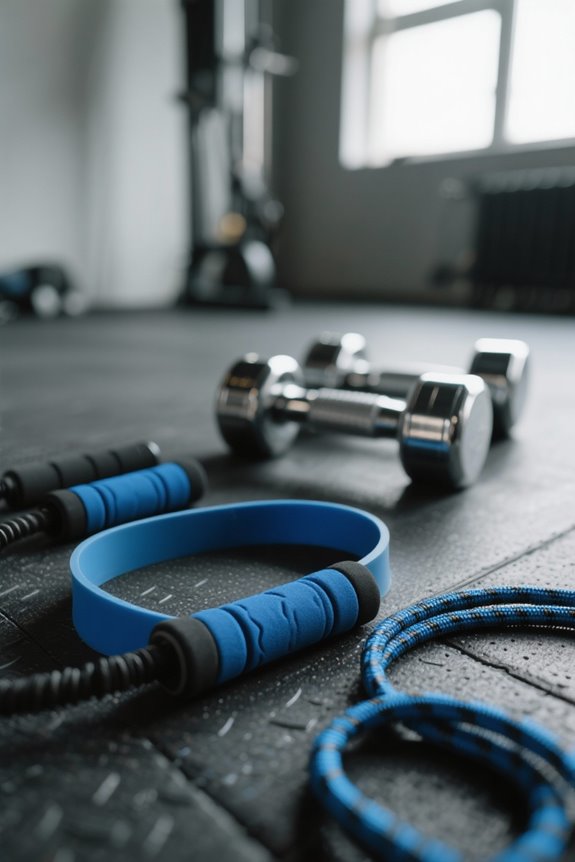
Creating a sample circuit workout routine is a dynamic way to engage multiple muscle groups while maximizing time efficiency. Our workout variations blend bodyweight and minimal-equipment exercises, structured in timed or repetition-based sequences. Each station, like push-ups or burpees, lasts 30 seconds to 3 minutes, with only 20–30 seconds of rest in between. We might repeat the circuit 2-3 times based on our fitness level. Exercise selection is crucial; combining cardio and strength movements, such as jump lunges and tricep dips, ensures a comprehensive session. For a bit more challenge, we incorporate a dumbbell for reverse wood chops or step-up knee raises. Adding resistance bands with handles can further enhance your circuit training by providing adjustable resistance levels from 10 to 50 lbs for customizable strength training exercises. These variations enhance cardiovascular health and muscular endurance, delivering a balanced and efficient workout.
Recommended Products
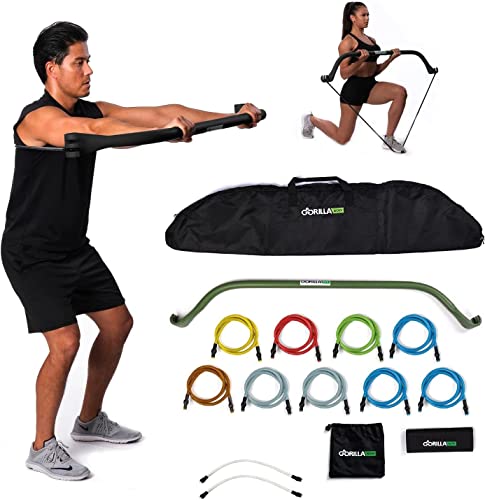
ALL-IN-ONE HOME GYM SYSTEM: Gorilla Bow Original delivers full body strength training with one portable resistance system designed for home, travel, and outdoor workouts, train chest, back, arms, legs, and core without bulky gym equipment while maintaining consistent performance anywhere

HEAVY RESISTANCE KIT: Add variety to your routine with the Balanced Body EXO Chair Functional Resistance Kit. It includes medium and heavy resistance bands for working out, a pair of ergonomic handles, and a pair of single loops for controlled movements.

Complete Full-Body Training Kit: The VITL Kit is an all-in-one portable resistance band training system featuring four Slastix workout bands, swivel belt, foot straps, handles, door anchors, agility dots and carry bag for total workout versatility.
Tips for Safe and Effective Workouts

When embarking on a circuit training journey, prioritizing safety and effectiveness is key to achieving our fitness goals without setbacks. For injury prevention, we should never skip a warm-up. A 5–10 minute session of light cardio and dynamic stretches prepares our muscles and joints for the workout’s demands. In addition, maintaining proper form is crucial. Whether we’re lifting weights or performing bodyweight exercises, using mirrors or videos can help us self-monitor technique and avoid strains. Workout efficiency improves when our environment is safe; ensure equipment is secure and the area is clear of obstacles. Alternating exercises, gradually increasing intensity, and resting appropriately can prevent overuse injuries. Finally, staying hydrated and mindful of our body’s signals enhances both safety and performance. When incorporating resistance bands into circuit training, look for bands with anti-snap technology and non-slip grips to enhance safety during high-intensity exercises.
Recommended Products

Includes a double stroller and two infant car seats, creating the perfect set for twins or siblings; Features comfortable twin seats and a standing platform option, providing a versatile solution for growing families

PROVEN PROTECTION IN EXTREME COLD - With a comfort rating down to -50°F, these RefrigiWear coveralls keep anyone warm and shielded from icy winds.
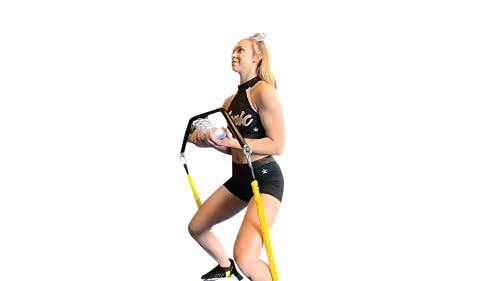
INNOVATOR SPOTLIGHT - With over 20 years of experience, Jason Mason an L-ATC and CSCS, identified the need for safer cheer stunting. His invention, the Stunt Double, empowers bases to build strength and perform lifts with optimal form.
Adapting Circuits for Different Fitness Levels
To effectively adapt circuit training for different fitness levels, it’s essential to consider both the intensity and complexity of exercises. We can modify exercise intensity by adjusting repetitions, duration, and rest periods. Beginners might start with bodyweight versions and longer rests, while advanced exercisers can incorporate weights or plyometrics, reducing rest to boost intensity. Exercise modifications like incline push-ups accommodate lower skill levels, while fitness progressions keep us challenged by increasing circuit rounds or complexity.
Selecting suitable exercises involves including fundamental movements like squats and lunges, with adaptations for beginners and progressions for advanced users. Minimal equipment circuits often use bodyweight and tools like resistance bands. By adjusting the circuit structure, we ensure everyone progresses safely, promoting strength and endurance across all fitness levels. When performing high-intensity movements, proper rubber gym flooring provides essential shock absorption and anti-slip surfaces to prevent injuries during dynamic exercises.
Recommended Products

Scroll to “From the Manufacturer” section for more information and enhanced product details

Made with durable recycled rubber tires that can weather any storm

💪 Best Home Gym Equipment: Includes 5, 10, 15, 20, 25, 30, 35, 40, 45, 50, 55, 60, 65, 70, 75, 80, 85, 90, 95, 100, 105, 110, 115 and 120lb dumbbell pairs, (2) of 3-tier BLUE RACKs and (2) of MATs. You can use these solid dumbbells in a wide range of exercises, also a perfect choice for both beginners or athletes.
Evidence Supporting Circuit Training
Circuit training, a versatile and effective workout method, boasts an impressive array of benefits supported by substantial evidence. Research findings highlight significant improvements in body composition, muscular strength, and cardiorespiratory fitness. For instance, resistance circuit training can reduce body fat by 4.3% and increase muscle mass by 1.9%. It also enhances upper and lower body strength by up to 23%, according to meta-analysis data. Training efficiency is another standout feature; it improves VO2 max by 6.3% and lowers cardiovascular risk factors, including blood pressure and cholesterol. Moreover, circuit training’s time-efficient nature doesn’t compromise results, making it a practical choice for diverse fitness levels. The effectiveness of circuit training can be further enhanced with minimal equipment like adjustable weight benches, which provide versatility for over 100 different exercises while maintaining compact, space-saving designs ideal for home workouts. This evidence showcases circuit training as a comprehensive and effective exercise approach.
Frequently Asked Questions
How Often Should I Do Circuit Training per Week?
We should aim for circuit training three to four times a week, balancing intensity with recovery importance. It’s crucial to manage fatigue and prevent overtraining, ensuring our bodies are ready and refreshed for each session.
Can Circuit Training Help Improve Flexibility?
Yes, it can! Circuit training offers flexibility benefits through dynamic circuit exercises. By targeting multiple muscle groups, we enhance mobility and joint range of motion, making it a great addition to our fitness routine for improved flexibility.
Is Circuit Training Suitable for Seniors?
Like a gentle breeze guiding a sailboat, circuit training is suitable for seniors. Our benefits analysis highlights improved autonomy and strength, while safety precautions ensure low-impact and adaptable routines tailored to individual needs, promoting safe exercise.
How Do I Stay Motivated During Circuit Training?
We can stay motivated during circuit training by setting clear goals and finding accountability partners. Sharing progress and challenges with others keeps us engaged and committed, making the workout experience enjoyable and rewarding. Let’s keep pushing together!
Can Circuit Training Be Combined With Other Workout Types?
You bet! Circuit training’s a jack-of-all-trades, seamlessly blending with other workouts. The benefits? It enhances muscle endurance, post-workout calorie burn, and cardiovascular health. Combining circuits with different routines maximizes efficiency and keeps our fitness journey exciting.