As an Amazon Associate, we earn from qualifying purchases. Some links on this site are affiliate links at no extra cost to you. Our recommendations are based on thorough research and editorial judgment.


Creating a Functional Home Gym in Small Spaces

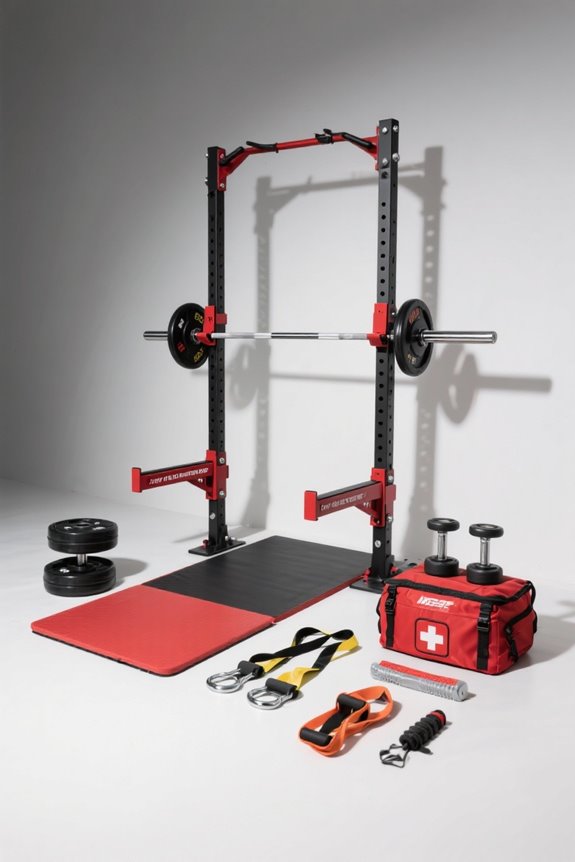
To create a functional home gym in small spaces, we focus on optimizing equipment and layout. Compact solutions like wall-mounted smart gyms provide digital resistance up to 200 lbs and foldable cardio machines that fit under furniture. Vertical shelving and wall-mounted racks keep areas clear, while adjustable dumbbells replace entire sets. Prioritizing recovery with tools like massage guns ensures comprehensive fitness. Use strategic layouts for efficiency and safety, and our strategies can enhance your workout potential.
Key Takeaways
- Utilize wall-mounted smart gyms and fold-away trainers to maximize strength training in limited spaces.
- Incorporate compact cardio machines like foldable treadmills and bikes to save floor space.
- Optimize layout with multi-use zones and ensure clear walkways for efficient movement.
- Employ vertical shelving and wall-mounted racks to organize equipment and free up floor space.
- Select versatile gear like adjustable dumbbells and foldable mats for varied workouts and easy storage.
Selecting Space-Saving Strength Equipment
When it comes to selecting space-saving strength equipment for our home gyms, a few innovative options can help us maximize limited spaces without compromising on workout quality. Wall-mounted smart gyms like the Tonal offer space efficient machines with a slim profile of 21.5″ W x 50.9″ H x 5.25″ D, providing dual purpose weights with digital resistance up to 200 lbs. This system’s AI technology adjusts weights and monitors form, making it a high-tech, compact choice. For those with tight spaces, fold-away functional trainers like the F9 offer dual adjustable cable pulleys and foldable doors, minimizing footprint post-workout. Multi-use free weight equipment, including adjustable dumbbells and collapsible benches, enhance versatility while ensuring efficient storage. Top-rated adjustable dumbbells like NOBELL and Rep Fitness Quickdraw can replace entire dumbbell sets with weight ranges up to 80 lbs, earning user satisfaction ratings above 4.6 stars for their space-saving designs.
Compact Cardio Machines for Tight Areas
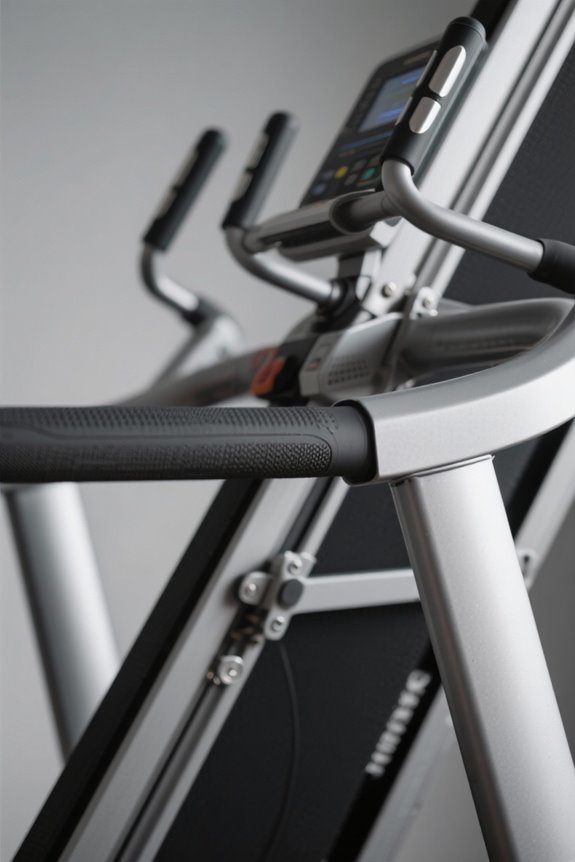
As we shift our focus from strength training to cardiovascular options, compact cardio machines offer remarkable solutions for maximizing tight spaces while maintaining an effective workout routine. Compact treadmills, such as folding models, reduce to about 55 x 29 x 5 inches, making them ideal for apartments. Walking pads, a subtype, fold to 32.5 inches and easily slide under furniture, perfect for low-impact cardio. Additionally, foldable bikes provide a sturdy yet small footprint, reinforced with steel frames, suitable for narrow areas. Recumbent bikes, like the NordicTrack 10, offer ergonomic comfort with lumbar support without sacrificing space. These machines frequently include digital connectivity, enhancing the workout experience. Fitness trampolines provide another excellent compact cardio option, offering the cardiovascular benefits equivalent to an hour of jogging in just 10 minutes of bouncing while featuring foldable designs perfect for small spaces. By integrating these options, we can maintain a comprehensive fitness regimen in even the tightest spaces.
Efficient Layout and Storage Solutions
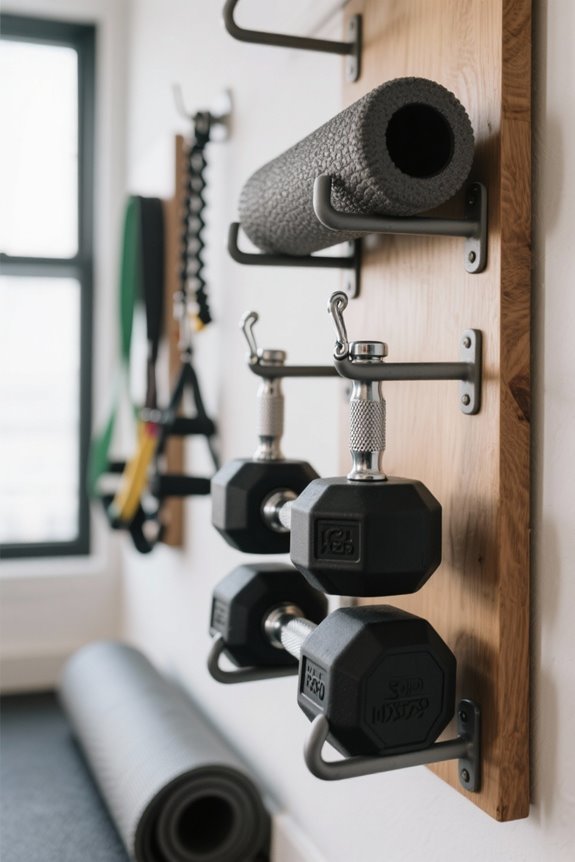
Crafting an efficient layout and storage solution is essential for maximizing the functionality of a home gym in small spaces. To optimize space allocation, we measure the available floor area and ceiling height before selecting equipment. Prioritizing multi-use zones, like combining yoga, weights, and stretching in one area, helps us make the most of every square foot. We visualize equipment placement using floorplans, ensuring clear walkways at least 3 feet wide for safe movement. For storage optimization, wall-mounted racks and pegboards keep resistance bands and jump ropes off the floor, while shelving above head height stores towels and water bottles. Fold-down equipment, like wall-mounted benches, saves floor space, and mirrors enhance the sense of roominess and aid form correction. When selecting weight benches for compact spaces, foldable designs can reduce storage space by up to 80% while still providing the versatility needed for comprehensive strength training routines.
Essential Accessories for Recovery
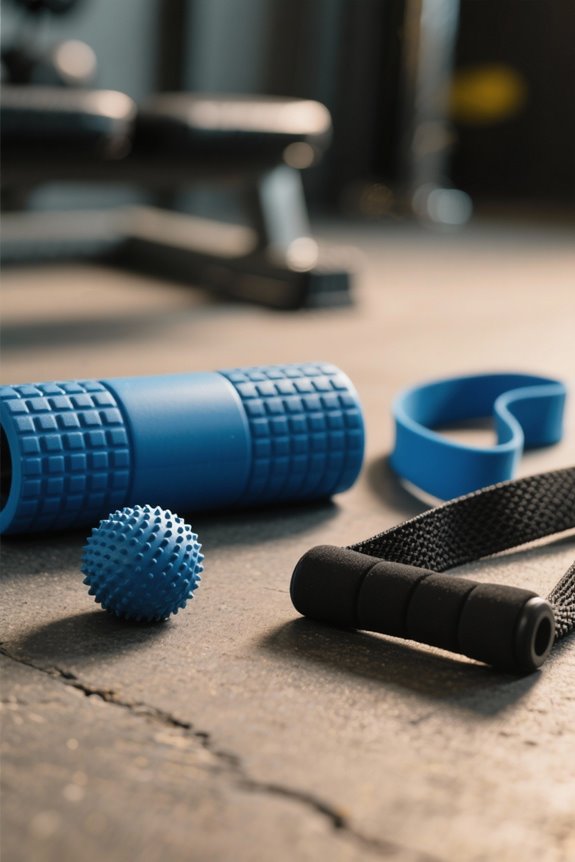
Having set up an efficient layout and storage solution, it’s time to explore the accessories that facilitate recovery in our compact home gym. Let’s dive into some essential tools and recovery strategies. Foam rollers, with their ability to improve blood flow and reduce muscle tension, are a staple. Massage guns deliver percussive therapy, providing muscle relief and boosting circulation. For those seeking advanced recovery, red light therapy devices help reduce inflammation and enhance energy production. Compression boots are great for promoting blood flow and reducing swelling after intense workouts. Vibration recovery tools combine rolling motions with oscillating pulses, offering enhanced effectiveness. When selecting foam rollers for your space-conscious setup, consider models with 3D nodes that provide deep tissue relief while maintaining the compact footprint essential for small home gyms. By incorporating these key tools, we can optimize our recovery routine and maintain peak performance.
Incorporating Bodyweight and Functional Training

When it comes to maximizing our small home gym space, incorporating bodyweight and functional training is not just practical, it’s essential. These workouts require minimal equipment, making them perfect for confined areas. By engaging in bodyweight progression, we can start with exercises like knee push-ups and gradually move to full push-ups, enhancing our strength over time. Functional movements such as squats and push-ups engage multiple muscle groups, mimicking daily activities and improving our overall mobility. Compound exercises like bear crawls and lunges are efficient, engaging muscles for stability and coordination without bulky machines. With emphasis on balance and coordination, these routines support daily function, allowing us to enhance strength, flexibility, and stamina in our home gym environment. For those concerned about hand coordination during grip-intensive exercises, fingerless gloves can provide warmth while preserving the dexterity needed for various workout equipment.
Space-Efficient Cardio Options
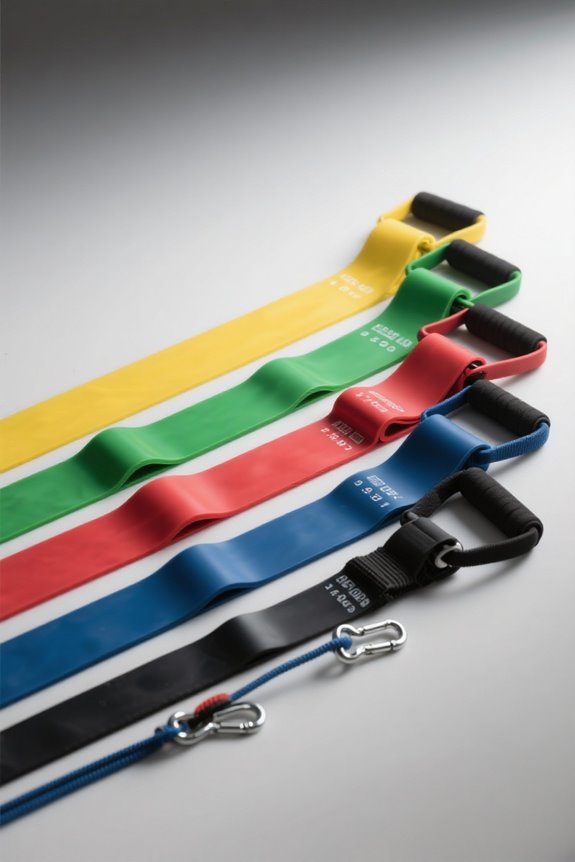
While maximizing limited space for cardio workouts, space-efficient options are our best allies in creating a functional home gym. We can enjoy a cardio variety with equipment that has a minimal footprint. Consider compact treadmills like the Sunny Health & Fitness Folding Treadmill, which fold vertically to just 55 x 29 x 5 inches. For those who prefer cycling, the Marcy Foldable Upright Exercise Bike offers a sturdy design and multiple resistance levels. Mini steppers and walking pads, such as the Sunny Health & Fitness Mini Stepper, fold to sizes that easily slide under furniture. Zero-footprint tools like jump ropes and resistance bands provide intense cardio without occupying space. Resistance bands also offer versatile strength training benefits with adjustable resistance levels from 5 to 225 lbs, making them ideal for targeting multiple muscle groups in minimal space. These solutions ensure our workouts are effective, even in the smallest areas.
Maximizing Safety in Limited Spaces
Creating a safe home gym in limited spaces requires meticulous planning and consideration. We need to implement safety protocols and effective risk management strategies. First, dedicating an enclosed workspace is crucial to restrict access to the equipment, reducing risks for children and pets. Proper flooring, such as rubber or foam, protects both the floor and us during workouts by providing traction. Ensuring the room supports the electrical requirements of our gear prevents overloading, while maximizing natural light can make the space feel more energizing. Let’s not forget soundproofing if the gym is upstairs. Equipment placement is key; we should maintain clear pathways and adhere to user manuals for safe operation. Establishing emergency procedures and keeping a first aid kit nearby ensures we’re prepared for any mishaps.
Versatile Gear for Small-Space Workouts
In small spaces, selecting versatile gear is crucial to creating an effective home gym without sacrificing functionality. Multi-purpose tools like adjustable dumbbells offer a full range of strength training options, replacing several pairs of traditional weights with a single space-saving set. Resistance bands are another excellent choice, providing scalable resistance for adaptable workouts, and they tuck away easily in drawers. Folding weight benches support a range of exercises and can be stored flat. Kettlebells, with their compact design, deliver comprehensive conditioning without taking up much room. For bodyweight exercises, suspension trainers attach to doors or walls, offering extensive exercise possibilities without floor space. Many modern adjustable dumbbells feature quick-change mechanisms that allow for seamless weight transitions during training sessions, maximizing workout efficiency in compact home gyms. These tools allow us to maximize our workout potential while maintaining a tidy and efficient home gym environment.
Choosing Multi-Functional Equipment
When creating a home gym in a compact area, choosing multi-functional equipment is essential to optimize both space and workout efficiency. Multi-station gyms and functional trainers are excellent choices with space saving features. They combine multiple workout stations, like leg press and chest press, into a single footprint, reducing the need for separate machines. User friendly designs, such as adjustable pulleys with 30–39 positions, cater to various exercises and fitness levels. Machines like the REP Fitness Ares 2.0 even offer hundreds of exercises from one unit. Look for equipment that integrates strength and cardio, offering full-body workouts while minimizing clutter. With fold-away designs, these machines ensure that when space is tight, every inch is utilized effectively. Adjustable dumbbells like the FEIERDUN set maximize versatility by functioning as dumbbells, kettlebells, and more, providing a complete workout solution with adjustable weights ranging from 20 to 90 lbs in a compact design.
Creating a Dedicated Exercise Area
Although space constraints can be challenging, a well-planned exercise area can transform any compact environment into an effective home gym. Let’s focus on choosing the optimal location that fosters exercise motivation and respects personal space. We should select areas with ample room for movement, like basements or balconies, ensuring the presence of natural light to enhance our workout mood. Separating this area from relaxation zones minimizes distractions, boosting focus. For those without full rooms, folding dividers or area rugs can define our workout space. Wall-mounted racks or pegboards are excellent for vertical equipment storage, keeping our area clutter-free. Compact equipment like adjustable hand weights or ankle weights can provide effective strength training while requiring minimal storage space. These thoughtful design choices don’t just maximize space—they create a personalized exercise sanctuary, inspiring us to achieve our fitness goals.
Stability and Balance Tools for Core Strength
As we consider the best tools to enhance our core strength, stability and balance equipment emerges as an essential component of any compact home gym. Balance exercises, such as planks on BOSU, leverage tools like stability balls and balance boards to improve core stability. Balance boards, with adjustable tilt angles, cater to various difficulty levels, while stability balls offer an unstable surface, enhancing balance push-ups. BOSU Balance Trainers add fun and effectiveness, supporting diverse exercises. Agility ladders and vibration plates further bolster coordination and core strength. The versatility of these tools means they’re suitable for all fitness levels, offering compact, space-saving options like foldable boards and inflatable discs. When selecting a stability ball, choose one with anti-burst technology to ensure controlled deflation and safety during workouts. Let’s embrace these tools to fortify our core and elevate our workouts.
Using Vertical Space Effectively
In small home gyms, efficiently using vertical space can transform a cluttered area into a functional fitness haven. By incorporating vertical shelving solutions and wall-mounted hooks, we can maximize every inch of space. Multifunctional racks are perfect for storing dumbbells, kettlebells, and barbells vertically, freeing up valuable floor space. Wall-mounted hooks are ideal for hanging resistance bands and yoga mats, keeping them organized and off the ground. Utilizing pegboards for smaller items like TRX straps and jump ropes promotes a clutter-free environment. We should also consider installing corner shelves or racks, optimizing often-wasted corner spaces. Additionally, labeling stored items enhances accessibility, while choosing durable materials ensures that our storage solutions effectively support the weight of various equipment.
Lightweight and Portable Equipment Ideas
Maximizing vertical space is only part of creating an efficient small home gym, and we’ve got to consider lightweight and portable equipment to truly make the most of limited areas. Resistance band workouts are ideal—these ultra-light bands require almost no storage space, offering strength training and stretching with ease. They’re affordable and often come in travel kits with handles and door anchors. For a comprehensive solution, portable gym kits like the Tousains Portable Gym weigh just 1 kg, simulating 90% of common fitness machines. They include adjustable resistance and app support, perfect for tracking progress. Additionally, lightweight suspension trainers provide versatile, full-body workouts using body weight, ensuring our gym setups stay efficient and clutter-free.
Enhancing Flexibility and Mobility
Flexibility and mobility are key components of a well-rounded fitness routine, especially in a small home gym setup. By incorporating mobility techniques and flexibility routines, we can enhance our overall physical function. Effective exercises like the lumbar rotation and prone lumbar twist (scorpion) enhance spinal flexibility and hip mobility. Squats with thoracic twists combine lower and upper body movements, maximizing joint lubrication and flexibility gains. For a full-body routine, the Jefferson curl to walkout stretch targets the posterior chain and core, emphasizing straight legs for hamstring flexibility. Deep goblet squats, with weights held close, improve hip and ankle mobility while building strength—a perfect fit for small spaces. Chair-based exercises, such as leg lifts, offer accessible options, ensuring no space is wasted.
Maintaining Equipment in Small Spaces
When it comes to maintaining equipment in small spaces, we must focus on a few key practices to ensure both longevity and functionality. Preventative maintenance is crucial. First, let’s establish a cleaning routine—wipe down contact surfaces like handles and seats after each workout to prevent sweat buildup. We should air out the space to reduce humidity, using fans if necessary, and keep floors clean by vacuuming or mopping daily. Regular inspections are vital; check bolts and screws weekly for tightness and examine belts and cables for wear. Climate control helps prevent rust and corrosion; using dehumidifiers can manage moisture effectively. Lastly, prioritize organizing equipment to maximize space, storing items vertically or on racks for optimal functionality.
Frequently Asked Questions
How Do I Stay Motivated to Work Out in a Small Home Gym?
We stay motivated by setting visual reminders and partnering with workout buddies. These strategies boost accountability and make exercise enjoyable. Let’s transform our small space into a motivating gym, ensuring we never skip a workout session.
What Are Affordable Options for Small-Space Home Gyms?
We’ve got great affordable options for small-space home gyms. Consider budget equipment like resistance bands or an ab roller. Multi-use furniture, like a folding workout bench, maximizes space and functionality, keeping workouts effective and cost-efficient.
How Can I Soundproof My Home Gym to Avoid Disturbing Neighbors?
We can soundproof our home gym by using soundproofing materials like rubber mats and mass-loaded vinyl. Combine these with noise reduction techniques like installing acoustic panels and door sweeps to minimize disturbance to neighbors effectively.
What Are Some Creative Storage Hacks for Small Fitness Accessories?
We suggest using over-the-door racks for bands and loops. Multi-use furniture like storage ottomans can hide accessories while serving as seating. These hacks maximize space and keep everything organized, making workouts more efficient and enjoyable.
How Do I Create a Workout Schedule That Fits Into a Busy Lifestyle?
Imagine weaving workouts into our daily tapestry. We prioritize and schedule them like vital threads of time management. By setting exercise as a priority, we’re weaving a balanced life, ensuring fitness despite life’s busy demands.