As an Amazon Associate, we earn from qualifying purchases. Some links on this site are affiliate links at no extra cost to you. Our recommendations are based on thorough research and editorial judgment.

Full-Body Resistance Band Routine for Busy Professionals

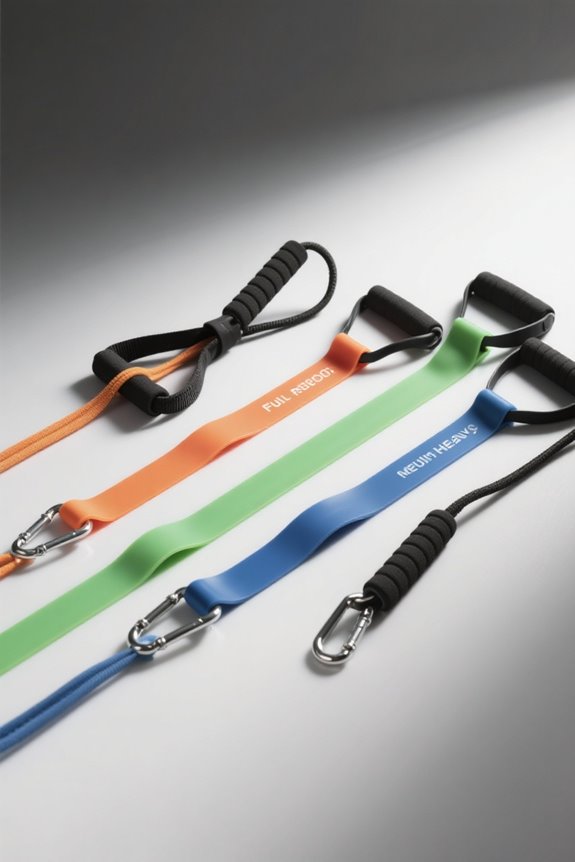
Professional fitness equipment photography captured on Canon EOS R5 with RF 50mm f/1.2L lens at f/2.8. Premium resistance bands in vibrant gradient colors arranged artistically on sleek white minimalist surface. Dramatic studio lighting creates soft shadows, highlighting elastic texture and metal carabiner details. Bands displayed in varying resistance levels – light, medium, heavy – with door anchors and padded handles. Commercial-grade composition features sharp focus on product quality and durability. Professional gradient backdrop transitions from cool gray to warm charcoal, emphasizing versatility for time-efficient workouts.
# Full-Body Resistance Band Routine for Busy Professionals
We can all benefit from incorporating a full-body resistance band routine into our busy days. Resistance bands offer portability, adjustable resistance levels, and engage multiple muscle groups efficiently. Our workouts can be condensed into 10-30 minutes by using circuits and minimizing rest to 30-45 seconds. Exercises like Band Pull-Aparts and Sumo Squats target shoulders, back, glutes, and more. By structuring our sessions this way, we ensure both strength gains and flexibility improvements—there’s still so much to explore!
Key Takeaways
- Choose compound exercises like banded squats and rows to maximize muscle engagement in minimal time.
- Limit workout duration to 10-30 minutes, perfect for busy professionals.
- Utilize circuits or supersets with 30-45 seconds rest to maintain intensity.
- Incorporate exercises such as Band Pull-Apart and Sumo Squat for a comprehensive full-body workout.
- Adjust resistance levels with color-coded bands to accommodate all fitness levels and ensure progressive strength gains.
Benefits of Resistance Band Training for Professionals
When it comes to fitness, resistance band training offers a host of advantages for professionals seeking both efficacy and convenience. Band versatility allows us to target various muscle groups with ease, offering a comparable increase in muscular strength to traditional weights. Beyond strength, bands enhance joint stability by engaging stabilizing muscles, reducing injury risks. Their continuous tension through a full range of motion promotes balanced muscle development and joint health, crucial for those of us juggling busy schedules.
Additionally, the portability and low cost of bands make them ideal for on-the-go workouts—whether at the office or while traveling. With easy-to-adjust resistance levels, they fit seamlessly into our routines, making short, efficient sessions possible even during work breaks. Modern resistance bands offer adjustable resistance levels ranging from as light as 5 pounds to as heavy as 300 pounds, accommodating everyone from beginners to advanced athletes.
Effective Full-Body Resistance Band Exercises

Incorporating resistance bands into our fitness routines opens up a world of full-body exercises that are both effective and convenient. For the upper body, exercises like the Band Pull-Apart and Overhead Pull-Apart target muscles such as the shoulders and lats. Performing 8-12 reps of exercises like the Lat Pull Down and Seated Row effectively strengthens the back and biceps. Meanwhile, for our lower body, the Sumo Squat with Band and Band Glute Bridge focus on enhancing glute and hamstring strength. Performing 10 reps of these exercises helps build stability and strength. The Band Lateral Walk engages hip abductors, while the Single-Leg Deadlift emphasizes balance. These exercises ensure that we cover all major muscle groups efficiently, fitting seamlessly into our busy schedules. The best resistance band sets offer adjustable resistance levels from 10 to 150 lbs, allowing busy professionals to progress from beginner to advanced workouts without needing additional equipment.
Structuring a Time-Efficient Routine

Creating a time-efficient workout routine with resistance bands can easily fit into our busy schedules, optimizing every minute spent. By focusing on effective time management and workout planning, we can ensure our sessions are both productive and swift. Total workout duration can be minimized to just 10-30 minutes, making it manageable for even the tightest schedules. We should incorporate multiple circuits or supersets, reducing downtime and keeping rest periods to just 30-45 seconds. This approach maintains intensity without wasting time. Prioritizing compound exercises, like banded squats and rows, engages multiple muscle groups, further shortening the session. The lightweight and compact design of resistance bands makes them perfect for quick workouts anywhere, whether at home, in the office, or while traveling. Consistency in scheduling workouts helps improve adherence, ensuring we stay on track and make the most of this efficient routine.
Adapting and Progressing With Resistance Bands

While structuring a time-efficient resistance band routine is important, knowing how to adapt and progress with these bands ensures long-term fitness success. Recognizing resistance adaptation is key—once we can complete 12–15 reps with perfect form easily, we should consider progression strategies. Tracking reps, sets, and time-under-tension helps us prevent premature resistance jumps, which can lead to injury.
To increase resistance without changing bands, we can combine lighter bands or adjust our body position to intensify tension. For skill progressions, bands assist us in mastering complex exercises, like pull-ups, by reducing load gradually. Systematic recording of our workouts, including perceived exertion, guides our progression while maintaining technique. Incremental adjustments using color-coded bands ensure safe and effective strength gains. When resistance bands eventually show wear in high-use areas, consider pairing them with supportive equipment like high-density foam mats to protect joints during floor exercises and maintain workout consistency.
Functional and Health Advantages Beyond Strength

When we think about resistance band training, its benefits stretch far beyond just building strength. These bands enhance functional mobility, mimicking real-life movements like lifting and bending, which are crucial for our daily tasks. The variable resistance they offer ensures our muscles engage fully throughout each motion, unlike free weights. This not only improves our balance and coordination but also plays a significant role in injury prevention. By activating core and stabilizer muscles, resistance bands help reduce the risk of falls, especially vital for aging or sedentary professionals. Moreover, their elastic nature minimizes joint stress, making them ideal for anyone with joint pain or previous injuries. For professionals working out at home, combining resistance band training with proper cushioning and shock absorption from quality exercise mats can further reduce joint stress and enhance comfort during floor-based exercises. These qualities underscore why resistance bands are an excellent choice for comprehensive fitness.
Practical Tips for Incorporating Resistance Bands Into Your Day
As we explore practical tips for incorporating resistance bands into our daily routines, it’s clear that their accessibility and versatility make them an indispensable fitness tool. Resistance bands fit easily into a briefcase or desk drawer, allowing us to integrate quick workouts during the day. Band storage is simple, ensuring they’re always on hand. To maximize their use, begin with light resistance, gradually increasing as strength builds. This helps avoid strain and allows for effective exercise modifications. We can perform exercises like seated rows at our desks or quick sets of squats during breaks, seamlessly fitting fitness into our schedules. Whether in a home office or traveling, these bands transform small spaces into versatile workout areas, making consistent exercise achievable. For those recovering from workplace-related strain or injuries, resistance bands serve as an effective tool for physical rehab exercises to strengthen muscles and improve mobility safely.
Frequently Asked Questions
How Do I Care for and Maintain My Resistance Bands to Ensure Longevity?
Let’s treat our resistance bands like precious vines, nurturing them with proper cleaning techniques and storage tips. We rinse, pat dry, and store them coolly, away from sunlight, ensuring they’re always ready to support our fitness journey.
Can Resistance Bands Be Used for Rehabilitation After an Injury?
Yes, we can definitely use resistance bands for rehabilitation exercises. They’re great for injury prevention, offering controlled tension and low-impact resistance. These bands help us safely strengthen muscles and improve range of motion after an injury.
Are There Specific Resistance Bands Recommended for Beginners Versus Advanced Users?
Let’s choose beginner bands like X-light or light for learning form, while advanced bands, such as heavy or extra-heavy, are for those who’ve mastered technique. Stacking or doubling bands can also increase resistance for experienced users.
How Can I Ensure I’m Using the Correct Form With Resistance Band Exercises?
We can ensure correct form by using mirrors for form checks and posture alignment. Did you know 70% of injuries stem from improper form? Let’s prioritize safety and effectiveness by focusing on technique while exercising.
What Should I Do if My Resistance Band Snaps During a Workout?
If our resistance band snaps, let’s stop exercising right away. Safety tips include checking for injuries. Discard the broken band and consider replacement options. A backup band or alternative tool keeps us safe and maintains workout continuity.