As an Amazon Associate, we earn from qualifying purchases. Some links on this site are affiliate links at no extra cost to you. Our recommendations are based on thorough research and editorial judgment.

4-Week Beginner Dumbbell Training Program for Home Workouts

Our 4-week beginner dumbbell training program offers a structured approach with 3-4 workouts per week, focusing on muscle groups like chest, back, and arms. Using adjustable or fixed dumbbells, sessions lasting 20-45 minutes include compound and unilateral movements. Prioritize progressive overload for muscle adaptation, increasing weight or reps by 10% weekly. Safety, nutrition, and rest are vital for recovery. Adopting this regimen can transform your fitness journey, inspiring a commitment to lifelong health and strength.
Key Takeaways
- The program includes 3-4 workouts per week with dedicated rest days for recovery.
- Each session focuses on specific muscle groups: chest/back, arms, legs/abs, and shoulders.
- Workouts last 20-45 minutes, incorporating compound and unilateral movements.
- Use adjustable dumbbells for space-saving and progressive overload in workouts.
- Warm-ups and cool-down stretches are essential for safety and muscle recovery.
Program Overview
When embarking on a dumbbell training program at home, it’s crucial to understand the structure and weekly layout to ensure balanced progress and recovery. Our program spans four weeks, with 3-4 workouts weekly, integrating rest days for optimal recovery. We focus on goal setting and adopting a training mindset, crucial for tracking progress and staying motivated. Sessions last 20-45 minutes, featuring full-body or targeted muscle group workouts, using compound and unilateral movements like dumbbell squats and single-arm rows. Weekly, we adjust variables—like increasing weights or reducing rest intervals—to challenge muscles and enhance strength, endurance, and muscle symmetry. By setting clear goals and maintaining a dedicated mindset, we maximize the benefits of our home-based dumbbell training journey. For optimal progression, consider investing in adjustable dumbbells that can range from 5 to 55+ lbs, allowing you to incrementally increase resistance as your strength develops throughout the program.
Essential Equipment

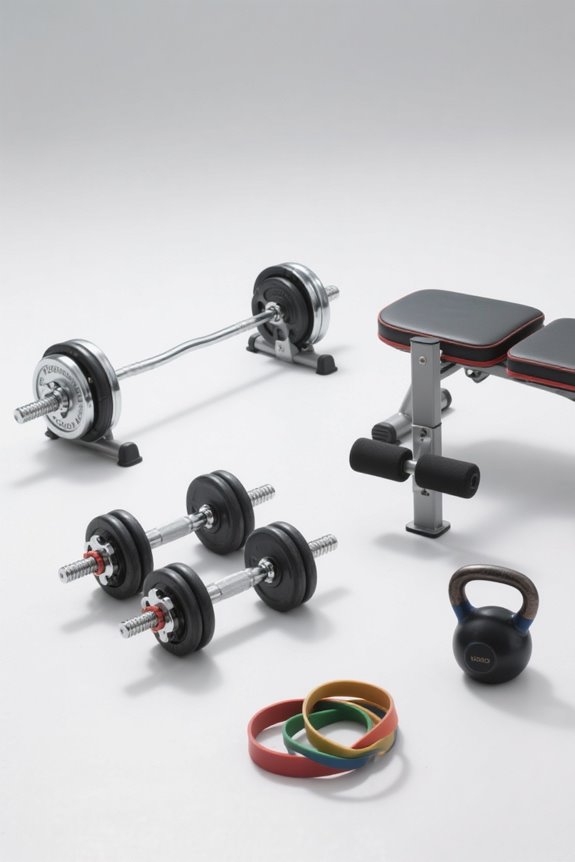
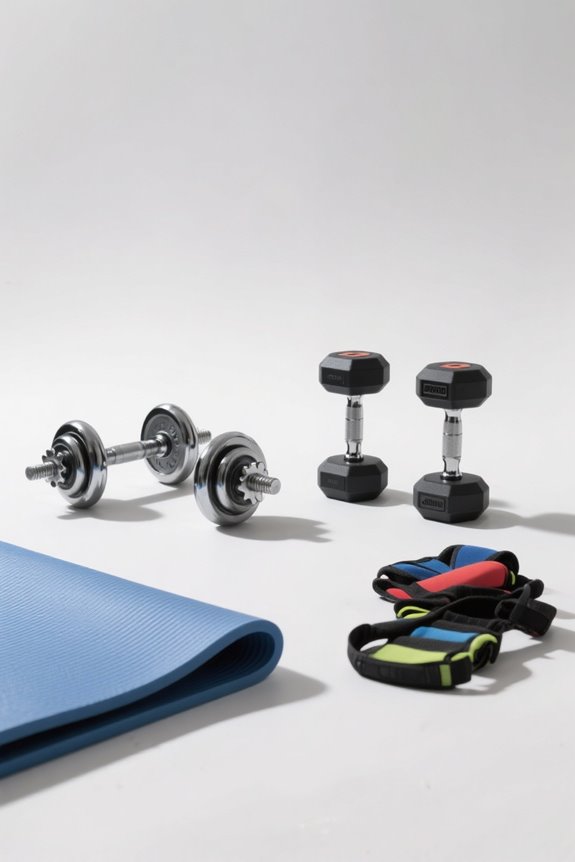
Selecting the right equipment is crucial for a successful dumbbell training program, and understanding the types of dumbbells available can make all the difference in optimizing your workouts at home. We’ve got options like adjustable and fixed dumbbells. Adjustable models are space-saving wonders, offering weight ranges from 5 to 55 pounds, perfect for various exercises. They also feature ergonomic handles ensuring a secure grip, enhancing safety and comfort during workouts.
Materials matter, too. You’ll find dumbbells in iron, rubber-coated, and chrome-plated varieties, each providing durability and aesthetic appeal. Rubber-coated options protect floors, while hexagonal designs prevent rolling. Maintaining our equipment’s quality is essential; regular cleaning and a dedicated dumbbell rack will keep them organized and ready for action.
Top-rated models like NOBELL and Rep Fitness achieve user satisfaction ratings above 4.6 stars, indicating their effectiveness and reliability for home gym setups.
Recommended Products

Home Gym Equipment Weight Set:Includes 5, 10, 15, 20, 25, 30, 35, 40, 45, 50, 55, 60, 65, 70, 75, 80, 85, 90, 95, and 100lb dumbbell pairs, (2) of 3-tier racks and (2) of mats. You can use these solid dumbbells in a wide range of exercises, also a perfect choice for both beginners or athletes.

CONTENTS: 5lb to 75lb Urethane Dumbbell Set (15 dumbbell pair total) with 3-tier commercial dumbbell rack.

💪 Best Home Gym Equipment: Includes 5, 10, 15, 20, 25, 30, 35, 40, 45, 50, 55, 60, 65, 70, 75, 80, 85, 90, 95, and 100lb dumbbell pairs, (2) of 3-tier BLUE RACKs and (2) of MATs. You can use these solid dumbbells in a wide range of exercises, also a perfect choice for both beginners or athletes.
Weekly Workout Structure

With our equipment ready and organized, let’s outline a weekly workout structure that maximizes the potential of our dumbbell training program at home. Our weekly workout will consist of four days, ideally on Monday, Wednesday, Friday, and either Saturday or Sunday, allowing for rest days in between to promote muscle recovery. Program adaptation is key; our schedule can be flexible to suit personal preferences and availability. Each session incorporates supersets to target multiple muscle groups simultaneously, with varied tempos and reps to enhance muscle engagement. We’ll focus on specific groups like chest and back, arms, legs and abs, and shoulders. Always start with a warm-up and end with cool-down stretching to prevent soreness, ensuring a safe and effective workout routine.
Recommended Products

Patented Smith Bar & Weight Multiplier System - Selectorized smith bar with weight stack system that multiplies resistance up to 330 lb. No need for a spotter or olympic weight plates.
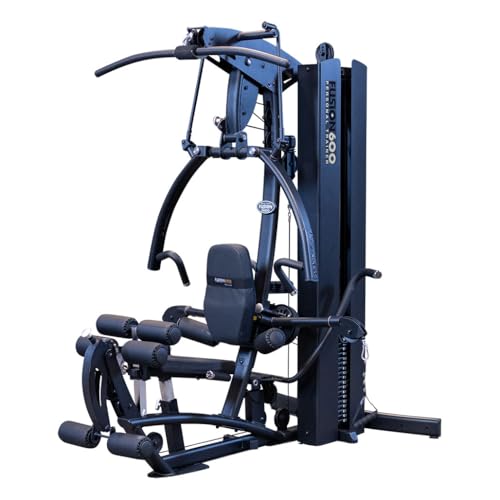
"INDUSTRY LEADER: For 30+ years, Body Solid has held the widest array of products designed to meet the demands of the ever-changing fitness industry (home gym, free weight machines, treadmills, bikes, ellipticals, weight plates, kettlebells, dumbbells, flooring, accessories and more). Our products are cutting edge and reliable and are built for Life……Your Life."

Full-Body Strength Training: The Speediance Gym Monster 2 combines a power cage, Smith machine, squat rack, bench rack, cable machine, and pulley system into one compact home gym for versatile strength training and full-body workouts.
Beginner Workout Examples

Beginner workouts can be both effective and accessible, providing a solid foundation for those new to dumbbell training. Let’s explore some exercise variations to get us started. Full-body movements like the goblet squat and shoulder press engage multiple muscles, boosting overall strength. For the lower body, exercises like the dumbbell split squat and step-up target the quadriceps and glutes, enhancing stability and power. Upper body exercises such as the dumbbell bench press and bent-over row focus on building chest and back muscles, rounding out our routine. Core stability is also key, with movements like the dumbbell woodchop. To further enhance workout intensity and calorie-burning potential, consider incorporating adjustable weighted vests that can be customized from 4 to 32 pounds depending on your fitness level. Before diving in, it’s crucial to integrate warm-up routines to prepare our muscles, reduce injury risk, and enhance performance.
Recommended Products

What's included: 5, 10, 15, 20, 25, 30, 35, 40, 45, 50, 55, 60, 65, 70, 75 lb pairs of urethane coated dumbbells and two 3-tiered racks

2100 lbs Weight Set with Dumbbell Rack: Includes 20 pairs of rubber hex dumbbells from 5 to 100 lbs. Dumbbell pairs in 5, 10, 15, 20, 25, 30, 35, 40, 45, 50, 55, 60, 65, 70,75, 80, 85, 90, 95 and 100 lbs. offer a versatile range of strength training exercises that's perfect for home gyms or professional settings. These hand weights provide the right free weight for different fitness levels and exercises, helping you reach your fitness goals faster

Multifunctional Smart Home Gym System: Speediance revolutionizes your workout by bringing the gym directly to your home. Our all-in-one home gym system seamlessly integrates cardio and strength training into your living room for a full-body workout
Importance of Progressive Overload

As we lay the groundwork with beginner workouts, it’s important to understand the role of progressive overload in advancing our strength training journey. This principle, crucial for muscle adaptation, involves gradually increasing training intensity to promote growth and prevent plateaus. By steadily escalating resistance, reps, or workout complexity, we compel our bodies to adapt and grow stronger. Not only does this enhance muscle size and strength, but it also boosts metabolic stress, a key driver of hypertrophy.
To apply progressive overload effectively, we should track our workouts, aiming for no more than a 10% increase in weight, reps, or intensity weekly. This ensures safe adaptation. Remember, form is paramount; always prioritize technique over heavier weights to minimize injury risks. Adjustable dumbbells with wide weight ranges accommodate various fitness levels and make it easy to implement progressive overload by allowing quick weight adjustments as you advance through your training program.
Targeted Exercises for Each Muscle Group
Exploring targeted exercises for each muscle group not only optimizes our workout efficiency but also ensures balanced muscle development. In strength training, activating specific muscles is key to progress. For our chest, exercises like the Dumbbell Chest Press and Incline Dumbbell Fly activate the pectorals and triceps, enhancing muscle growth and strength. Our back benefits from movements such as the Dumbbell Bent-Over Row, engaging the latissimus dorsi and rhomboids. To build shoulder strength, the Dumbbell Shoulder Press and Lateral Raise effectively target the deltoids. For leg development, Dumbbell Squats and Lunges focus on the quads, hamstrings, and glutes. Each exercise, executed with precision, maximizes muscle activation and contributes to a comprehensive strength training regimen. To get started with your home workouts, consider investing in neoprene coated dumbbells that provide a comfortable, non-slip grip and prevent rolling during floor exercises.
Recommended Products

Freight Delivery: You must provide an accurate phone number and delivery address on the order so the freight carrier can contact you to schedule the delivery.

1200 lbs Weight Set with Dumbbell Rack: Includes 15 pairs of rubber hex dumbbells from 5 to 75 lbs. Dumbbell pairs in 5, 10, 15, 20, 25, 30, 35, 40, 45, 50, 55, 60, 65, 70 and 75 lbs. offer a versatile range of strength training exercises that's perfect for home gyms or professional settings. These hand weights provide the right free weight for different fitness levels and exercises, helping you reach your fitness goals faster

INDUSTRY LEADER: For 30+ years, Body Solid has held the widest array of products designed to meet the demands of the ever-changing fitness industry (home gym, free weight machines, treadmills, bikes, ellipticals, weight plates, kettlebells, dumbbells, flooring, accessories and more). Our products are cutting edge and reliable and are built for Life……Your Life.
Safety and Recovery Tips
In any effective dumbbell training program, prioritizing safety and recovery is essential to maximize results and prevent injuries. We should always start with a proper warm-up, incorporating dynamic stretches and light cardio to prepare our muscles. Using correct form and technique is crucial for injury prevention, while gradually increasing weight load helps prevent strain. A clear workout environment minimizes tripping hazards, and a spotter provides extra support when lifting heavier weights.
For recovery strategies, a cool-down routine, involving gentle stretching, aids in muscle recovery. Allowing a 48-hour rest period between intense workouts promotes muscle growth. Listening to our body and stopping if pain occurs can prevent injuries. Regular stretching enhances flexibility, further reducing injury risk, while balanced training avoids overtraining, ensuring effective muscle strengthening. When working out in cold environments or during cooler seasons, wearing fingerless gloves can help maintain dexterity for proper grip while keeping hands warm during exercises.
Recommended Products

Robust & Stable Design: Built with 2x2-inch commercial-grade steel uprights, the Drone3 smith machine provides unmatched stability and durability for all your workouts. With a 2,500-lb capacity, this power cage handles your toughest routines and is adaptable to most standard gym accessories

【All-in-one home fitness system】This multi-functional home fitness equipment integrates a power cage, cable crossover machine, pull-up station, cable station, and squat rack to give you a full-body workout at home. Whether you're focusing on strength, endurance or muscle building, the L04 Fitness Station has your fitness needs covered.
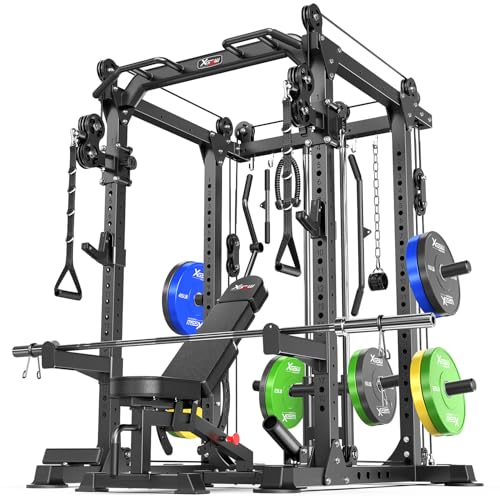
【Sturdy and Durable Home Fitness Station】The home fitness system is made of heavy-duty steel frame, which ensures structural stability and durability. With a footprint of 62.7 “L x 59.8 ‘W x 83.4 ’H, L02, and a total bare machine weight of 590 lbs, it can withstand up to 1500 lbs of weight during training with great stability.
Nutrition and Lifestyle Considerations
When embarking on a dumbbell training program, understanding the role of nutrition and lifestyle can greatly enhance our results and overall experience. Meal timing is crucial; consuming a balanced meal with carbohydrates, protein, and fat 2 to 3 hours before training ensures optimal energy. For quick energy, a smaller snack 30 to 90 minutes prior can be effective. Hydration strategies should start well before exercise, maintaining fluid balance for peak performance. Post-workout, a meal or snack with carbohydrates and protein within 30 to 60 minutes aids in glycogen replenishment and muscle repair. Let’s prioritize whole foods over processed ones, as they provide essential nutrients. By managing our macronutrient balance and caloric intake, we support muscle growth and recovery efficiently. Creating a comfortable workout environment with a large exercise mat provides the necessary space and cushioning for floor-based dumbbell exercises and stretching routines.
Maintaining Long-Term Fitness Consistency
Although maintaining long-term fitness consistency might seem daunting at first, it’s entirely achievable with the right strategies in place. First, habit formation is crucial; building exercise routines through repetition and positive reinforcement helps make workouts second nature. To keep motivation maintenance high, we should set SMART goals—specific, measurable, achievable, relevant, and time-bound—that provide a clear path forward. Utilizing accountability systems, like journals or fitness apps, is key in tracking progress, offering visible evidence of improvements and keeping us motivated. Additionally, incorporating a variety of exercises into our routine prevents boredom and sustains engagement. Finally, having a solid support system encourages commitment, enhancing our ability to stick with the program. For home workouts targeting core development, consider investing in ab mats that provide excellent lower back support and can enhance exercises like crunches, sit-ups, and leg lifts while maintaining proper spine alignment. By doing so, we ensure a sustainable fitness journey.
Frequently Asked Questions
How Do I Stay Motivated Throughout the 4-Week Program?
We stay motivated by setting clear goals and tracking our progress. Let’s find a workout buddy for accountability and support. Celebrating small wins and adjusting goals keeps our momentum strong throughout the 4-week program.
Can I Modify the Program if I Have Joint Issues?
Absolutely, let’s tailor the program to fit like a glove! We can incorporate joint-friendly modifications and low-impact options, like box squats and glute bridges, ensuring our journey remains smooth and enjoyable, while minimizing joint strain.
Are There Alternative Exercises for Limited Mobility?
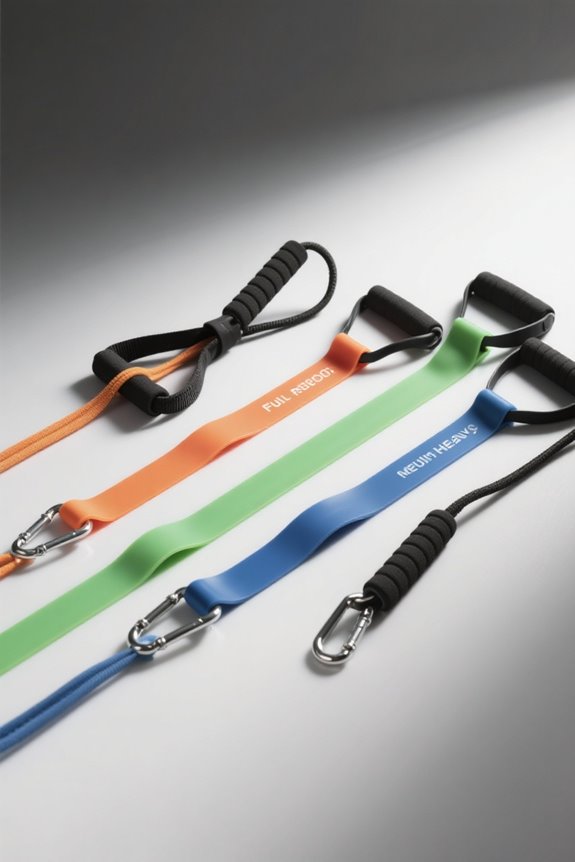
Absolutely, we can explore alternative exercises for limited mobility. Resistance bands and chair exercises are fantastic options. They offer support and adaptability, allowing us to strengthen muscles and improve flexibility without putting stress on our joints.
What Should I Do if I Miss a Workout Day?
If we miss a workout day, let’s not stress. We’ll reset our schedule and jump back in as soon as possible. Consistency matters, not perfection. Use the missed time to rest or try a lighter activity.
How Can I Track My Progress Effectively?
“Slow and steady wins the race.” Let’s use progress journals and workout apps to log exercises, track improvements, and stay motivated. Consistently reviewing our data ensures we’re on the right path toward our fitness goals.