As an Amazon Associate, we earn from qualifying purchases. Some links on this site are affiliate links at no extra cost to you. Our recommendations are based on thorough research and editorial judgment.


How Dumbbell Training Improves Muscle Symmetry

We’ve found that dumbbell training significantly improves muscle symmetry. It targets unilateral imbalances, enhancing muscle growth and correcting discrepancies by focusing on weaker sides. It bolsters stabilizer and antagonist muscle activation, greatly benefiting exercises like single-arm curls. With dumbbells, we enjoy a natural range of motion, which enhances joint health and promotes balanced muscle activation. These attributes lead to symmetrical aesthetics and robust functional performance. There’s so much more to explore in the world of dumbbell training.
Key Takeaways
- Dumbbell training enhances muscle activation, promoting balanced growth and visual symmetry.
- Unilateral exercises reduce muscle imbalances by targeting weaker, non-dominant sides.
- Increased range of motion in dumbbell exercises recruits more muscle fibers for symmetry.
- Enhanced stabilizer muscle activation during dumbbell workouts minimizes compensatory movements.
- Adjustable dumbbells provide varied resistance, ensuring balanced development across muscle groups.
Unilateral Loading and Imbalance Correction
When it comes to achieving muscle symmetry, unilateral loading plays a crucial role in correcting imbalances. Through unilateral training, we can significantly improve asymmetry reduction by focusing on one limb at a time. This approach not only targets the weaker, non-dominant side but also enhances muscle activation, particularly during exercises like the single-leg countermovement jump. Studies show that unilateral plyometric training can lead to moderate improvements in lower limb asymmetry, boosting jump performance. By using this method, we’re delivering high-acceleration stimuli which enhance joint stability and explosive power. Over a period of 4–12 weeks, training at moderate to high intensity helps reduce interlimb activation imbalances. To maximize the effectiveness of unilateral dumbbell training while maintaining proper form, incorporating wrist support can help reduce fatigue and prevent injury during heavy lifting sessions. Thus, unilateral training is essential for balanced strength and symmetry.
Recommended Products

Home Gym Equipment Weight Set: Includes 5, 10, 15, 20, 25, 30, 35, 40, 45, 50, 55, 60, 65, 70 and 75lb dumbbell pairs, 3-tier rack and mat. You can use these solid dumbbells in a wide range of exercises, also a perfect choice for both beginners or athletes.

1200 lbs Weight Set with Dumbbell Rack: Includes 15 pairs of rubber hex dumbbells from 5 to 75 lbs. Dumbbell pairs in 5, 10, 15, 20, 25, 30, 35, 40, 45, 50, 55, 60, 65, 70 and 75 lbs. offer a versatile range of strength training exercises that's perfect for home gyms or professional settings. These hand weights provide the right free weight for different fitness levels and exercises, helping you reach your fitness goals faster

PRECISE WEIGHT SELECTION – 180 TO 780LB: Tailor your training exactly. The 650LB set includes pairs from 10LB to 55LB: 10, 15, 20, 25, 30, 35, 40, 45, 50, 55LB. Choose from multiple weight ranges (180LB to 780LB) for linear progression, periodization, or simply having the right weight for every exercise.
Enhanced Stabilizer and Antagonist Muscle Activation
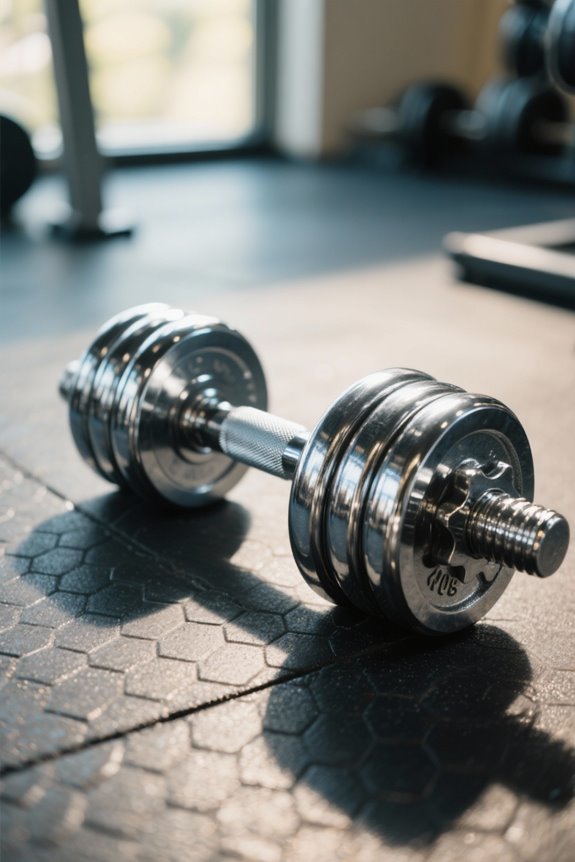
As we focus on achieving muscle symmetry, it’s important to highlight how dumbbell training enhances stabilizer and antagonist muscle activation. With exercises like dumbbell flyes and bench presses, we see a substantial increase in antagonist engagement, such as a 57-86% rise in biceps activation compared to barbell equivalents. This increased activation is due to higher internal torque demands on shoulder stabilizers, resulting in significant coactivation. Moreover, dumbbell exercises boost stabilizer activation, increasing electromyographic activity in muscles like the rotator cuff, improving joint proprioception and neuromuscular control. By training with dumbbells, we not only foster balanced muscle development and symmetry but also enhance joint stability through increased stabilizer and antagonist engagement, aiding in injury prevention and overall muscle balance. Many modern adjustable dumbbells feature non-slip grips and ergonomic designs that further enhance control and safety during these stabilizer-activating movements.
Natural Range of Motion and Joint Adaptability

In pursuit of optimal joint health and function, dumbbell training offers a natural range of motion that promotes joint adaptability. By allowing each limb to move independently, dumbbells enhance joint mechanics, accommodating the body’s natural paths and optimizing flexibility training. This approach improves joint mobility and flexibility, crucial for maintaining joint health and function. Through full range of motion exercises, we engage muscles in their lengthened positions, promoting hypertrophy while improving joint stability. Dumbbells also facilitate unilateral training, reducing imbalances and compensations often seen with dominant side bias. As we progressively overload, connective tissues are strengthened, enhancing joint elasticity and resilience. These benefits collectively reinforce joint adaptability, vital for dynamic training and daily activities, reducing injury risk and supporting overall joint integrity. Quality adjustable dumbbells with ergonomic grips further enhance safety and comfort during extended workouts, allowing for seamless progression across different strength levels.
Recommended Products

Home Gym Equipment Weight Set:Includes 5, 10, 15, 20, 25, 30, 35, 40, 45, 50, 55, 60, 65, 70, 75, 80, 85, 90, 95, and 100lb dumbbell pairs, (2) of 3-tier racks and (2) of mats. You can use these solid dumbbells in a wide range of exercises, also a perfect choice for both beginners or athletes.

💪 Best Home Gym Equipment: Includes 5, 10, 15, 20, 25, 30, 35, 40, 45, 50, 55, 60, 65, 70, 75, 80, 85, 90, 95, and 100lb dumbbell pairs, (2) of 3-tier BLUE RACKs and (2) of MATs. You can use these solid dumbbells in a wide range of exercises, also a perfect choice for both beginners or athletes.

FEATURES: Synchronized articulating functional training arms with range extending from upper ab exercises to side accessed workouts
Regional Muscle Hypertrophy and Symmetrical Growth

Dumbbell training’s ability to enhance joint adaptability naturally leads us to consider its role in regional muscle hypertrophy and achieving symmetrical growth. By focusing on regional hypertrophy, we can target specific muscle segments, ensuring balanced development across muscle groups. For instance, dumbbells allow unilateral loading, forcing each limb to work independently, which reduces compensatory dominance and encourages even growth. This approach is supported by EMG data, which shows dumbbells activate stabilizers and prime movers more evenly than fixed implements, like barbells. The greater range of motion possible with dumbbells, such as a deeper stretch in a chest press, recruits more muscle fibers. This recruitment promotes balanced hypertrophy, helping correct asymmetries and contributing to a well-proportioned physique. Modern adjustable dumbbells with 2.5 or 5 lb increments enable precise progressive overload for targeted muscle development, making them essential tools for achieving optimal muscle symmetry in home gym settings.
Functional Strength and Everyday Performance
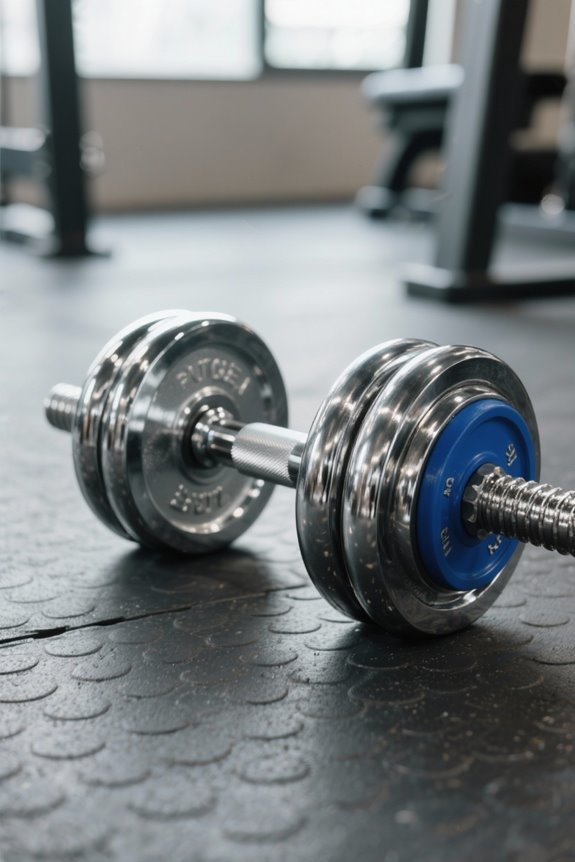
When it comes to building functional strength for everyday performance, dumbbell training offers a comprehensive approach that’s hard to beat. By mimicking natural movement patterns like bending and squatting, dumbbells ensure our joints move through their full range, enhancing mobility and joint health. This not only boosts our muscle endurance but also provides functional flexibility. Unilateral exercises allow us to develop balanced strength on each side, making it easier to perform asymmetrical tasks like carrying groceries or climbing stairs. Dumbbell workouts also enhance intermuscular coordination, crucial for complex movements. The constant engagement of core muscles during these exercises supports better posture and stability. Cast iron dumbbells with hexagonal shapes prevent rolling during exercises, providing additional safety and stability for floor-based movements. Ultimately, dumbbell training equips us with the strength and flexibility needed for daily life.
Practicality and Accessibility of Dumbbells
Although often underestimated, dumbbells offer unmatched practicality and accessibility that make them an ideal choice for strength training. Their cost savings are notable, as dumbbells generally come with lower upfront costs than bulky gym machines. An initial investment in adjustable dumbbells provides a range of weights, eliminating the need for multiple separate sets, thus optimizing both cost and space. For user convenience, dumbbells require minimal technical knowledge and are easy to store in small spaces like apartments or home gyms. They’re portable, allowing us to train wherever we choose without being tied to a gym. This flexibility suits diverse users, whether we’re beginners or seasoned athletes, making strength training accessible to all, regardless of socioeconomic backgrounds or physical abilities. Modern adjustable dumbbells can accommodate weights up to 80 lbs with quick adjustment mechanisms, making them suitable for users across all fitness levels from novice to advanced lifters.
Recommended Products

Multifunctional Smart Home Gym System: Speediance revolutionizes your workout by bringing the gym directly to your home. Our all-in-one home gym system seamlessly integrates cardio and strength training into your living room for a full-body workout

INDUSTRY LEADER: For 30+ years, Body Solid has held the widest array of products designed to meet the demands of the ever-changing fitness industry (home gym, free weight machines, treadmills, bikes, ellipticals, weight plates, kettlebells, dumbbells, flooring, accessories and more). Our products are cutting edge and reliable and are built for Life……Your Life.

What you will get: Two adjustable dumbbell 90lbs(80lbs with 10lb additional plates) and One Upgrade 4in1 Weight Bench. They will be shipped out in three separate packages.
Preventing Dominant-Side Compensation
Preventing dominant-side compensation is crucial to achieving balanced muscle development, and dumbbells are particularly effective in this area. By promoting balanced muscle activation, dumbbells require us to engage both sides of our body, reducing reliance on our dominant side. Unilateral training, where we train one side independently, helps identify and correct muscle imbalances effectively. This approach highlights any discrepancies in strength or size, allowing targeted improvements.
Furthermore, dumbbells engage stabilizer muscles more than barbells, enhancing balance and symmetry. Their mimicry of natural movement patterns minimizes compensatory movements from the dominant side, fostering functional strength. This strength translates well into sports and daily activities, ensuring we perform optimally without unnecessary muscle compensation. For those seeking portable alternatives to traditional weights, resistance bands can complement dumbbell training by providing adjustable resistance levels that support unilateral exercises and help maintain muscle balance during travel or home workouts. Thus, dumbbell training supports a well-rounded, symmetrical physique.
Recommended Products

INDUSTRY LEADER: For 30+ years, Best Solid has held the widest array of products designed to meet the demands of the ever-changing fitness industry (home gym, free weight machines, treadmills, bikes, ellipticals, weight plates, kettlebells, dumbbells, flooring, accessories and more). Our products are cutting edge and reliable and are built for LifeYour Life.

INDUSTRY LEADER: For 30+ years, Body Solid has held the widest array of products designed to meet the demands of the ever-changing fitness industry (home gym, free weight machines, treadmills, bikes, ellipticals, weight plates, kettlebells, dumbbells, flooring, accessories and more). Our products are cutting edge and reliable and are built for Life……Your Life.
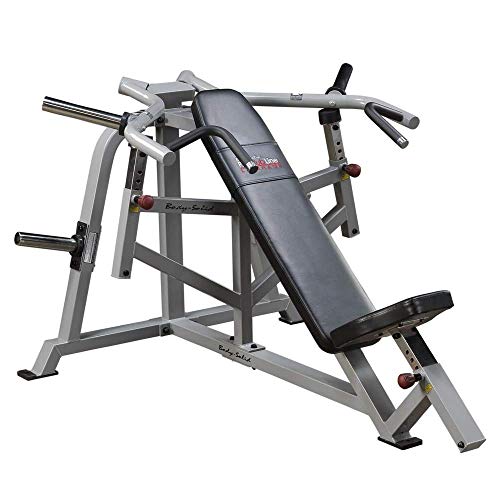
INDUSTRY LEADER: For 30+ years, Body Solid has held the widest array of products designed to meet the demands of the ever-changing fitness industry (home gym, free weight machines, treadmills, bikes, ellipticals, weight plates, kettlebells, dumbbells, flooring, accessories and more). Our products are cutting edge and reliable and are built for Life……Your Life.
Promoting Aesthetic Symmetry
To truly promote aesthetic symmetry, dumbbell training offers an unmatched approach that encourages balanced muscle activation and growth. By allowing each limb to move independently, dumbbells help ensure that our muscle proportions develop evenly, preventing any visual imbalance. This approach activates more muscle fibers than barbell exercises, fostering balanced hypertrophy. Unilateral exercises, where we focus on one side at a time, are key to addressing any size or strength discrepancies. They enhance our mind-muscle connection, highlighting areas needing improvement. With dumbbells, we can also experience a greater range of motion, which helps deepen muscle engagement and refine muscle shape. This flexibility in movement ensures that our entire muscular framework contributes to a visually balanced, symmetrical physique. To maximize the effectiveness of these symmetry-building exercises, incorporating adjustable incline benches allows for multiple backrest positions that can target various muscle groups at different angles, enhancing the precision of unilateral training.
Recommended Products

Including: Speediance Gym Monster 2 Smart Home Gym & Rowing Bench & Adjustable Weight Bench & Smart PowerGrip Handles & Skiing Handles Bundle

Upgraded Speediance Gym Monster: Strength Training, Now at a New Level! Featuring a powerful 2.1-channel speaker, 11 adjustable height levels, AeroRow Rowing Bench, a state-of-the-art cooling system, and an upgraded screen chip, this all-in-one gym immerses you in your workouts, ensuring each session is both engaging and effective

Including: Speediance Gym Monster 2 Works Plus & Smart PowerGrip Handles & Weight Lifting Belt & Gym Accessories Organizer & Skiing Handles 2 Bundle
Supporting Long-Term Functional Performance
After highlighting the aesthetic benefits of dumbbell training, let’s explore how they support long-term functional performance, which is equally important for both athletes and fitness enthusiasts. Unilateral dumbbell exercises boost core endurance and pelvic control by activating the lumbo-pelvic-hip complex. These exercises enhance deep spinal stabilizer (DSS) muscle activation, crucial for sustained functional stability. EMG data shows greater engagement of the obliques, ensuring balanced core muscle use. The independent movement of dumbbells demands more from our stabilizer muscles, improving joint stability and proprioception. This reduces compensatory movements, promoting joint health and symmetry. By addressing side-to-side imbalances, dumbbell training supports musculoskeletal symmetry, optimizing movement efficiency and reducing injury risks. A quality adjustable weight bench can support up to 3,000 pounds and provides the stable platform necessary for maximizing these functional benefits during dumbbell exercises. Ultimately, this fosters long-term functional performance and adaptability.
Frequently Asked Questions
How Can Dumbbell Training Be Adapted for Beginners?
We can adapt dumbbell training for beginners by selecting light weights, focusing on proper techniques, and using modifications. Let’s prioritize form, employ beginner-friendly exercises, and gradually increase resistance to ensure safe and effective progress.
What Are the Best Dumbbell Exercises for Improving Endurance?
We recommend compound exercises like goblet squats, lunges, and overhead presses for endurance benefits. Incorporating dumbbell circuits with minimal rest maximizes stamina. High-rep isolation moves like bicep curls enhance specific muscle endurance. Let’s improve together!
Can Dumbbell Workouts Be Effective for Weight Loss?
Yes, dumbbell workouts can be effective for weight loss. They boost metabolism, preserve muscle while burning fat, and reduce visceral fat, which is essential for overall health. Let’s incorporate dumbbells into our routine for better results!
How Often Should Dumbbell Training Be Incorporated Into a Routine?
Dumbbell frequency should be twice to thrice weekly. Let’s ensure training consistency by targeting each muscle group multiple times a week. This approach balances benefits, building better symmetry and strength while avoiding overtraining. Listen to your body!
What Safety Precautions Are Necessary When Using Dumbbells?
We should focus on a firm dumbbell grip, proper lifting techniques, and controlled movements for injury prevention. Let’s ensure we warm up, wear proper footwear, and use spotter support for heavy lifts to stay safe.


