As an Amazon Associate, we earn from qualifying purchases. Some links on this site are affiliate links at no extra cost to you. Our recommendations are based on thorough research and editorial judgment.


How Jump Rope Training Develops Calf Muscles

Jump rope training’s fantastic for developing calf muscles. By engaging both gastrocnemius and soleus muscles, it enhances strength and endurance. Diverse techniques like high knees, double unders, and single leg jumps improve explosive power and muscle coordination. Continuous jumping engages fast-twitch fibers, promoting hypertrophy and definition. This activity not only builds stamina but also boosts tendon elasticity and dynamic stabilization. For those curious about optimizing calf development, there’s plenty more to explore in our techniques and strategies.
Key Takeaways
- Jump rope exercises promote calf muscle hypertrophy by engaging gastrocnemius and soleus muscles during plantarflexion.
- Dynamic jump variations like high knee jumps boost calf strength and power for explosive movements.
- Eccentric contractions during landing absorb impact, enhancing tendon elasticity and muscle endurance.
- Continuous jump rope practice activates both fast-twitch and slow-twitch muscle fibers, improving coordination and aerobic conditioning.
- Progressive increase in jump height and speed ensures comprehensive calf muscle development and growth.
Variety of Jump Rope Techniques for Calf Development
When it comes to developing our calf muscles through jump rope training, there’s a variety of techniques that can offer significant benefits. By incorporating different jump styles, such as basic jumps, front-to-back jumps, and side-to-back jumps, we can progressively challenge our calves. Each technique targets specific aspects of calf development; for instance, basic jumps build endurance, while front-to-back jumps enhance dynamic stabilization. To further elevate our training, alternate foot step jumps improve muscle coordination, and high knee jumps boost strength and power. For those seeking advanced challenges, double unders increase explosiveness, and single leg jumps focus on one leg at a time for balanced development. By progressively integrating these styles, we can effectively engage our calf muscles for growth and strength. To maximize our workout efficiency and comfort during these varied techniques, selecting ropes with ergonomic handles and non-slip grips can significantly reduce hand fatigue during intense calf-focused sessions.
Muscle Physiology and Response in the Calves During Jump Rope

Understanding muscle physiology and response in the calves during jump rope training is crucial for maximizing our workout benefits. When we jump rope, the gastrocnemius and soleus muscles in our calves propel us upward by generating plantarflexion, while eccentric contractions absorb impact forces upon landing. These muscle mechanics engage both fast-twitch and slow-twitch fibers, promoting muscle hypertrophy through continuous contraction cycles. Our tendons’ elasticity plays a vital role, enhancing energy efficiency by storing and releasing elastic energy, thereby reducing muscular fatigue. Plyometric jumping not only increases lower limb stiffness but also strengthens connective tissues, improving muscle-tendon unit stiffness. This adaptation supports explosive power and stability, ensuring more effective and efficient jumps. The double-bearing systems in modern jump ropes allow for smooth, fast rotations that enhance workout efficiency and maintain consistent training intensity. Understanding these physiological responses can optimize our jump rope training outcomes.
Influence of Jump Rope on Muscle Size and Definition

Jump rope training doesn’t just improve our calves’ physiology; it also significantly influences their size and definition. By exploring various jump rope variations, we can target the calves with different intensities, enhancing calf muscle activation. For example, single leg jumps focus the load on one calf, promoting hypertrophy, while double unders boost explosiveness and growth. Dynamic moves like alternating foot steps engage multiple muscle fibers, maximizing muscle stimulation. These variations create a circuit that enhances calf size and definition.
Moreover, the high-repetition, weight-bearing nature of jump rope exercises boosts muscle tone and definition. Frequent toe-off impacts activate the gastrocnemius and soleus muscles, improving separation and visibility. With each jump, the calves become more sculpted, showcasing improved muscle contours and endurance. Like other workout ropes, jump ropes engage multiple muscle groups including arms, core, and legs effectively, making them versatile tools for comprehensive fitness training.
Comparison of Jump Rope Training and Calf Raises

Although both jump rope training and calf raises are effective for calf development, they cater to different aspects of muscle improvement. As a dynamic calf development technique, jump rope primarily enhances endurance and coordination through repetitive plantar flexion, maintaining continuous tension. The jump rope benefits include improved fast-twitch muscle fiber activation and aerobic conditioning. In contrast, calf raises focus on strength and size by imposing a direct load, essential for hypertrophy. They offer adjustable resistance with weights, allowing targeted muscle stimulation. While jump rope serves as a versatile, accessible exercise, calf raises provide specific benefits like increased maximal strength and stability. For those seeking to enhance their calf training routine with additional equipment, cardio step platforms with adjustable heights can provide varied workout intensity and progression opportunities. By understanding these differences, we can tailor our training to meet individual fitness goals effectively.
Recommended Products

Club-Quality Design for Home Use – Built with the same durable components found in premium gym equipment, engineered for quiet, comfortable, in-home performance.

UNLIMITED FULL BODY STRENGTH TRAINING: The FT2 brings the entire gym to you. It's equipped with two 165 Ib weight stacks, 2 sliding pulleys, 2 upper pulleys, 4 lower pulleys, a selectorized smith bar, a pull up bar, and a full accessory kit

Multifunctional Smart Home Gym System: Speediance revolutionizes your workout by bringing the gym directly to your home. Our all-in-one home gym system seamlessly integrates cardio and strength training into your living room for a full-body workout
Jump Rope Protocols for Effective Calf Muscle Engagement

When it comes to jump rope protocols for effective calf muscle engagement, variety and intensity are key components we can’t overlook. By incorporating diverse jump rope drills like regular bounces, jump rope running in place, single-leg jumps, and double unders, we ensure comprehensive calf engagement. These drills engage both the gastrocnemius and soleus muscles, improving endurance and muscle memory. Circuit training, featuring 2–3 rounds of varied exercises for 30–60 seconds with short rests, maximizes metabolic stress and mechanical tension. Such protocols also emphasize ankle plantarflexion, boosting tendon elasticity and neuromuscular coordination. To maintain growth, we should progressively increase jump height and speed. By performing these routines 2–4 times weekly, we balance calf recovery and adaptation. Just as adjustable height features allow heavy-duty storage racks to accommodate different items efficiently, progressive jump rope training protocols can be modified to target specific calf muscle development goals at varying intensity levels.
Recommended Products

Bluetooth-connected weighted jump rope set for high-intensity interval & endurance fitness training

First weighted jump rope system built to help you achieve your strength, endurance, and fitness goals; includes a 1LB and 2LB rope and power handles
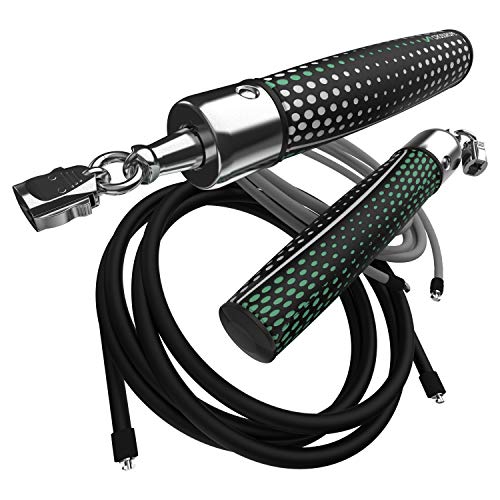
First weighted jump rope system built to help you achieve your strength, endurance, and fitness goals.
Additional Benefits of Jump Rope for Lower Limb Muscle Development
While jump rope training is often celebrated for its cardiovascular benefits, it’s also a powerhouse for lower limb muscle development. The dynamic movements involved significantly enhance calf muscle flexibility, essential for reducing injury risk and improving performance. Through regular sessions, we see marked improvements not only in muscle strength but also in the elasticity of tendons, which helps prevent strains.
Moreover, jump rope serves as an excellent dynamic warm-up, preparing our muscles and connective tissues for more intense activity by boosting neuromuscular coordination and balance. This preparation supports better control during sports and daily tasks, reducing unnecessary fatigue. Additionally, the enhanced muscle endurance from jump roping allows us to engage in longer physical activities without premature exhaustion, supporting functional strength and recovery. To further enhance lower body training and rehabilitation, incorporating small exercise balls can provide targeted muscle engagement and additional stability challenges that complement the dynamic movements of jump rope training.
Engaging Fast Twitch and Slow Twitch Fibers
Let’s explore how jump rope training effectively engages both fast twitch and slow twitch muscle fibers in our calves. Our calf muscles, composed of these two fiber types, benefit from the jump rope’s unique plyometric nature. With each leap, the rapid stretch-shortening cycle stimulates fiber activation, promoting muscle adaptation. Fast twitch fibers, predominant in the gastrocnemius, thrive on explosive movements like double unders, increasing power and hypertrophy. In contrast, the soleus, rich in slow twitch fibers, benefits from sustained jumping sessions, enhancing endurance and fatigue resistance. By alternating workout intensities and incorporating variations, we can ensure comprehensive fiber engagement. This approach not only bolsters muscle efficiency but also optimizes the stretch-shortening cycle, contributing to improved performance. To maximize comfort during extended training sessions, consider using a yoga mat with adequate joint support to cushion your knees and provide stability during floor-based stretching and recovery exercises.
Techniques for Enhancing Explosiveness and Power
To enhance explosiveness and power in our calf muscles, jump rope training offers a dynamic and effective approach. By incorporating repeated takeoffs and landings, we rapidly stretch and shorten our calf muscles, driving explosive strength. The push-off phase, especially when executed with our toes, activates the gastrocnemius and soleus, essential for quick, dynamic movements. We can increase our jump rhythm and vertical force through variations like double unders, which boost lower limb explosive strength. Single-leg jumps focus body weight on one leg, increasing explosive demand per leg. To maximize power, we should engage in interval training, with short, intense bouts of 30–60 seconds. Progressive overload, rest intervals, and frequency (2–4 weekly sessions) ensure recovery and adaptation. Using ropes with high-quality bearings ensures the smooth rotation necessary for mastering advanced techniques like double unders and triple unders.
Recommended Products

HEAVY DUTY CABLE PULLER - This rotaboom cable puller by Current Tools has a capacity of 10,000 pounds, and ready to tackle any jobsite

Diablo tensioner and linear pull for the most delicate strings. Glide to Activate string gripper allows tensioning with one hand. Super fast.

Strategies for Increasing Calf Muscle Endurance
Increasing calf muscle endurance through jump rope training demands a strategic approach, combining various techniques to achieve optimal results. By gradually increasing jump rope duration or repetitions, we extend time under tension, enhancing endurance. Incorporating longer jump intervals promotes sustained contractions, while weighted ropes intensify workload, aiding adaptations. Advanced variations like single-leg jumps challenge muscles uniquely, building stamina. Consistency is key; performing sessions 3–5 times weekly stimulates metabolic adaptations, improving oxygen utilization. Balancing rest days prevents overtraining, allowing muscular repair. Intensity modulation, through varied jump speed and height, incrementally boosts stamina. Additionally, incorporating balance board exercises between jump rope sessions can enhance calf muscle stability and proprioception, contributing to overall endurance development. Finally, calf muscle nutrition is crucial—a protein-rich diet supports repair, while hydration and electrolytes facilitate function, ensuring our calves endure longer during training.
Recommended Products

MULTI SPORT TRAINING: Build strength and endurance to meet your specific sports and fitness goals

Keeps ropes and hoops organized
Bluetooth-connected weighted jump rope set for high-intensity interval & endurance fitness training
Utilizing Jump Rope for Improved Neuromuscular Coordination
When we think about jump rope training, it’s not just about building endurance; it’s also a powerful tool for enhancing neuromuscular coordination. By engaging our neural pathways, jump rope demands precise coordination between our eyes, feet, and hands. The constant jump timing and rhythm improve neuromuscular responses, allowing for quicker brain-to-muscle communication. As we perform complex maneuvers, our bodies must rapidly process rope speed and direction, refining our movement precision. Research indicates that jump rope training enhances gross motor coordination, integrating arm, leg, and torso movements to boost overall motor skills. Additionally, the dynamic postural stability required to adjust our center of gravity while jumping reinforces balance, enhancing our neuromuscular coordination and promoting better proprioceptive feedback. This enhanced coordination developed through jump rope training translates well to other combat sports like boxing, kickboxing, and MMA, where precise timing and neuromuscular coordination are essential for effective performance.
Optimal Circuits for Calf Muscle Activation
Although jump rope exercises are often associated with cardiovascular fitness, they’re also a fantastic method for activating and strengthening calf muscles through varied circuit training. By structuring circuits effectively, we can ensure optimal calf muscle activation while promoting muscle recovery. We start with moderate-intensity moves like basic and alternate foot jumps to prepare the calves. Then, we incorporate higher-impact exercises such as high knee steps and double unders to boost power and strength. Single leg jumps are crucial for unilateral overload, focusing on each calf separately. To maximize effectiveness, we repeat circuits 2-3 times with active rest, maintaining continuous muscle engagement. Gradually increasing jump rope speed and height ensures progressive overload, essential for calf hypertrophy and endurance development.
Recommended Products

🏀🚀 Jump Higher, Play Better: Elevate your game with Jump99 Plyometric Shoes, adding 5-10 inches to your vertical jump. Reach new heights on the court or field with ease.

TRACTION, STABILITY, & COMFORT: The Hayabusa Pro Boxing Shoes combine traction, stability, and comfort for the ultimate shoe in the ring. The lightweight design and custom outsole allow for explosive agility with an anchored grip for pinpoint pivots.

Balancing Strength and Endurance in Calf Training
Balancing strength and endurance in calf training is crucial for optimizing performance and muscle development. By engaging in jump rope sessions, we can target both strength and endurance through the dual activation of the gastrocnemius and soleus muscles. The explosive plantar flexion involved in jumping enhances the gastrocnemius for strength, while sustained skipping challenges the soleus, promoting endurance balance. To achieve this balance, alternating between strength-focused exercises, like straight-leg calf raises, and endurance-biased activities, such as high-repetition bodyweight calf raises, is essential. Incorporating progressive overload and recovery within our routine ensures both muscle fibers develop optimally. By systematically adjusting our calf training, we can maximize both power and stamina, leading to well-rounded muscle growth and performance.
Frequently Asked Questions
How Often Should I Jump Rope for Calf Muscle Development?
We should jump rope 2-3 times a week for optimal calf muscle development. This training frequency, combined with other calf exercises, ensures consistent engagement and progressive overload, helping our calves grow stronger and more defined over time.
What Type of Jump Rope Is Best for Calf Training?
Imagine the rhythm of our hearts syncing with the rope’s swish. For calf training, we’d choose weighted ropes for muscle endurance and speed ropes for quickness. Both enhance our calves, each with its own thrilling intensity.
Can Jump Rope Help Reduce Calf Muscle Soreness?
Yes, it can! Jump rope aids calf recovery by enhancing blood flow and flushing out waste. It offers jump benefits like reducing muscle soreness when done with proper technique, warm-up, and incorporating active recovery sessions. Let’s keep jumping wisely!
Are There Specific Stretches to Do Before Jump Rope Sessions?
They say, “An ounce of prevention is worth a pound of cure.” Let’s focus on dynamic stretches like grass grabbers and calf raises before jumping. Static stretches aren’t ideal as they might limit our muscle springiness.
How Long Should a Jump Rope Session Be for Best Results?
For best results, our jump rope session duration depends on our skill level. Beginners should aim for 1-5 minutes, while experienced individuals can go for 10-15 minutes, adjusting gradually as we build endurance and skill.


