As an Amazon Associate, we earn from qualifying purchases. Some links on this site are affiliate links at no extra cost to you. Our recommendations are based on thorough research and editorial judgment.


Resistance Band Tension Control: A Complete Guide

Resistance band tension control is crucial for effective workouts, boosting muscle strength, and ensuring safety. We begin by selecting the right band type for our exercises—therapy, loop, or tube with handles—and match resistance levels to our fitness stage: X-Light for beginners, progressing to Heavy for advanced users. Bands increase tension as they stretch, dictating exercise intensity. Proper setup, maintaining form, and progressive training help achieve fitness goals. Explore further to maximize your workout benefits.
Key Takeaways
- Adjust band tension by changing the stretch length or combining multiple bands for increased resistance.
- Begin with lighter bands to master form; gradually increase resistance as proficiency grows.
- Secure anchor points at appropriate heights to maintain consistent band tension during exercises.
- Track progress by monitoring resistance levels and regularly adjusting workouts every 3–4 weeks.
- Ensure bands are in good condition through periodic checks to maintain effective tension control.
Understanding Resistance Band Types
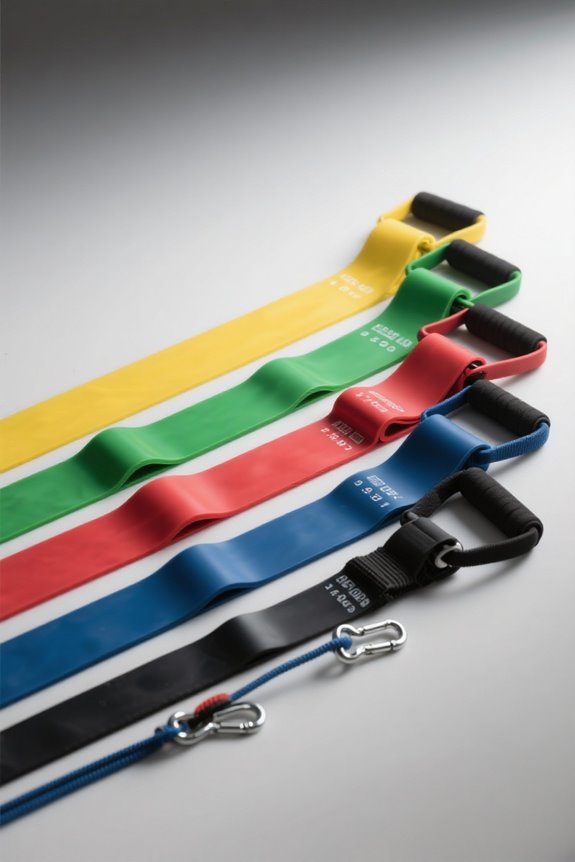
When it comes to understanding resistance band types, knowing their unique characteristics is key to maximizing workouts. We often find therapy bands ideal for flexibility and recovery exercises due to their lightweight, highly stretchable nature. Band usage varies significantly across types—loop bands, popular in gyms, offer versatility for full-body workouts, while mini-bands excel in glute strengthening and cardio. For those of us mimicking dumbbell actions, tube bands with handles provide comfortable grip options. It’s crucial to engage in proper band maintenance; ensure bands are stored away from direct sunlight and sharp objects to prolong their lifespan. Figure 8 bands, shaped for upper body and core work, are excellent for isometric exercises, offering moderate resistance, typically 8-20 pounds. Most resistance bands are crafted from natural latex for high elasticity and minimal wear and tear with frequent use.
Recommended Products

VERSATILE EXERCISE BANDS FOR HOME, CLINIC & GYM USE – These latex-free workout bands are perfect for physical therapists, chiropractors, athletic trainers, fitness professionals, and home users seeking effective resistance training equipment. Use for rehab therapy, muscle strengthening, flexibility improvement, injury recovery, balance training, and full-body workouts.


HEATED OTTOMAN DISGUISE — VIBRATION PLATE FOR HOME USE: The RelaxaVibe is a 4D vibration plate hidden inside a premium upholstered ottoman; press the built-in heat button to enjoy warmth on tired muscles while seated, then remove the cover to reveal a full-body vibration machine
Selecting the Right Resistance Level
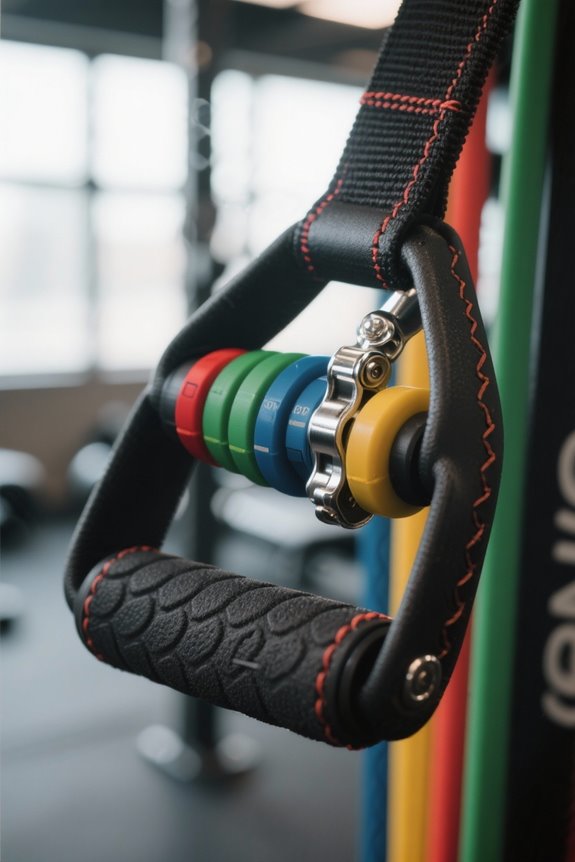
Choosing the right resistance level is a key factor in optimizing our workouts, especially after understanding the various types of bands available. Band resistance selection hinges on our fitness levels—beginners should start with X-Light or Light bands, easing into tension. Intermediate users might favor Medium bands for a balanced challenge, while advanced users require Heavy or Extra Heavy for muscle overload. The user experience improves with strategic choices; larger muscle exercises demand higher resistance, whereas smaller muscles benefit from lighter bands to preserve form. Our fitness goals, whether rehabilitation or power development, should align with band resistance to maximize efficacy. Remember, proper form is crucial before advancing to heavier bands, ensuring a safe and effective workout. For bench press applications specifically, some systems offer color-coded resistance levels that correspond to different weight ranges, making it easier to select appropriate tension based on your current lifting capacity.
Recommended Products

HANDLE SHARP METAL & GLASS WITH CONFIDENCE: ANSI/ISEA 105 Cut Level A6 protection shields hands from sheet metal, glass, stamped parts, blades, and razor-edged materials that lower-rated gloves can't stop. Also rated ANSI Level 3 Abrasion and Level 2 Puncture Resistance.

Ultimate Cut Protection: These cut-resistant sleeves conform to the highest ANSI A9 cut resistance standard, making them the top choice for supreme cut protection. Utilizing lightweight shell technology, these sleeves are over 50% lighter than comparable A9 sleeves while delivering identical cut protection. The shield graphic is color-coded for easy cut level identification even from a distance

AI-POWERED GUIDANCE WITH ZEPP COACH: Train smarter with our tactical smart watch featuring AI-driven insights, integrating a heart rate monitor and step counter watch for recovery and performance balance
Mechanics of Band Tension

Understanding the mechanics of band tension is crucial for optimizing our workouts and achieving our fitness goals. Resistance bands exhibit a strong linear force-extension relationship up to about 100% deformation, allowing for precise tension modulation. This means the tension increases proportionally with the stretch length due to band elasticity. However, beyond this point, the behavior turns nonlinear, deviating from Hooke’s law and introducing hysteresis, where energy is lost as heat. Bands with different colors and thicknesses show significant stiffness variations, with tension differences ranging from 20% to 67%. These attributes affect our training difficulty and muscle recruitment. The spring constant (k) further influences the tension dynamics, while differences in band length affect recoil speed, ensuring each workout is effectively challenging. Most resistance band systems offer adjustable resistance levels ranging from 10 to 50 pounds per band, allowing users to customize their workout intensity by stacking multiple bands together.
Recommended Products

1-2 Person Outdoor Sauna Room: The overall size of the traditional steam sauna room are L 53.15* D 54.72* H 78.74inch. Large enough for two person enjoy sauna, Perfect size for courtyards, gardens, patio or outdoor spaces, allowing you and family to enjoy a sauna experience in the comfort of your own home

【2 Person Sauna For Home】: Our spacious home wooden sauna size is 5.9' ft x 5.9' ft x 6.23' ft, This two-person sauna offers the ultimate in luxury, Ergonomically designed recliner, it fits the curve of the human spine, making it more comfortable to enjoy

Commercial grade 304 stainless steel construction for lasting durability
Setting Up for Success

Although setting up for success with resistance band training may seem daunting, it’s crucial for optimizing our workouts and ensuring consistent progress. First, we need to ensure proper band placement by choosing sturdy anchor points at the right height; for a chest press, set the anchor at chest height. Tension adjustments are key—start with lighter bands, around 10-15 lbs, to master form without strain. Gradually increase repetitions from 10 to 15, then switch to higher resistance bands as strength improves. Secure anchors using wraps or crisscrossing to maintain tension consistency, and always test tension with low-rep sets. A well-prepared environment, with clear space and organized equipment, ensures smooth transitions and effective workouts. Consider incorporating supportive equipment like ab mats, which provide lower back support during core exercises and can complement your resistance band routine for comprehensive training.
Recommended Products

These Pickleball Court Equipment Packages were created by our expert team of Pickleball court equipment specialists and include all the necessary equipment parts to outfit a pickelball court quickly and efficiently on an budget.

44 POUND FLYWHEEL: 44-pound heavy-duty flywheel ensures stability to avoid jolting while riding. Emergency push-down brake stops the wheel immediately for safety.
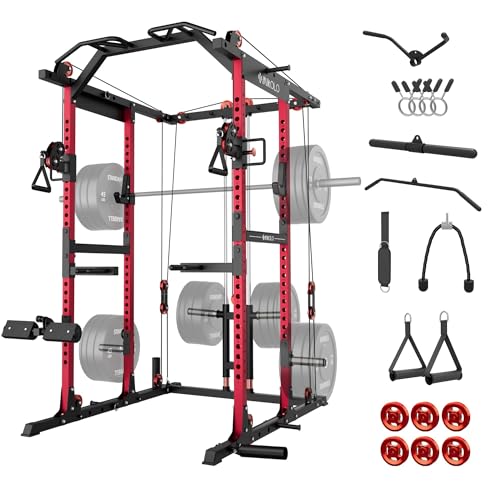
[ 8 in 1 Home Gym ]: Mikolo K6 2.0 power cage can bring power rack / cable crossover machine / lat pulldown station / 2:1 ratio low row station (includes 2 in 1 anchor/footplate attachment) / Chin station / Dip station / Core trainer / Resistance station to your home gym at the same time. With this K6 2.0 power cage, you can do unlimited exercises at limited space.
Mastering Effective Exercise Techniques

Mastering effective exercise techniques with resistance bands can significantly enhance our workouts by ensuring optimal muscle engagement and functional strength gains. By adjusting band tension and utilizing resistance variations, we can progressively overload muscles, promoting hypertrophy and strength. Stretching the band increases tension, challenging our muscles further, while altering hand or foot placement grants finer control over resistance. We can also combine or layer bands for advanced workouts, customizing resistance to target specific muscle groups, such as glutes or shoulders. Incorporating slow, controlled movements and isometric holds maximizes muscle fiber recruitment, enhancing endurance and growth. Additionally, integrating multi-planar and compound movements with bands improves functional strength and coordination, making our routines both effective and varied. When selecting equipment, prioritize natural latex bands for better elasticity and durability compared to alternatives that may not withstand intensive training sessions.
Ensuring Safety and Proper Form
When it comes to using resistance bands, ensuring safety and proper form is paramount to avoid injury and get the most out of our workouts. Band maintenance and safety precautions play a crucial role in this. We should inspect our bands before each use, discarding any with tears or nicks to prevent snapping injuries. Storing them in a cool, dark place away from sunlight helps maintain their integrity. Additionally, securing bands to sturdy, immovable objects and using specialized anchors ensures they don’t slip during exercises. It’s vital we avoid overstretching them beyond 300% of their resting length. Wearing protective eye gear and executing exercises in a slow, controlled manner further minimizes risk, helping us maintain proper form and prevent injuries. Quality bands made from natural latex construction typically offer better durability and performance compared to synthetic alternatives.
Progressing Your Training
Progressing your training with resistance bands is an exciting journey that hinges on understanding and applying progressive overload. We must challenge our muscles beyond their current capacity to see gains, and resistance bands are excellent tools for this. Advanced progression involves employing overload techniques such as using thicker bands or shortening the band’s working length by gripping closer, thus increasing tension. Combining multiple bands can also provide a significant challenge for the seasoned athlete. Additionally, manipulating volume and intensity—like increasing repetitions or adding extra sets—helps maintain consistent progress. By gradually transitioning to complex exercises, including unilateral variations and integrating balance elements, we ensure continuous adaptation. Let’s track our progress diligently, noting changes every 3–4 weeks for optimal results. Complement your resistance band training with foam rollers to enhance muscle recovery and maintain optimal flexibility between intense workout sessions.
Recommended Products

Revolutionary, portable resistance training system used by professional athletes proven to increase speed and improve first move quickness

PILATES WALL WORKOUT: Originally designed by Joseph Pilates, the Ped-o-Pull features a compact profile that supports a variety of exercises. This revolutionary Pilates equipment takes up minimal space, making it easy to fit in your home or studio.

Integrating Resistance Bands Into Your Fitness Routine
Resistance bands are an incredibly versatile addition to any fitness routine, offering myriad benefits across all fitness levels. They’re perfect for combining cardio with strength training, enhancing flexibility, and targeting multiple muscle groups. Whether we’re at home, traveling, or outdoors, their portability allows us to maintain consistent workouts. By using bands, we can safely modify workout intensity and reduce injury risk due to their lower joint impact.
Incorporating resistance bands promotes functional strength by mimicking everyday movements, engaging stabilizer muscles crucial for balance and coordination. Additionally, their progressive resistance helps build muscle and improve mobility. For those of us recovering from injury or seeking to enhance overall fitness, resistance bands are a cost-effective, adaptable solution that supports cardiovascular health and joint range of motion. Similar to how quality boxing gloves require regular assessments to determine replacement needs based on training frequency, resistance bands should be periodically evaluated for wear and performance to maintain workout effectiveness.
Frequently Asked Questions
How Can I Properly Store Resistance Bands to Prolong Their Lifespan?
We should store resistance bands in a cool, dry place using hanging storage solutions. Avoid direct sunlight, humidity, and extreme temperatures. Clean and dry them thoroughly before storing to prevent damage and prolong their lifespan.
Are Resistance Bands Suitable for Rehabilitation Exercises?
Yes, they’re perfect for rehabilitation exercises. We can target specific muscle groups, enhance flexibility, and promote injury prevention. Bands allow controlled, low-impact movements, making them an excellent tool for safe, effective recovery and muscle strengthening.
Can Resistance Bands Be Used Effectively for Flexibility Training?
Yes, resistance bands can be effectively used for flexibility training. They offer flexibility benefits through band stretches, enhancing joint range and muscle length. Let’s incorporate bands into our routine for improved flexibility and overall mobility.
What Are the Common Signs That a Resistance Band Needs Replacement?
We’ve all seen it—fraying edges, dramatic color fading, and bands that look like they’ve survived a war. When your band resembles a relic from ancient times, it’s time to replace it for safety and effectiveness.
How Do Resistance Bands Compare to Free Weights in Building Muscle?
Both resistance bands and free weights effectively build muscle, with bands offering enhanced muscle activation through variable tension and free weights allowing precise weight progression. Combining them maximizes results by utilizing different resistance profiles and movement patterns.