As an Amazon Associate, we earn from qualifying purchases. Some links on this site are affiliate links at no extra cost to you. Our recommendations are based on thorough research and editorial judgment.


Time-Based Vs Rep-Based Training: Which Is Better?

When comparing time-based and rep-based training, both have unique strengths. Time-based training emphasizes duration, promoting endurance and mental focus, while reducing injury risk with controlled efforts. On the other hand, rep-based training focuses on precise performance tracking, muscle growth, and adaptable exercise selection, ensuring safety through quality repetitions. Each method offers flexibility for diverse fitness levels, goals, and schedules. Whether building strength or endurance, understanding these approaches helps us align our workouts more effectively. Continue exploring to uncover more insights.
Key Takeaways
- Time-based training enhances mental focus and reduces injury risk through controlled effort durations.
- Rep-based training offers precise progress tracking and supports muscle growth with documented reps and weights.
- Time-based training ensures consistent workload and is ideal for those with strict time constraints.
- Rep-based training provides flexibility and adaptability for diverse fitness levels and goals.
- Combining both methods can maximize engagement and optimize training results.
Understanding Time-Based Training
When we dive into understanding time-based training, we see a unique approach that focuses on the duration of effort rather than the distance covered, which can really change the way we train. This method offers remarkable time-based benefits, emphasizing intensity and purpose over pace or mileage. By allowing us to tailor workouts to our goals—like recovery or tempo runs—we avoid the pressure of hitting specific distances, promoting authentic execution and mindful running.
Time-based training also reduces injury risk, as it removes the need to overexert to meet mileage targets, supporting safe fitness rebuilding. It encourages mindfulness by letting us stay present, attentive to our body’s signals, enhancing mental focus. This approach increases flexibility, accommodating various fitness levels and schedules effectively. To maximize the benefits of this training approach, selecting training gloves with proper padding and wrist support can enhance both comfort and performance during extended workout sessions.
Exploring Rep-Based Training

As we’ve explored the benefits of time-based training, it’s equally important to consider the merits of rep-based training, a method that offers its own unique advantages. Rep counting simplifies performance tracking, making it easier for us to maintain training consistency. Without needing external timers, we can monitor our progress by documenting repetitions, sets, and weights. This allows us to set clear goals and celebrate visible improvements, enhancing motivation.
Rep-based training also supports muscle adaptation by driving lean muscle growth and improving endurance. The structure of rep-based workouts ensures safety, as we focus on completing quality repetitions, reducing the risk of overtraining. Moreover, the cognitive benefits, such as improved concentration and stress reduction, make rep-based training a holistic approach to fitness. For effective rep-based training at home, rubber coated dumbbells provide excellent grip security and reduce noise during workouts, making them ideal equipment for maintaining consistent repetition-based routines.
Comparing Work Volume and Efficiency

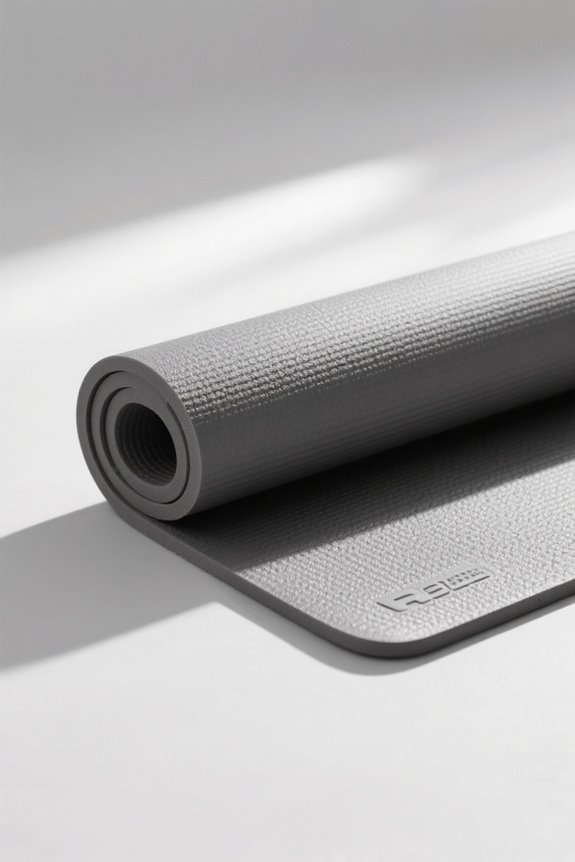
While comparing work volume and efficiency in time-based versus rep-based training, we uncover distinct advantages and challenges in each approach. Time-based training often results in a higher work volume, as more reps can be completed within a set timeframe, promoting cumulative volume gains. This standardization ensures consistent workloads and enhances training efficiency by maintaining energy expenditure. On the other hand, rep-based training allows for precise control over volume to target specific goals, like strength or hypertrophy, by adjusting reps and sets. Although variable rest can affect time efficiency, focusing on a fixed rep count can optimize calorie burn in shorter sessions. Both methods effectively stimulate muscle growth when nearing failure, highlighting the importance of volume control in achieving desired outcomes. For exercises targeting core stability, using supportive equipment with high-density foam can enhance comfort during workouts while maintaining proper form throughout either training approach.
Recommended Products

3-Layer Anti-Rust, Weather-Resistant Performance: The heavy-duty metal frame has a 3-layer automotive-grade coating (E-coating, powder coating, finish spray) — it resists rust, salt, corrosion and humidity. Cushion's cover is made of 100% solution-dyed Olefin fabric. Even in intense Florida sun or salty coastal air, colors stay vibrant year after year. With crack-resistant PE rattan, the set holds up to sun, rain, snow and storms for year-round outdoor use

【Tailored Resistance & Adjustable Features】 Whether stretching into a gentle pose or powering through an intense workout, this Pilates Reformer adapts to your needs. Equipped with a 7-position adjustable foot bar, a 2-level headrest, and 3 height pulley risers for smooth transitions, every session feels perfectly personalized—just like a one-on-one with your instructor.

ENHANCE CORE STRENGTH & FLEXIBILITY – Target and strengthen your abs, back, and shoulders while improving posture and alignment. Ideal for Pilates, rehabilitation, and functional training.
Time Management and Convenience Factors

Time-based and rep-based training each offer unique benefits and challenges when it comes to time management and convenience. In our busy lives, time efficiency is key. Time-based sets shine in this area, allowing us to predict workout duration precisely. Each session is defined by minutes or seconds, making workout planning straightforward and ensuring we finish on time. Automated timers further enhance this predictability, removing guesswork and enabling precise execution. In contrast, rep-based workouts can have inconsistent durations; fatigue can extend or shorten sessions unpredictably, disrupting tight schedules. Time-based training also lets us focus on form rather than counting reps, enhancing mental focus. For those with strict time constraints, time-based protocols offer a reliable and convenient solution. Additionally, time-based training can help maintain muscle warmth throughout the workout, which enhances overall effectiveness and performance during lifting sessions.
Recommended Products

THIS BUNDLE CONTAINS: 1 Garmin Venu 3S, GPS Smartwatch, AMOLED Display, Advanced Health and Fitness Features, Up to 10 Days of Battery + 1 Signature Series Watch Stand with Charging Cable + 1 Signature Series Power Bundle

Make a bold statement with this rugged GPS smartwatch, featuring a 1.1” display with solar charging lens and unlimited battery life in smartwatch mode with solar charging (assumes all-day wear with 3 hours per day outside in 50,000 lux conditions)

Designed with a bright AMOLED display, get a more complete picture of your health, thanks to battery life of up to 11 days in smartwatch mode
Group Training Dynamics

When it comes to group training dynamics, choosing between time-based and rep-based training can significantly impact the efficiency and customization of sessions. Time-based training enhances group dynamics by ensuring efficiency in training sessions. Everyone starts and finishes at the same time, maintaining a structured environment, which is beneficial for diverse fitness levels. It also facilitates scheduling and organization, making it easier to manage group sessions effectively.
On the other hand, rep-based training offers adaptability and flexibility, allowing participants to focus on mastering form and achieving specific fitness goals. This approach enhances training effectiveness by providing clear objectives and motivating participants through rep counts. Just as with equipment like ab wheels where proper form is essential to prevent injuries, especially for novices learning new movements, rep-based training allows instructors to ensure each participant masters technique before progressing. Choosing the right method depends on our group’s needs, but incorporating both can maximize engagement and results.
Individual Training Preferences
As we consider individual training preferences, it’s important to recognize how personal goals and needs shape our approach to workouts, just as group dynamics influence collective sessions. Personalized preferences often hinge on our fitness objectives—whether we’re focusing on strength, hypertrophy, or endurance. Rep-based training offers the precision some of us need, targeting volume with fixed rep goals ideal for strength or bulking. On the other hand, time-based training suits those of us leaning towards endurance, emphasizing sustained effort within set periods. Training variability also factors in; some prefer the structure of rep counts for measurable progress, while others enjoy the mental freedom of time-based sessions, appreciating the reduced cognitive load and predictable workout durations. Each approach adapts to individual schedules and goals. For those seeking maximum flexibility in their training routine, resistance bands can accommodate both time-based and rep-based approaches with varying resistance levels from 3 to over 150 pounds.
Motivation and Mental Focus in Workouts
Balancing motivation and mental focus in workouts hinges on finding the right approach that aligns with our goals and preferences. Time-based training offers motivation strategies by providing efficient workouts through set durations, like HIIT, which appeal to those with limited time. This structure fosters mental engagement, as we can concentrate on form and effort without the distraction of counting reps. Conversely, rep-based training enhances mind-muscle connection, especially when pushing to failure, as it requires heightened awareness near fatigue. This method relies on the motivation derived from achieving specific rep goals, creating a sense of accomplishment. Both approaches have unique benefits; choosing between them involves considering how each supports our mental focus and keeps our motivation high during workouts. Incorporating versatile equipment like kettlebells can enhance both training styles, as their textured handle design promotes better grip and safety while allowing for dynamic movements that target multiple muscle groups effectively.
Adaptability for Different Fitness Levels
Moving from motivation and mental focus to adaptability for different fitness levels, we find time-based and rep-based training each offer unique advantages. Time-based training standardizes work and rest periods, which helps novices maintain steady effort without the need for rep counting, minimizing fatigue-induced rest extensions. This ensures novice adaptation through progressive conditioning. By adjusting work/rest times, workouts can be easily scaled for all fitness stages, allowing incremental challenges as endurance builds.
Rep-based training offers explicit, adaptable rep targets, ideal for those seeking advanced conditioning. It allows for flexibility in selecting exercises and adjusting reps for skill mastery, enhancing motor control and confidence. By balancing lower and higher rep counts, individuals can customize workouts to fit their unique fitness capacities efficiently. Both training approaches benefit from proper elbow support, especially during weightlifting movements where joint stability and compression can enhance performance while reducing injury risk.
Progression Strategies for Fitness Goals
When it comes to progression strategies for fitness goals, understanding how to effectively track and adjust your training is crucial. We can leverage both rep-based and time-based methods to achieve progressive overload, essential for enhancing strength and endurance. With rep-based training, we track progress through clear, measurable benchmarks, like increasing from 8 to 10 reps. This allows us to make precise micro-adjustments, such as adding a couple of reps or a small weight increase. On the other hand, time-based training emphasizes consistency, with fixed intervals that can be adjusted by extending work periods or shortening rest. While this approach requires macro-adjustments, it’s effective for those focusing on endurance. Both methods offer unique progression opportunities, depending on our specific fitness goals. For example, incorporating equipment like weighted jump ropes can enhance time-based cardio sessions by adding resistance for strength training benefits while maintaining the cardiovascular focus.
Muscle Growth and Hypertrophy Considerations
Although the path to muscle growth and hypertrophy is nuanced, understanding the role of Time Under Tension (TUT) is crucial for optimizing results. By keeping each set within the 20 to 70-second range, we can effectively stimulate muscle adaptation without veering into endurance territory. According to hypertrophy principles, a controlled eccentric phase of about 2 seconds, paired with an explosive concentric action, optimizes growth. While rep ranges from 5 to 50 can achieve similar outcomes, the magic lies in taking sets close to failure. Whether we’re employing low, moderate, or high reps, reaching 1–3 reps of failure is key. Just as proper grip is essential for stability during yoga practice, maintaining proper form and control throughout each repetition ensures maximum muscle fiber recruitment and growth stimulus. Therefore, balancing tempo and volume, rather than focusing solely on TUT, ensures comprehensive muscle adaptation and growth.
Recommended Products

Home Gym Equipment Weight Set:Includes 5, 10, 15, 20, 25, 30, 35, 40, 45, 50, 55, 60, 65, 70, 75, 80, 85, 90, 95, and 100lb dumbbell pairs, (2) of 3-tier racks and (2) of mats. You can use these solid dumbbells in a wide range of exercises, also a perfect choice for both beginners or athletes.

Freight Delivery: You must provide an accurate phone number and delivery address on the order so the freight carrier can contact you to schedule the delivery.

CONTENTS: 5lb to 75lb Urethane Dumbbell Set (15 dumbbell pair total) with 3-tier commercial dumbbell rack.
Strength Development Techniques
In the realm of strength development techniques, focusing on the right load and repetition ranges is critical for achieving maximal strength gains. During strength training, using heavy loads—80-100% of one-rep max (1RM)—with 1–6 reps per set is key. This approach creates a total time under tension (TUT) of 3 to 25 seconds. In our method comparison, slower reps allow better control, crucial when lifting heavy weights. Conversely, faster reps may drive neural adaptations, boosting long-term strength. For novices, moderate loads at 60-70% 1RM with 8-12 reps help. While rep-based training offers clear repetition targets, enhancing form, time-based sets provide a genuine workload assessment, emphasizing muscle tension duration. Both methods have unique benefits for strength development.
Enhancing Endurance and Conditioning
As we dive into enhancing endurance and conditioning, it’s crucial to understand how time-based and rep-based training uniquely contribute to these fitness goals. Time-based training, like HIIT, focuses on maintaining intensity and constant tension, promoting both endurance improvements and conditioning adaptations. By incorporating time-under-tension methods, we can achieve muscular endurance without counting reps, and control workout intensity through adjustable durations.
On the other hand, rep-based training shines with high-rep schemes (above 15 reps), effectively building local muscular endurance. This method allows muscles to sustain force over longer periods, enhancing our endurance capacity. Whether we use low loads for higher reps or moderate loads in a time-based setup, both approaches offer unique pathways to boost our overall conditioning and endurance.
Recommended Products

Full-Body Strength Training: The Speediance Gym Monster 2 combines a power cage, Smith machine, squat rack, bench rack, cable machine, and pulley system into one compact home gym for versatile strength training and full-body workouts.
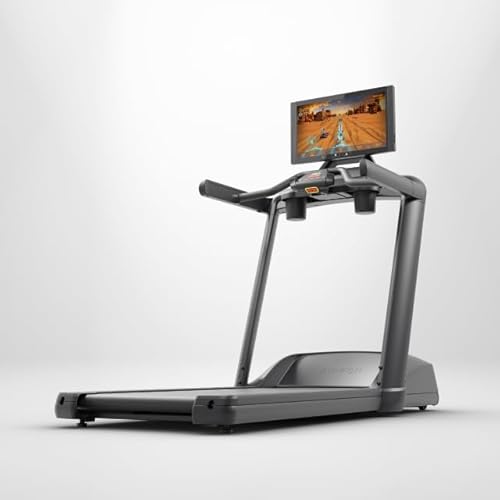
Endless Workout Options: Transform every workout with 1,000+ options tailored to your goals. Crush classes, compete in races, play multiplayer games, or escape with scenic routes. Stream Netflix, Hulu, Disney+, Prime Video, YouTube, and more, all from your screen. Spotify and Apple Music keep your energy high. Membership unlocks the full experience with interactive and community-driven features. (Sold separately.)

Commercial-Level Walking Treadmill: Optimized speed range of 0.3 to 5 MPH paired with extreme incline makes this the ultimate walking and hiking treadmill; whisper-quiet commercial motor delivers smooth, consistent power perfect for steep grade training without running
Impact of Rep Tempo on Training Outcomes
When we look at the impact of rep tempo on training outcomes, it’s clear that tempo plays a pivotal role in shaping our fitness results, influencing everything from muscle growth to strength development. Tempo variations, such as an eccentric focus and controlled concentric speed, can significantly affect training results. Optimal hypertrophic responses are often achieved with a combination of fast concentric and slow eccentric phases. This approach increases time under tension, enhancing both muscle activation and metabolic implications. Faster concentric speeds promote neural efficiency, bolstering strength gains. Moreover, strategic volume strategies, like matching time under tension across different tempos, ensure effective training outcomes. By understanding these dynamics, we can tailor our workouts for maximum efficiency and effectiveness.
Choosing the Right Method for Your Goals
How do we know which training method aligns best with our fitness goals? It boils down to training effectiveness and goal specificity. For those of us aiming to boost cardiovascular fitness and endurance, time-based training maximizes work volume in a set period, making it ideal. Conversely, if building maximal strength or hypertrophy is our target, rep-based training fits better, leveraging established rep schemes like 1-6 reps for strength and 6-12 for muscle growth. Muscular endurance thrives on higher rep counts, typically exceeding 15, which rep-based routines cater to well. However, combining both methods can yield comprehensive benefits, challenging different fitness domains and preventing plateaus. Let’s choose our strategy based on what we aim to achieve.
Recommended Products

Dual-Screen Console

Club-Quality Design for Home Use – Built with the same durable components found in premium gym equipment, engineered for quiet, comfortable, in-home performance.

[Powered by iFIT]] - Get more out of NordicTrack with iFIT Ñ access over 10,000 workouts and features for a personalized experience (Pro subscription required).
Frequently Asked Questions
How Do Time-Based and Rep-Based Training Impact Workout Boredom?
Think of boredom as a shadow in our workout journey. Time-based training offers workout variety, reducing its presence through dynamic effort. Meanwhile, rep-based training fosters mental engagement with clear goals, but risks monotony without varied challenges.
Are There Safety Concerns Unique to Time-Based or Rep-Based Training?
Yes, there’re safety concerns unique to each. In time-based training, injury prevention requires maintaining technique focus despite fatigue. Rep-based training allows stopping once reps are complete, aiding form but demands controlled intensity for safety.
Can Time-Based Training Benefit Recovery Differently Than Rep-Based?
Yes, we believe time-based training can benefit recovery differently by incorporating active recovery within workouts, enhancing muscle repair. This method’s continuous nature might improve circulation, helping remove metabolites and promoting faster recovery than rep-based training.
How Does Rep-Based Training Affect Flexibility and Mobility?
We’ve found that rep-based training, our trusty companion, offers flexibility gains and mobility enhancement. By moving through full joint ranges, it gracefully encourages muscle coordination and joint control, enriching our body’s movement repertoire with every repetition.
Do Time-Based and Rep-Based Methods Vary in Calorie Burn Efficiency?
Yes, they vary. Time-based methods often boost calorie burn and energy expenditure by minimizing rest and maintaining a higher heart rate. Rep-based routines can also be efficient, especially with high-rep, quick-set approaches for increased energy usage.