As an Amazon Associate, we earn from qualifying purchases. Some links on this site are affiliate links at no extra cost to you. Our recommendations are based on thorough research and editorial judgment.


Adjustable Bench Angles Explained: When to Use Each Position

We know adjustable benches are versatile tools essential for targeted training. Set at a flat position for exercises like bench presses, they enhance upper body strength and muscle recruitment. An incline of 30-45 degrees optimizes upper chest and shoulder training, balancing tension and stress. Decline positions target lower pectorals effectively. These angles maximize muscle activation and reduce strain. By adjusting bench angles, we focus on specific muscle groups. There’s much more to uncover!
Key Takeaways
- Use a flat bench (0-degree angle) for exercises like barbell bench press to enhance upper body strength and chest engagement.
- An incline bench angle of 30-45 degrees effectively targets the upper chest and shoulders, minimizing shoulder strain.
- Decline bench angles of 15-30 degrees focus on lower chest activation while minimizing shoulder involvement.
- Adjustable benches offer versatility with multiple angle settings for flat, incline, and decline exercises, catering to various fitness goals.
- Ensure bench stability and proper setup on a flat surface to maintain safety and effectiveness during workouts.
Understanding Flat Bench Angles
Understanding flat bench angles is crucial for optimizing our workout routines, especially when it comes to targeting specific muscle groups effectively. The flat bench is positioned at a 0-degree angle, parallel to the ground, providing a neutral setting ideal for exercises like the barbell bench press. For flat bench safety, it’s vital to pay attention to elbow positioning. Our elbows should be flared out at a 45–70 degree angle to maximize chest engagement and minimize shoulder impingement risk. Going beyond this range can shift tension away from our chest, impacting the effectiveness of our workout. Proper elbow positioning not only enhances muscle activation but also contributes to better bar path control, ensuring a safe and efficient lifting experience. When selecting equipment for flat bench exercises, ensure your bench supports at least 500 lbs to maintain stability across different movements and training intensities.
Benefits of Flat Bench Exercises

Flat bench exercises frequently stand out as a staple in our upper body workouts, offering a host of benefits that contribute to overall fitness. The flat bench benefits include substantial upper body strength improvements, particularly in the chest and arms, as proven by scientific studies. Muscle recruitment is maximized, with the bench press activating the pectoralis major, anterior deltoids, and triceps brachii more effectively than other exercises like dumbbell flyes. We’ve seen increases in muscle thickness—up to 16% in the pectoralis major—and lean body mass, coupled with reductions in body fat, especially in high-intensity protocols. These exercises also enhance functional strength, support bone health, and improve metabolic functions, making them invaluable for any fitness regimen. For maximum effectiveness, adjustable dumbbells can provide the versatility needed to progressively overload these muscle groups across different weight ranges and fitness levels.
Incline Bench Angle Range

When it comes to optimizing our upper body workouts, the incline bench angle plays a pivotal role in targeting specific muscle groups. With angle customization, we can fine-tune our focus between the upper chest and shoulders. The optimal range of 30 to 45 degrees is recommended for effective muscle targeting. A 30-degree angle maximizes upper chest engagement, minimizing shoulder strain. Meanwhile, a 45-degree angle offers a balanced workout by involving both the upper chest and shoulders, making it ideal for those seeking comprehensive development. Adjustments based on our fitness goals ensure that we’re working towards personal objectives. Importantly, avoiding angles beyond 45 degrees helps prevent shoulder strain, ensuring that we stay safe while pushing our limits in training. Quality adjustable benches with multiple backrest positions allow for seamless transitions between different angles, maximizing workout versatility and muscle targeting effectiveness.
Recommended Products

5 BACK PAD BENCH POSITIONS & 4 SEAT PAD POSITIONS: Lay flat, incline, and adjust to a total of 5 different back pad positions. Maximize comfort and stability with 4 additional adjustments on the seat pad
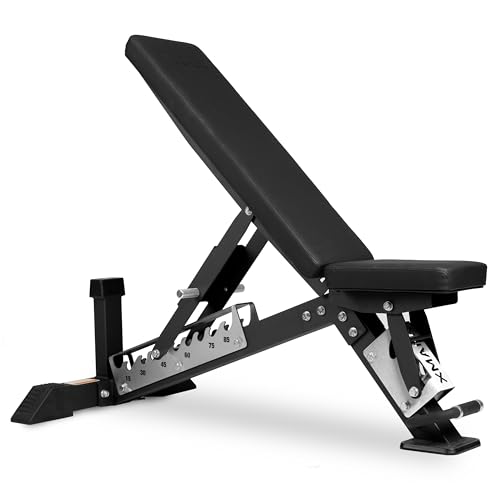
PROFESSIONAL GRADE: The Black Hawk Commercial Weight Bench is built from premium 3" x 3" 11-gauge steel and uses high-quality brass bushings in its moving parts, the benchmark for professional and competition-grade benches. Featuring a 7 gague stainless-steel ladderback and seat adjustments, this bench is built for the demands of a commercial gym.

INDUSTRY LEADER: For 30+ years, Body Solid has held the widest array of products designed to meet the demands of the ever-changing fitness industry (home gym, free weight machines, treadmills, bikes, ellipticals, weight plates, kettlebells, dumbbells, flooring, accessories and more). Our products are cutting edge and reliable and are built for Life……Your Life.
Targeting the Upper Chest With Incline Bench

We’ve explored how different incline bench angles can influence muscle engagement, and now it’s time to focus specifically on targeting the upper chest. The upper chest, or clavicular head of the pectoralis major, is uniquely activated by incline presses due to its anatomical structure. When we perform incline presses, especially with a 30-45° angle, we align our arms to move diagonally upward, directly stimulating the upper chest fibers. Dumbbell incline presses are particularly effective because they allow independent arm movement and a greater range of motion. By retracting and depressing our shoulder blades, we further enhance the engagement of the upper chest while minimizing shoulder dominance. This technique ensures constant tension, promoting upper chest development and reducing injury risks. For added comfort during floor-based chest exercises, consider using a mat with 4mm to 5mm thickness to provide optimal joint protection without compromising stability.
Recommended Products

Advanced Full-Body Workouts with Upgraded Resistance: Experience the power of 260 lbs of total resistance, offering a more intense and versatile workout. The Gym Monster 2S is designed to provide comprehensive full-body training, targeting every major muscle group. The advanced pulley system, combined with the multifunctional workout bench, ensures that you can perform a wide variety of exercises, enhancing strength and endurance with every session.

🎁🎁🎁Unlock Your Free Gift! Simply Bundle The Yoga Mat, Extender Belt Attachments, And Barbell Pad In Your Cart. ❤️❤️❤️❤️❤️One-Year Price Guarantee!One-Year Price Guarantee!One-Year Price Guarantee!

HOME GYM: The XMark Functional Trainer Cable Machine features dual 200 lb weight stacks with 2:1 resistance ratio, 19 adjustment levels, and a super, smooth cable pulley system, that will challenge everyone in your household.
Optimal Incline Angles for Chest Activation

Understanding the optimal incline angles for chest activation is crucial for maximizing workout effectiveness and achieving balanced muscle development. When performing an incline press, targeting the upper chest, specifically the clavicular head of the pectoralis major, is key. The recommended incline angle ranges from 15 to 45 degrees, but studies indicate that a 30-degree angle is optimal for upper chest activation, minimizing deltoid involvement. Higher angles, such as 60 degrees, may increase deltoid activation instead. By incorporating both flat and incline bench presses, we can achieve balanced muscle growth. It’s important to adjust incline angles according to individual physiology and training goals. Proper technique, including foot placement and shoulder blade retraction, ensures effective muscle engagement and prevents injury. Modern adjustable weight benches offer multiple positioning options ranging from -30 to 90 degrees, providing the versatility needed to target different muscle groups effectively.
Exploring Decline Bench Angles
Having explored the optimal incline angles for targeting the upper chest, let’s shift our focus to the world of decline bench angles, which offer unique benefits for lower chest development. When we set the bench between 15 to 30 degrees downward, we emphasize the lower pectoral fibers, leading to enhanced muscle activation. EMG studies have shown that the decline bench press delivers high overall activation of the pectoralis major, making it a superior choice for building chest muscle mass. By reducing the focus on the upper chest and front deltoids, we can target the lower chest and triceps more effectively. This angle also minimizes shoulder involvement, providing a more natural pressing path, particularly when using dumbbells. For home gym enthusiasts, incorporating adjustable equipment like dip stations can complement decline pressing movements while supporting substantial weight capacities for progressive overload.
Recommended Products

INDUSTRY LEADER: For 30+ years, Body Solid has held the widest array of products designed to meet the demands of the ever-changing fitness industry (home gym, free weight machines, treadmills, bikes, ellipticals, weight plates, kettlebells, dumbbells, flooring, accessories and more). Our products are cutting edge and reliable and are built for Life……Your Life.

Durable & Sleek Design – Modern oval-tubed frame combines commercial-grade strength with a clean, space-efficient profile for home gyms.

Compact and Ergonomic: Powertec's fitness equipment is perfectly suitable for small spaces such as a home gym or garage. The slick ergonomic design of this weight bench makes it easy to transport and comfortable to use.
Enhancing Lower Chest Development
Let’s dive into enhancing lower chest development, a key aspect often overlooked in chest training. Our lower chest, mainly composed of the sternal head of the pectoralis major, benefits greatly from targeted lower chest exercises. By incorporating a decline bench angle of 15-30 degrees, we’re effectively engaging this area. Utilizing a variety of decline exercises, such as dumbbell presses or machine presses, ensures continuous muscle stimulation. Remember, proper form is crucial—stabilizing our shoulders and controlling movements enhances muscle engagement. To achieve progressive overload, we should gradually increase weight or resistance during these exercises, promoting muscle growth and strength. With strategic angle adjustments, our training becomes more efficient, leading to balanced hypertrophy and enhanced lower chest development. Additionally, using interlocking gym floor tiles with proper thickness and shock absorption can provide the stable, non-slip foundation necessary for maintaining proper form during decline exercises.
The Role of Upright Bench Angles
When it comes to optimizing our upper chest training, incorporating upright bench angles can be a game changer. These angles, ranging from 15° to 45°, prioritize muscle activation in the upper chest and anterior deltoids. A 15° incline is ideal for those of us mindful of joint stress, focusing on chest development while minimizing shoulder strain. The popular 30° angle strikes a balance, maximizing muscle activation without undue stress. However, at 45°, the focus shifts more toward shoulder involvement, increasing the risk of rotator cuff strain if form slips. By adjusting bench angles, we can modulate joint angles and muscle tension, ensuring a safe and effective workout tailored to our goals. This approach enhances both muscle growth and overall strength development. Pairing these bench positions with adjustable dumbbells allows for versatile weight progression that accommodates different strength levels throughout your incline training routine.
Shoulder Focus With Upright Bench
In our exploration of bench angles, the focus shifts to the unique benefits of upright bench positions for shoulder development. By understanding shoulder mechanics and muscle engagement, we can optimize our workouts for better results. At angles greater than 45°, the anterior deltoid becomes the primary muscle, with the clavicular head of the pectoralis major playing a secondary role. The 60°–75° range is particularly effective, maximizing anterior deltoid activation while minimizing chest involvement. Common exercises like the high incline dumbbell press capitalize on these angles, promoting anterior deltoid hypertrophy. Additionally, the upright position reduces horizontal abduction, potentially lowering shoulder strain. For those seeking a balanced shoulder workout, these bench angles are invaluable for building strength and aesthetics. To further enhance shoulder development, consider incorporating weighted vests during bodyweight exercises to increase resistance and improve workout intensity.
Recommended Products
![Adjustable Bench [Bells of Steel] Buzz Saw Flat Incline Decline Weight Bench, up to 6 Incline Angles, Foldable Lifting Bench for Easy Storage - 11 Gauge Steel, 1000lb Capacity](https://m.media-amazon.com/images/I/31ct8g8-4RL._SL500_.jpg)
Buzz-Saw Stability - This weight bench bites down and doesn’t budge—thanks to a sawtooth ladder design that locks in your angle tighter than your gym crush’s playlist.

Heavy Duty Strength & Stability: Built with a sturdy steel frame and premium padding, the Rep Nighthawk Adjustable Weight Bench delivers commercial-grade durability. Designed for heavy weightlifting, this bench supports intense workouts at home or in the gym.

Titan Fitness Adjustable Incline Bench, Rated 650 LB, Utility Flat, Incline, or Upright Weight Bench
IMPROVED VERSION: We have updated the material of the seat to be stronger and gripper than our standard Poly Vinyl upholstery.
Importance of Adjustable Bench Features
Adjustable benches are a cornerstone of versatile workout equipment, offering a multitude of angle settings that cater to a range of exercises and fitness goals. With adjustable benefits, they transform any exercise regimen, enhancing workout versatility. Models known as FID benches provide flat, incline, and decline options, eliminating multiple fixed benches. This adaptability allows for exercises like bench presses and shoulder presses, targeting different muscle groups depending on the angle. Sturdy steel frames ensure safety, with high weight capacities supporting intense strength training. Non-slip padding and minimal pad gaps enhance security and comfort. Moreover, their space-efficient design is ideal for home gyms, often featuring foldable frames. This reduces costs and maximizes utility, making them indispensable for diverse fitness levels. Many adjustable benches pair effectively with power cages that offer compatible attachment systems and integrated storage solutions for a complete home gym setup.
Recommended Products

【Ultra-Space Efficient】Entire smith machine fits in just 11 sq ft (approx. 1㎡), delivering full gym functionality even in compact home spaces. Perfect for home gyms and limited spaces.

RitFit Home Gym Package gets you everything you need in just one click. It helps you to customize a fully-functioning fitness space at home.

INDUSTRY LEADER: For 30+ years, Body-Solid has held the widest array of products designed to meet the demands of the ever-changing fitness industry (home gym, free weight machines, treadmills, bikes, ellipticals, weight plates, kettlebells, dumbbells, flooring, accessories and more). Our products are cutting edge and reliable and are built for Life……Your Life.
Balancing Muscle Development With Angle Variations
After exploring the importance of adjustable bench features, let’s focus on how varying bench angles can balance muscle development effectively. By adjusting the angle, we can target specific muscles, optimizing muscle activation and force production. For instance, an incline bench press at 30 degrees enhances upper chest engagement while minimizing shoulder involvement, promoting balanced hypertrophy. Introducing workout variety through angle changes keeps our muscles guessing, boosting workout motivation and preventing plateaus. This training adaptability allows us to address muscle imbalances, achieving a more symmetrical physique. Moreover, the versatility of adjustable benches lets us progress by challenging different muscle fibers, ensuring comprehensive muscle growth. By strategically varying angles, we not only enhance upper body aesthetics but also maintain long-term interest in our workouts.
Best Practices for Safe and Effective Workouts
When it comes to ensuring safe and effective workouts, proper setup and adjustment of the bench are crucial. Exercise safety starts with placing the bench on a flat, non-slip surface, ensuring stability to prevent accidents. Adjust the bench to a secure locking position, avoiding loose angles. Proper technique is vital; align your spine neutrally, keeping your shoulders and hips supported. Maintain controlled movements and keep your feet planted for balance. Before heavy lifts, use spotters or safety supports to minimize injury risks. Begin with lighter weights, focus on mastering form, and gradually increase intensity. Incorporate warm-up and mobility exercises to prepare your body. If discomfort occurs, stop immediately and reassess. By following these practices, we can ensure a safe, effective workout.
Frequently Asked Questions
How Do Bench Angles Affect Muscle Activation Differently in Beginners Versus Advanced Lifters?
Like a painter choosing colors, bench angles let us adjust muscle recruitment. Beginners benefit from lower angles to master lifting mechanics safely, while advanced lifters use steeper angles for targeted activation and challenging muscle growth.
What Are Common Mistakes When Adjusting Bench Angles for Different Exercises?
We often encounter common errors when adjusting bench angles, like setting incorrect inclines or neglecting shoulder blade engagement. Let’s ensure proper form by engaging the core, maintaining a consistent grip, and avoiding flared elbows.
How Do Adjustable Benches Compare to Fixed Benches for Home Gym Setups?
Imagine a versatile transformer in our home gym. Adjustable benches offer diverse exercises, but cost more. Fixed benches, like sturdy rocks, provide stability and affordability. We must weigh adjustable advantages against fixed limitations for our ideal setup.
Can Bench Angle Adjustments Aid in Rehabilitation After Shoulder Injuries?
We believe bench angle adjustments can significantly aid in shoulder injury rehabilitation. By aligning with rehabilitation protocols, we enhance shoulder stability, ensuring exercises are both effective and safe, helping prevent reinjury while progressively strengthening the shoulder complex.
What Is the Impact of Bench Padding on Exercise Performance and Comfort?
We know that high-quality padding materials enhance comfort levels during exercise by reducing pressure points and supporting joint alignment. Proper padding prevents soreness, improves stability, and ensures safety, ultimately boosting our workout performance and capability.