As an Amazon Associate, we earn from qualifying purchases. Some links on this site are affiliate links at no extra cost to you. Our recommendations are based on thorough research and editorial judgment.


HIIT Workout Combining Jump Ropes and Resistance Bands

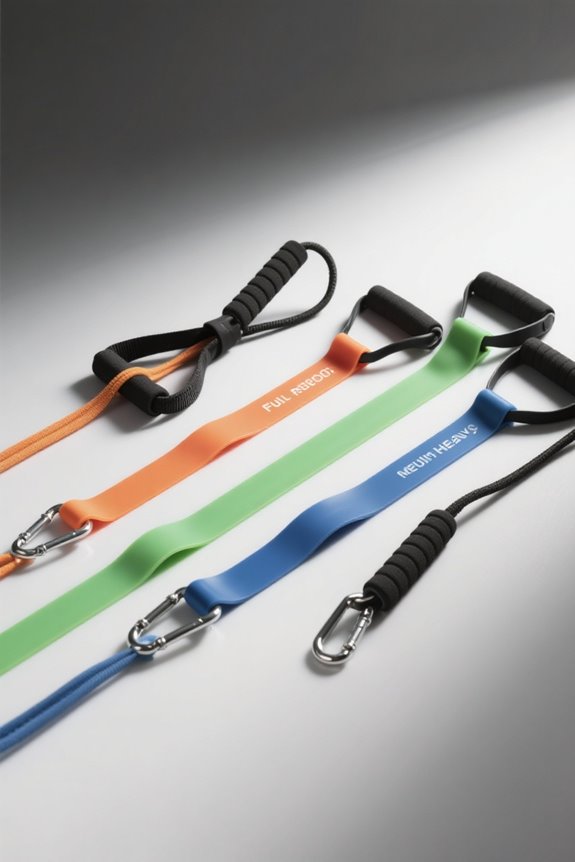
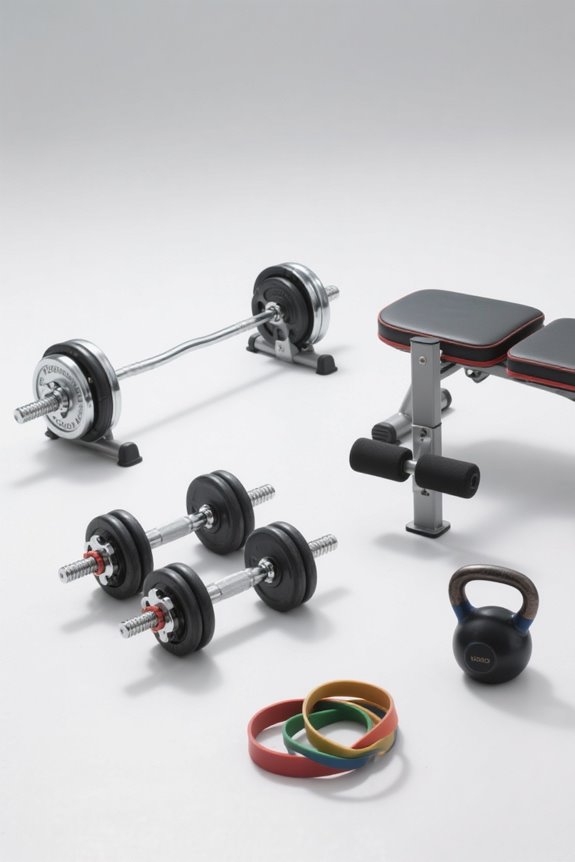
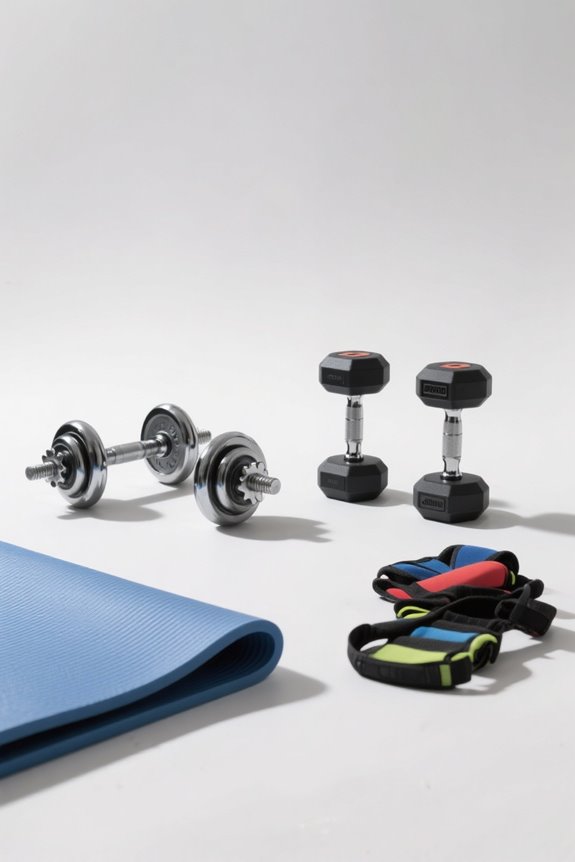
Combining jump ropes and resistance bands for HIIT workouts supercharges our fitness routine. Jump roping burns up to 495 calories in 30 minutes, elevates our heart rate, and improves balance. Resistance bands increase muscle engagement and calorie burn, building strength and endurance. This portable and cost-effective combo enhances our coordination with varied techniques that challenge multiple muscle groups. We can easily adjust intensity for specific goals, whether it’s weight loss or endurance. Let’s explore the full potential of this dynamic workout method.
Key Takeaways
- Jump ropes and resistance bands enhance HIIT by engaging multiple muscle groups and boosting cardiovascular fitness.
- Combining jump ropes with resistance bands increases calorie burn and provides a metabolic boost through the EPOC effect.
- Resistance bands ensure constant tension, promoting muscle activation and progressive overload for strength building.
- Proper form and technique, including wrist-based rope rotations, are crucial for safety and effective muscle engagement.
- Customize HIIT workouts to align with goals like fat loss, endurance, or strength using varied intensity circuits.
Benefits of HIIT With Jump Ropes and Resistance Bands
When incorporating jump ropes and resistance bands into our HIIT routines, we unlock a multitude of benefits that can enhance both our physical fitness and workout efficiency. By combining these tools, we engage multiple muscle groups, boosting our mental resilience and workout motivation. Jump ropes enhance coordination and balance, while resistance bands offer constant tension for increased muscle engagement. This combination not only strengthens cardiovascular endurance but also improves bone density through repetitive impact. The versatility of jump ropes allows them to be integrated in various HIIT segments, from warm-ups to intense intervals, while resistance bands add intensity and variety. As a low-cost, portable option, this duo ensures we can maintain our fitness regime anywhere, encouraging consistency and dedication. For those looking to further diversify their HIIT workouts, adding cardio step platforms with adjustable heights can create additional intensity variations and target different muscle groups during interval training.
Calorie Burn and Metabolic Impact
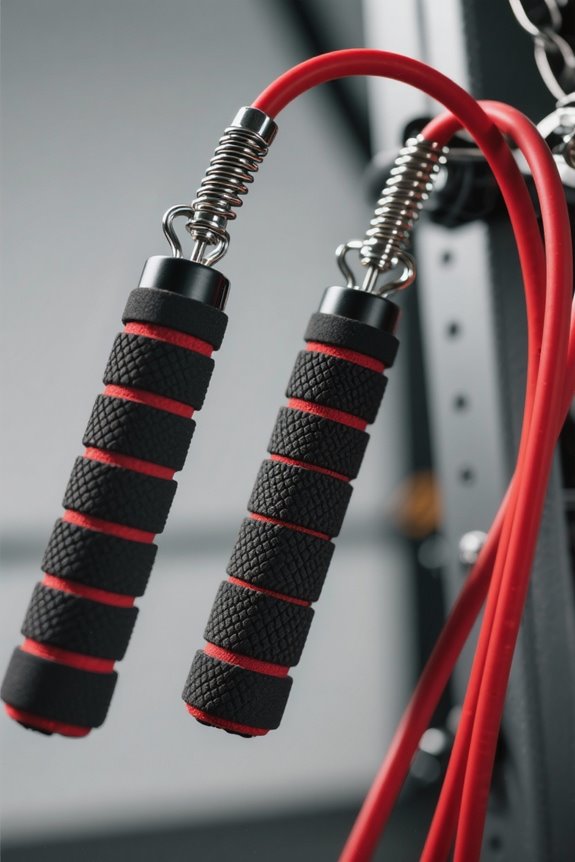
Although many exercises claim to torch calories, our HIIT workouts with jump ropes and resistance bands offer a particularly efficient calorie burn. Jump roping alone can burn up to 495 calories in just 30 minutes, depending on speed and body weight. When we add resistance bands, the caloric expenditure increases due to enhanced muscle engagement. This combination not only boosts our calorie burn during exercise but also provides a substantial metabolic boost post-workout. The excess post-exercise oxygen consumption (EPOC) effect from this workout keeps our metabolism elevated for hours, promoting continued calorie burning and fat oxidation. By integrating both jump ropes and resistance bands, we maximize energy expenditure and stimulate a lasting metabolic impact, making this workout highly effective. For those looking to further enhance their core strength training, incorporating ab workout wheels into your routine can provide additional stability and target multiple muscle groups effectively.
Cardiovascular Fitness and Endurance Gains

How do we effectively boost both cardiovascular fitness and endurance with our HIIT workout featuring jump ropes and resistance bands? By integrating these tools, we engage in endurance strategies that maximize aerobic training. Jumping rope significantly raises heart rates, improving cardiovascular fitness, while resistance bands add intensity, enhancing endurance gains. These workouts are efficient, allowing us to achieve cardiovascular improvements in shorter sessions.
Regular jump rope exercises can lower resting heart rate and improve circulation, reducing the risk of cardiovascular disease. Adding resistance bands increases the workout’s intensity, challenging both our endurance and aerobic capacity. Our heart becomes more efficient at pumping blood, leading to better heart rate recovery. For optimal performance during these intense sessions, ergonomic handles with non-slip grips can enhance comfort and reduce hand fatigue, allowing you to maintain proper form throughout your workout. Ultimately, this combination offers a comprehensive approach to cardiovascular health and endurance enhancement.
Strength Building and Muscle Activation
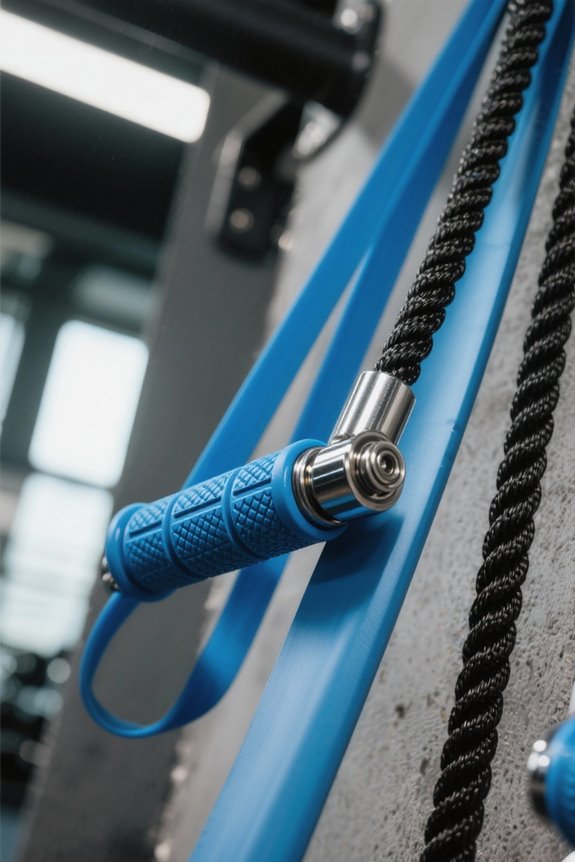
As we shift our focus from cardiovascular fitness and endurance to strength building and muscle activation, it’s clear that our HIIT workouts using jump ropes and resistance bands are more than just heart-pounding routines. By incorporating resistance bands, we engage in progressive overload, which promotes muscle activation beyond bodyweight exercises. This constant tension leads to muscle fatigue and encourages strength adaptation, targeting key areas like the hip abductors and glutes. Through full range of motion movements, such as squats and lateral shuffles, we achieve maximal fiber recruitment. This combination fosters muscle hypertrophy, enhancing both upper and lower body strength. Progressive resistance not only builds strength endurance but also improves muscle balance, helping us break through strength plateaus and prevent injuries. To further enhance core stability during these intense movements, consider incorporating ab mats which provide crucial lower back support and help isolate core muscles during floor exercises.
Enhancing Coordination and Balance

Jumping rope isn’t just child’s play; it’s a powerful tool for enhancing coordination and balance, crucial components of physical fitness. As we repeatedly hop and swing the rope, we engage in coordination drills that synchronize our hands, arms, feet, and legs. This process refines our motor coordination by improving communication between our brain, nerves, and muscles. Studies on young athletes reveal that jump rope training enhances motor coordination and balance, making it an effective balance exercise. The repetitive impact of landing on the balls of our feet strengthens our ankles and core, vital for maintaining balance. By varying our techniques, like single-leg jumps or high-speed intervals, we increase the challenge, leading to measurable improvements in our coordination and balance. Models with interchangeable cables allow you to switch between different resistance levels and speeds, providing focused training that can target specific coordination challenges and skill development.
Neuromuscular Adaptations and Agility
Building on the coordination and balance we achieve with jump rope exercises, we can further enhance our physical capabilities through neuromuscular adaptations and improved agility. HIIT workouts combining jump ropes and resistance bands boost neuromuscular efficiency, leading to significant gains in limb lean mass and maximal strength. Over 12 weeks, we notice better motor unit recruitment, which is crucial for agility as it enhances rapid force generation within the first 50 milliseconds of a contraction. This translates to improved muscle power and explosive movements, especially in older adults. By managing neuromuscular load with short intervals, we maintain speed and explosive strength. These adaptations help us react faster and change direction swiftly, essential for agility-focused training. The versatility of resistance bands makes them ideal for creating controlled resistance that facilitates the gradual strength improvements necessary for optimal neuromuscular development.
Safety Tips and Injury Prevention
When we dive into HIIT workouts with jump ropes and resistance bands, prioritizing safety and injury prevention is essential for a successful and sustainable fitness journey. Regular injury assessment and adherence to safety standards can significantly reduce risks. First, inspect our resistance bands for any cracks or weak spots, and ensure jump ropes are neither damaged nor improperly sized, preventing tripping hazards. Proper anchoring of bands is crucial to avoid slippage, and handles must be securely attached. Let’s address muscle imbalances to prevent injuries like Valgus Knee, and choose resistance levels matching our fitness goals. Additionally, ensuring stable surfaces and proper footwear enhances safety. Just as the grip texture on quality barbells enhances safety during heavy lifting, maintaining secure holds on resistance band handles prevents slippage during dynamic movements. Lastly, a well-ventilated environment and a nearby first aid kit further protect us during workouts.
Proper Form and Technique
Mastering the proper form and technique in HIIT workouts with jump ropes and resistance bands is crucial for both performance and safety. Let’s ensure our posture is upright, with shoulders back and core engaged, as we jump and land on the balls of our feet. This minimizes joint stress and maximizes efficiency. Using our wrists to rotate the jump rope, not our elbows or shoulders, helps maintain rhythm and reduce fatigue.
For resistance bands, selecting the right type and ensuring they’re anchored securely is key. Position bands correctly, like above the knees for squats, to target the intended muscle groups. Sync our jump rope rhythm with band resistance, maintaining steady, controlled motions. By doing so, we enhance muscle engagement and coordination. When selecting resistance bands, prioritize those with non-slip handles to maintain a secure grip during intense HIIT movements and prevent equipment slippage that could compromise your workout safety.
Structuring Your HIIT Session
Now that we’ve established the importance of proper form and technique, let’s focus on structuring our HIIT session for optimal results. We’ll start with a 5 to 10-minute warm-up, preparing our muscles and cardiovascular system. Our session will include 3 to 5 circuits, each with 4 to 6 exercises, ensuring circuit variety and effective exercise sequencing. Interval timing is key—beginners might use a 1:3 work-to-rest ratio, while advanced participants can progress to 3:1. This approach maximizes endurance and anaerobic improvements. Recovery strategies, such as structured rest periods between circuits, help prevent injury and promote adaptation. For resistance training portions, incorporating adjustable resistance levels allows you to customize the intensity throughout different circuits and accommodate various fitness levels. Finally, a 5 to 10-minute cool down, focusing on static stretching, aids in flexibility and recovery. This comprehensive structure enhances both performance and results.
Recommended Products

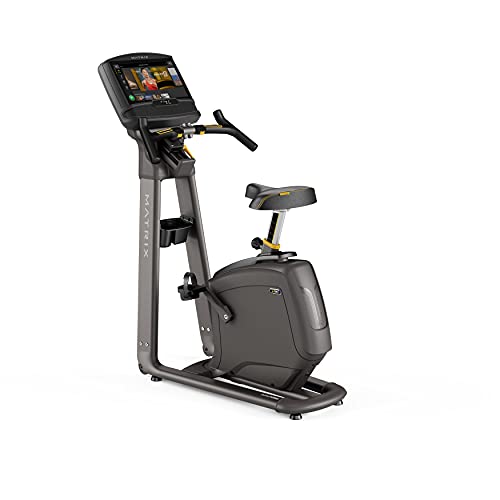
Club-Quality Design for Home Use – Built with the same durable components found in premium gym equipment, engineered for quiet, comfortable, in-home performance.

ONE BENCH for all your workouts : Completely self-contained the bench is designed to fit in any room in your home. The FXD Bench is the most versatile bench in the game with the smallest footprint possible. Perfect for traditional Strength Training HIIT or Bodyweight with a huge range of accessories | ALL-IN-ONE: Minimize transition time so you can maximize your workout. 6 pressing positions 6 pulling positions 100s of banded hook combos stable enough for box jumps. Resistance rails engage training variety and optionality by providing anchor points at any bench angle or position | SELF OR INSTRUCTOR-LED: Crafted to work seamlessly with instructor-led app-led or self-led workouts — dual-angle bench allows you to always be facing forward (toward your phone or instructor) | COMPACT MOBILE: Easy to move with our patented single lever brake release. | UNPARALLELED QUALITY: Built for commercial gym or home use.
Club-Quality Design for Home Use – Built with the same durable components found in premium gym equipment, engineered for quiet, comfortable, in-home performance.
Sample HIIT Circuit: Jump Rope and Resistance Band
Let’s dive into the energizing world of a Sample HIIT Circuit using jump ropes and resistance bands. This workout combines jump rope intervals of 30-60 seconds with resistance band exercises, offering workout variations to target different muscle groups. We typically see 3-6 exercises per circuit, alternating between cardio bursts and strength exercises to maintain intensity. Work-to-rest ratios such as 40 seconds on and 20 seconds off can be adjusted for different fitness levels, ensuring everyone can participate comfortably. With exercise modifications like basic jumps and resistance band squats, we can adapt the routine to suit our needs. Sessions last 15-30 minutes, divided into blocks, each with unique combos, promoting maximum fat burn and muscle activation for a comprehensive workout experience. For optimal results, choose resistance bands with anti-snap technology and non-slip grips to ensure safety during high-intensity intervals.
Recommended Products

【Extra-Large Hammock】Tired of crowded floats? Our 12ft inflatable water hammock fits 8-10 adults, while the 15ft giant lake floats holds 10-12 adults with 1200lbs capacity. Perfect for family gatherings or lake parties—stand, jump, or lounge on this stable round floating ring that won't tip

Comfort-Driven Design: Features a head and neck pillow, padded straps, foot bar, platform cushion, and foam shoulder pads for comfort and proper body alignment while you work out

Durable PVC & Mesh Bottom:Made with layered PVC and a breathable mesh bottom, this inflatable water hammock allows water to flow through for a cooler feel while providing stable support for use in pools, lakes, and outdoor water settings.
Customizing Workouts for Goals
When it comes to customizing workouts for specific goals, it’s essential that we align our exercise choices with our primary fitness objectives, whether that’s fat loss, endurance, strength, or general fitness. Goal alignment is key: for weight loss, combining jump rope sprints with resistance band exercises elevates heart rate and maximizes calorie burn. Endurance goals benefit from longer, moderate to high-intensity intervals, integrating bands for muscular stamina. Strength routines focus on heavier tension bands and timed rope intervals for recovery. For general fitness, a balanced approach using bodyweight moves, jump ropes, and bands offers a well-rounded stimulus. Exercise variety ensures we’re challenging different muscle groups, keeping our workouts fresh and effective while targeting specific fitness gains.
Recommended Products

Full-Body Workout: This infinity rope trainer works your grip, arms, back, core, and legs. This endless rope trainer is also great for building strength, endurance, and flexibility. Whether for daily fitness or physical therapy, this home gym endless rope trainer gives you a full workout without needing a big gym

Bluetooth-connected weighted jump rope set for high-intensity interval & endurance fitness training

First weighted jump rope system built to help you achieve your strength, endurance, and fitness goals; includes a 1LB and 2LB rope and power handles
Portable and Space-Efficient Training
While maximizing our fitness routines, it’s crucial to consider the portability and space efficiency of our equipment, especially for those of us with limited workout areas. Effective space management hinges on smart equipment options like jump ropes and resistance bands. Jump ropes coil neatly into small drawers or bags, while resistance bands fold or roll, saving precious space compared to traditional weights. They’re lightweight, making workouts accessible in compact apartments or outdoor venues. By varying band thickness and length, resistance bands provide diverse resistance levels, simulating different weight loads, which eliminates the need for multiple bulky machines. Utilizing vertical storage solutions or containers helps organize these tools, ensuring our workout zones remain functional and clutter-free, enabling seamless transitions between exercises.
Recommended Products

Broad Space: This garden 2-person sauna (71"W x71"D x71"H) provides ample room to stretch out, crafted from natural Canadian Hemlock wood for optimal heat retention (reaches 195°F in 20 minutes). Resistant to warping. The warm wood interior creates an authentic Finnish-style sauna experience

1-2 Person Outdoor Sauna Room: The overall size of the traditional steam sauna room are L 53.15* D 54.72* H 78.74inch. Large enough for two person enjoy sauna, Perfect size for courtyards, gardens, patio or outdoor spaces, allowing you and family to enjoy a sauna experience in the comfort of your own home

【2 Person Sauna For Home】: Our spacious home wooden sauna size is 5.9' ft x 5.9' ft x 6.23' ft, This two-person sauna offers the ultimate in luxury, Ergonomically designed recliner, it fits the curve of the human spine, making it more comfortable to enjoy
Monitoring Progress and Adjusting Intensity
Monitoring our progress and adjusting workout intensity is crucial for maximizing the effectiveness of a HIIT routine with jump ropes and resistance bands. Performance tracking through heart rate monitoring helps us maintain optimal intensity, aiming for Zones 4 and 5—80-95% of our maximum heart rate—during work intervals. Fitness trackers and apps offer real-time data, enabling precise intensity adjustments. They also facilitate workout logging and dynamic interval modifications, fostering progression. Combining heart rate data with subjective measures like the Rating of Perceived Exertion (RPE) ensures balanced intensity monitoring. RPE helps us recognize fatigue and avoid overtraining. By tracking jump rope speed, resistance band reps, and workout duration, we can evaluate fitness advancements and tailor our sessions for continual improvement.
Recommended Products

Advanced, watch-style dive computer features a stunning 1.4” AMOLED display, scratch-resistant sapphire lens, 51 mm titanium bezel and optional titanium bracelet

Advanced tactical GPS smartwatch features a 1.4” solar charged display, titanium bezel and sapphire lens and built-in LED flashlight for after-dark visibility

Advanced, watch-style dive computer, sized for smaller wrists, features a stunning 1.2” AMOLED display, scratch-resistant sapphire lens and 43 mm stainless steel bezel
Frequently Asked Questions
How Often Should I Do a HIIT Workout With Jump Ropes and Resistance Bands?
We should aim for 2-3 times a week, unleashing the power of frequency guidelines to reap workout benefits. Let’s not overdo it; rest is key! Beginners, start slow and build up as your endurance skyrockets.
Can Beginners Safely Start With a HIIT Routine Combining These Tools?
Yes, we can safely start a HIIT routine with these tools by incorporating beginner modifications and essential safety precautions. Let’s focus on proper form, start with low intensity, and gradually progress as our endurance improves.
What Type of Jump Rope Is Best for HIIT Workouts?
We’d argue speed ropes are the holy grail for HIIT and CrossFit workouts. Their lightning-fast rotation and feather-light design elevate jump rope techniques to an art form, making every jump feel like you’re defying gravity itself.
How Do I Choose the Right Resistance Band for My Fitness Level?
Let’s assess our fitness level and goals to choose the right resistance band. Band thickness correlates with resistance levels; beginners start with lighter bands, while advanced users benefit from thicker, heavier bands for increased resistance and challenge.
Are There Any Specific Warm-Up Exercises Recommended Before Starting This HIIT Session?
Why skip a proper warm-up? Let’s start with dynamic stretching to loosen up, followed by mobility drills like hip circles and torso twists. These ensure our bodies are ready to tackle the intensity of the workout ahead.