As an Amazon Associate, we earn from qualifying purchases. Some links on this site are affiliate links at no extra cost to you. Our recommendations are based on thorough research and editorial judgment.


The Role of Progressive Overload in Home Strength Training

In home strength training, progressive overload is crucial for muscle and strength gains. By gradually increasing the demands on our muscles—whether through additional weight, more repetitions, or shorter rest periods—we stimulate adaptation, resulting in growth and enhanced endurance. This approach, pivotal for preventing plateaus, also promotes cardiovascular health and boosts overall fitness. Incorporating progressive overload keeps routines engaging while driving continuous improvement. For effective home workouts, consider adapting these methods consistently.
Key Takeaways
- Progressive overload is essential for continuous muscle growth and strength gains in home strength training.
- Gradually increasing weight or reps avoids plateaus and promotes consistent muscle adaptation.
- Personalized progression based on individual goals enhances training effectiveness and sustainability.
- Variation in exercises and equipment prevents monotony, boosting motivation and engagement.
- Tracking workouts helps measure progress and identifies areas needing improvement, fostering motivation.
Understanding Progressive Overload
Progressive overload is a cornerstone of effective strength training, and understanding this concept can transform how we approach our workouts. It’s all about gradually pushing our muscles and nervous systems beyond their current limits using overload techniques. By doing so, we stimulate muscle adaptations like hypertrophy and increased strength. We can implement these techniques by adding weight, upping repetitions, or shortening rest intervals. Each method challenges our bodies to adapt, leading to stronger muscles and improved neuromuscular efficiency.
As we progress, our muscles grow, our endurance improves, and our risk of plateauing decreases. This gradual increase in intensity not only enhances muscle size but also fortifies our connective tissues, reducing injury risk. By embracing progressive overload, we ensure our workouts remain effective and engaging. Resistance bands offer an excellent tool for implementing progressive overload at home, as they provide varying resistance levels that can be adjusted through color-coded options ranging from light to heavy intensity.
Key Principles of Progressive Overload

When it comes to mastering the art of progressive overload, understanding the key principles is essential for effective home strength training. We must focus on form adjustments and intensity control, ensuring each rep is executed with precision. Progression cycles guide us, keeping our load management in check to avoid injuries. By incorporating exercise variety and tempo changes, we add new challenges and extend time under tension. Let’s not forget rest strategies; reducing rest periods can increase metabolic stress. Adjusting training frequency and workload distribution, based on individual metrics, ensures sustainable progress. Monitoring these aspects helps us tailor workouts, optimizing adaptations. For home-based progressive overload, adjustable dumbbells with quick weight change mechanisms allow seamless transitions between different resistance levels without interrupting workout flow. Remember, while enthusiasm drives us, consistent and calculated increments prevent plateaus and foster safe, long-term strength gains.
Benefits for Strength and Muscle Growth

Unlocking the benefits of progressive overload is all about understanding how it enhances strength and muscle growth. Muscle hypertrophy occurs when skeletal muscle fibers enlarge due to increased myofibril proteins from repeated tension. With progressive overload, we see microscopic muscle fiber damage, leading to thicker, stronger fibers and sustained hypertrophy. This gradual process, with ≤10% weekly load increases, helps prevent plateaus, ensuring continuous growth.
Strength adaptations involve not just muscle size but also neuromuscular efficiency. By recruiting more motor units, our nervous system boosts functional strength, aiding daily tasks. In early training stages, whether by increasing load or repetitions, we can achieve similar strength gains. These tailored overload methods optimize our muscle strength and size gains effectively.
For home workouts, resistance bands can provide up to 500 lbs of load capacity across three tension levels, making them effective tools for implementing progressive overload without traditional weights.
Applying Overload in a Home Setting

Applying overload in a home setting offers us a practical and accessible way to enhance our strength training routine. By following home workout tips, we can effectively incorporate progressive overload into our regimen. We can increase repetitions to push our muscles further, or add weight with everyday items like water bottles or cans. Resistance band alternatives offer a simple way to add extra challenge without traditional weights. Additionally, increasing time under tension by performing exercises slowly, utilizing deeper movements with chairs or steps, and decreasing rest time between sets all contribute to greater workout intensity. Resistance bands with varying resistance levels from 3 lbs for beginners to over 150 lbs for advanced users provide an excellent tool for implementing progressive overload as we can systematically increase the challenge. It’s essential to maintain proper form and listen to our bodies to prevent injury. With these strategies, we can safely and effectively build strength at home.
Recommended Products

1-2 Person Outdoor Sauna Room: The overall size of the traditional steam sauna room are L 53.15* D 54.72* H 78.74inch. Large enough for two person enjoy sauna, Perfect size for courtyards, gardens, patio or outdoor spaces, allowing you and family to enjoy a sauna experience in the comfort of your own home

【2 Person Sauna For Home】: Our spacious home wooden sauna size is 5.9' ft x 5.9' ft x 6.23' ft, This two-person sauna offers the ultimate in luxury, Ergonomically designed recliner, it fits the curve of the human spine, making it more comfortable to enjoy

Commercial grade 304 stainless steel construction for lasting durability
Effective Bodyweight Exercise Strategies

How can we maximize our strength gains with nothing more than our own body weight? By embracing bodyweight challenges, we can escalate exercise intensity and foster significant muscle growth. First, increase repetitions or add sets gradually. This method enhances training stimulus, encouraging hypertrophy and strength without extra load. Adjusting tempo by slowing down movements extends time under tension, boosting muscle fiber recruitment.
Incorporating pauses or isometric holds at peak contractions increases intensity and muscle activation. Transitioning to advanced variations, like archer push-ups, further elevates resistance and challenge. Employing compound supersets or unilateral training also amplifies workout effectiveness. Finally, incorporating dynamic movements like plyometrics can significantly raise power output, contributing to overall strength and functional capacity. Adding resistance bands to bodyweight exercises provides variable resistance that can enhance strength training by targeting specific muscle groups more effectively.
Recommended Products
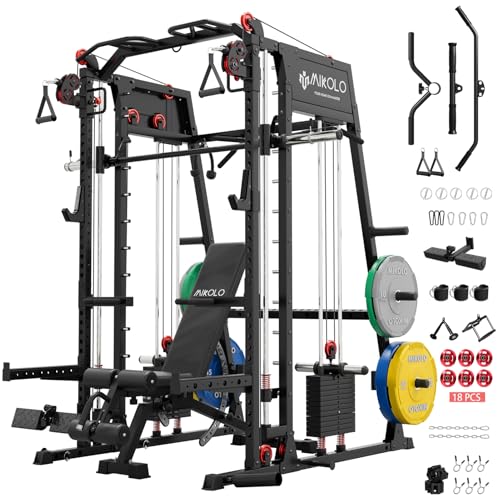
[M4 2.0 — A Classic, Reimagined] M4 Smith Machine has always been the rack users grow with — dependable, accessible, and built for real home gym training. Now, with M4 2.0, we’ve listened to thousands of users and refined every detail. It inherits the same reliable DNA but delivers a sturdier frame, smoother movement, and smarter usability that fits how you actually train.

[All New M4 2.0 Elite] M4 Classic has always been your most reliable companion, growing alongside countless users with exceptional performance and accessible pricing. Today, we return with sincerity—upgraded M4 2.0, born from thousands of real user feedback, makes its debut, inheriting the classic legacy while opening a new chapter of experience

MULTI-GRIP BAR: The Multi-Grip Bar is the newest addition of the pull-up bar options for the Profile squat racks. This pull up bar offers 5 different hand position grips. This bar is powder coated black with an added grip texture.
Tracking Progress for Optimal Results
Why is tracking progress so essential in our strength training journey? Tracking metrics like weight, reps, and sets helps us monitor changes and maintain motivation. Using workout journals or mobile apps, we can easily record each session’s details. Progress visualization through video analysis and progress photos allows us to see improvements in form and muscle definition, boosting our commitment.
Additionally, regular body measurements like muscle circumference or body fat percentage offer a quantitative look at physical changes. These methods ensure we’re increasing our workout volume, adjusting tempo, and reducing rest times appropriately. When implementing progressive overload at home, adjustable dumbbells with 2.5 or 5 lb increments provide the precise weight increases needed to challenge muscles effectively over time. By visualizing our progress and using concrete data, we prevent overtraining, set realistic goals, and tailor our workouts effectively. Tracking is our roadmap to optimal results in home strength training.
Recommended Products

Home Gym Equipment Weight Set:Includes 5, 10, 15, 20, 25, 30, 35, 40, 45, 50, 55, 60, 65, 70, 75, 80, 85, 90, 95, and 100lb dumbbell pairs, (2) of 3-tier racks and (2) of mats. You can use these solid dumbbells in a wide range of exercises, also a perfect choice for both beginners or athletes.

Patented Smith Bar & Weight Multiplier System - Selectorized smith bar with weight stack system that multiplies resistance up to 330 lb. No need for a spotter or olympic weight plates.

CONTENTS: 5lb to 75lb Urethane Dumbbell Set (15 dumbbell pair total) with 3-tier commercial dumbbell rack.
Tailoring Overload to Individual Needs
Tailoring overload to our individual needs is crucial to ensuring that our strength training is both effective and safe. By conducting individualized assessments, we can determine our baseline fitness levels, helping us set appropriate starting weights, reps, and sets. It’s important to consider previous injuries or medical conditions, as these require us to adjust our overload strategies to prevent worsening any issues. Recovery metrics, such as age, sleep quality, and nutrition, guide us in modifying our progression rate to match our recovery capacity. We should monitor personal fatigue and soreness levels, which indicate when it’s time to adjust intensity or volume. By aligning our progression with personal goals and recovery needs, we ensure a sustainable and effective training journey. Adjustable dumbbells offer particular advantages for home strength training, as they allow modifications to resistance based on user strength progression and eliminate the need for purchasing separate weights for different fitness levels.
Recommended Products

Including: Speediance Gym Monster 2 Smart Home Gym & Rowing Bench & Adjustable Weight Bench & Smart PowerGrip Handles & Skiing Handles Bundle

💪 Best Home Gym Equipment: Includes 5, 10, 15, 20, 25, 30, 35, 40, 45, 50, 55, 60, 65, 70, 75, 80, 85, 90, 95, and 100lb dumbbell pairs, (2) of 3-tier BLUE RACKs and (2) of MATs. You can use these solid dumbbells in a wide range of exercises, also a perfect choice for both beginners or athletes.

Including: Speediance Gym Monster 2 Works Plus & Smart PowerGrip Handles & Weight Lifting Belt & Gym Accessories Organizer & Skiing Handles 2 Bundle
Preventing Plateaus With Overload Techniques
To keep our strength training effective and prevent those frustrating plateaus, we can apply progressive overload techniques. By utilizing specific overload methods, like gradually increasing weight or reps, we encourage continuous muscle adaptation, crucial for plateau prevention. Increasing weight, even in small increments, ensures muscles face consistent challenges. Alternatively, adding volume by upping sets, reps, or workouts per week can significantly enhance muscle growth. Another method is time under tension, where slowing down movements increases muscle engagement. Ensuring a full range of motion, like deeper squats, targets muscles differently, promoting further adaptation. Adjustable kettlebells offer an ideal solution for implementing progressive overload at home, allowing you to customize weight options and make precise incremental increases as your strength develops. Consistency is key; regularly applying these techniques keeps muscles from settling into a comfort zone, ensuring ongoing progress in strength training.
Recommended Products
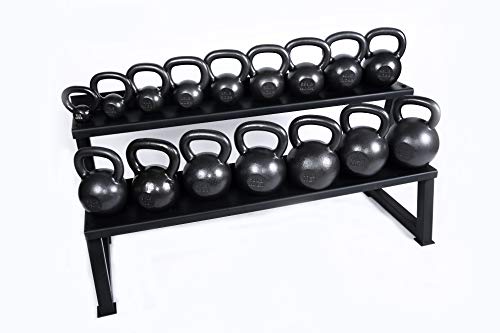
Ader 5lb, 10lb, 15lb, 20lb, 25lb, 30lb, 35lb, 40lb, 45lb, 50lb and 60lb cast iron premier kettlebells
Ader premier kettlebells 2pcs of each 5, 10, 15, 18, 25, 30, 35lb (14pieces 280lbs) picture for reference only

COMFORTABLE, COMPACT, AND EASY TO USE - 10 piece light bundle kit. Includes (2) 4kg (10lbs), (2) 6kg (14lbs), (2) 8kg (18lbs), (2) 10kg (22lbs) & (2) 12kg (26lbs). The 3-in-1 TRX YBell Series is considered the best free weight set for a home gym by countless customers. The TRX YBell is a dumbbell, kettlebell and push-up stand all in one tool. With the TRX YBell, a grip change is an equipment change. By changing your grip on the TRX YBell, the weight distribution shifts changing it from one piece of equipment to another
Maintaining Motivation Through Variation
When it comes to maintaining motivation in our home strength training routines, introducing variation is an essential strategy. Variation strategies help prevent workout monotony, a common dropout reason in strength programs. By altering exercises, sets, reps, and equipment, we can keep our minds engaged and reduce boredom. Motivation techniques like mixing training modalities—using bodyweight, bands, or dumbbells—enhance enjoyment, promoting long-term commitment. Novelty stimulates the brain’s reward system, reinforcing adherence. Incorporating minor changes provides visible progress markers, boosting psychological investment. Scientific evidence suggests exercise variety correlates with higher adherence rates, as novelty and autonomy increase intrinsic motivation. While too much variation might hinder technique mastery, a balanced approach ensures sustainable, engaging workouts. Equipment like Pilates bands offers multiple resistance levels that allow for seamless progression and variety within the same workout modality.
Physiological Impacts of Overload Training
Progressive overload stands as a cornerstone of effective home strength training, driving significant physiological changes by gradually increasing the demands placed on our muscles. Through this process, we experience both neuromuscular adaptations and muscle hypertrophy. As we increase the load, our central nervous system enhances its ability to transmit signals, optimizing motor unit recruitment and improving neuromuscular coordination. This leads to more efficient and synchronized muscle activation.
Moreover, metabolic adaptation occurs as our muscles experience elevated metabolic stress, promoting hypertrophic signaling and muscle growth. Consistent overload fosters cellular remodeling, increasing mitochondria and capillary density, which boosts muscle endurance. However, muscle recovery is crucial; without adequate rest, we risk injury and performance decline. Balancing overload with recovery ensures continued progress and adaptation. Implementing progressive overload in home workouts becomes particularly effective with rubber coated dumbbells, which offer weight ranges from 5 to 50 pounds to accommodate gradual strength increases.
Health Benefits Beyond Muscle Growth
While muscle growth is a well-known benefit of strength training, the health advantages of progressive overload extend far beyond just building bigger muscles. By enhancing cardiovascular fitness, we improve heart and lung function, which reduces the risk of chronic diseases like type 2 diabetes. Bone health also benefits as progressive overload stimulates osteoblast activity, increasing bone density and reducing fracture risk. Functional strength gained from this training supports daily living, promoting independence as we age. On a mental wellness front, overload training boosts mood and cognitive function, thanks to neuroplasticity and hormonal changes. Additionally, the endocrine response enhances anabolic hormones, supporting overall vitality. Lastly, improved immune support helps us stay resilient against illnesses, bolstering our overall health.
Safety Considerations in Overload Training
Ensuring safety in overload training is crucial for preventing injuries and achieving long-term success. We must prioritize injury prevention by mastering technique before increasing resistance. Correct form minimizes risks like strains or joint damage. Emphasizing warm-up importance, we prepare our muscles and joints for the demands ahead. Individualized training tailored to our fitness level, age, and goals ensures safe progression, avoiding mismatched demands that lead to overuse injuries. Gradual changes, such as a 10% weekly increase in weight or reps, support safe musculoskeletal adaptation. Recovery strategies, including monitoring signs of overtraining like fatigue or soreness, help maintain safety. Consulting professionals for personalized plans further aids in aligning progression with our capacity, reducing injury risks.
Managing Recovery and Rest Periods
Having established the importance of safety in overload training, let’s turn our attention to managing recovery and rest periods, which are just as vital for effective home strength training. Our approach should involve recovery phases, strategically placed every 4 to 6 weeks, allowing muscle recuperation and adaptation. Implementing rest techniques, like adjusting rest intervals between sets, is crucial. Shorter rest periods, around 60-90 seconds, can boost workout intensity, while longer ones help regain strength for heavier lifts. Monitoring fatigue and readiness scores guides us in optimizing rest phases. Sharp joint pain or a rise in resting heart rate signals inadequate recovery, urging us to adjust. By listening to our bodies, we ensure balanced progression and avoid injury.
Avoiding Overtraining and Setbacks
When it comes to avoiding overtraining and setbacks in home strength training, it’s crucial to approach our regimen with a strategic mindset. Recognizing overtraining symptoms like persistent soreness, fatigue, and irritability is key to preventing issues. Recovery importance cannot be overstated; it’s essential to balance workout intensity with adequate rest. By implementing gradual increases in load or intensity, and monitoring our mood and sleep quality, we can track our recovery effectively. Detailed workout logs help identify early signs of overtraining, allowing us to adjust variables like weight or reps rather than pushing through discomfort. Prioritizing proper nutrition, hydration, and structured programming further aids in avoiding setbacks, ensuring our strength gains are sustainable and resilient over the long term.
Strategies for Continued Progress and Growth
To ensure our home strength training remains effective and engaging, it’s important to adopt strategies that promote continued progress and growth. By gradually increasing weight or repetitions, we encourage strength adaptation, challenging our muscles to grow. Enhancing volume through more sets or weekly workouts amplifies muscle stress, while modifying tempo or varying exercises prevents plateaus. This requires mental resilience, as consistent effort and focus on technique, such as mastering form and utilizing full range of motion, are crucial. Incorporating resistance bands or household items can diversify our routines. To sustain momentum, we should track progress and maintain consistency, ensuring that each workout builds on the last. By embracing these strategies, we cultivate enduring strength and resilience in our home training endeavors.
Frequently Asked Questions
Can Progressive Overload Be Combined With Other Training Methods?
Of course, we can combine progressive overload with other training methods. Picture us juggling flaming resistance bands while doing circuit training; it’s a recipe for muscle confusion, enhanced strength, and endless entertainment. Just don’t drop anything!
How Does Diet Influence Progressive Overload Effectiveness?
Our diet’s crucial for progressive overload success. Protein timing enhances muscle repair, while a caloric surplus fuels growth. Let’s ensure balanced nutrition to optimize strength gains and recovery, maximizing results from our home strength training efforts.
What Role Does Mental Focus Play in Progressive Overload?
Mental focus is the backbone of progressive overload. We can’t thrive without mental resilience and concentration strategies, as they help us push boundaries, track progress, and stay motivated. Let’s harness focus to maximize our gains together.
How Can Technology Enhance Progressive Overload Tracking?
Technology enhances progressive overload tracking by using app tracking for precise logging and wearable devices for real-time feedback. Together, they optimize our training by providing insights into performance, ensuring consistent and effective strength gains without guesswork.
Are There Specific Breathing Techniques for Progressive Overload Exercises?
Yes, there are. Let’s focus on breathing rhythms and inhalation timing. Exhale on exertion, inhale on lowering. Use the Valsalva maneuver cautiously during heavy lifts for stability, ensuring timing matches movement for effective progressive overload.