As an Amazon Associate, we earn from qualifying purchases. Some links on this site are affiliate links at no extra cost to you. Our recommendations are based on thorough research and editorial judgment.


How to Maintain Proper Posture on an Exercise Mat

To maintain proper posture on an exercise mat, we ensure our form is correct by engaging core muscles and aligning the spine. Non-slip mats and printed alignment guides offer stability and help position limbs accurately. Cushioning supports joints, reducing strain. Warm-up exercises enhance posture, while core-strengthening techniques like plank variations stabilize our spine. Stretching increases flexibility, addressing muscle imbalances. Monitoring tools provide feedback on posture. Let’s uncover more techniques and tips for effective posture maintenance.
Key Takeaways
- Use non-slip mats with printed alignment guides to ensure correct limb and spine placement.
- Engage core muscles consistently to stabilize the spine and maintain balance.
- Utilize yoga bolsters and cushions for ergonomic support and joint relief.
- Monitor posture with wearable devices that track body angles and joint positions.
- Practice dynamic and static stretches to enhance flexibility and prevent postural deviations.
Benefits of Proper Posture on an Exercise Mat
When it comes to exercising on a mat, maintaining proper posture is crucial for maximizing the benefits of your workout. By focusing on alignment cues, we can ensure that our body moves correctly and stays balanced. Selecting the right mat plays a significant role in this process. A non-slip mat provides stability, helping us concentrate on form without worrying about slipping. Printed alignment guides can aid in placing our hands, feet, and spine precisely, promoting symmetrical posture. The mat’s cushioning supports our joints, reducing the strain on our knees and elbows during exercises. For additional support during challenging poses or when recovering from injuries, yoga bolsters can provide ergonomic support that promotes proper spinal alignment while reducing joint stress. This combination of alignment cues and thoughtful mat selection not only enhances stability but also prevents injury, allowing us to enjoy a safe and effective workout routine.
Essential Warm-Up Exercises for Posture
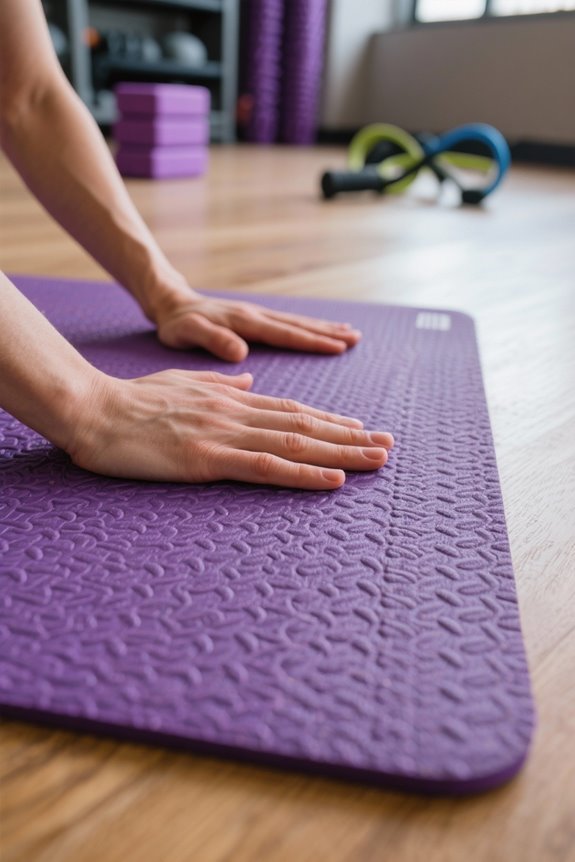
Before diving into any exercise routine, it’s essential to start with a warm-up that primes our bodies for posture-centric workouts on the mat. A dynamic warm-up like neck rolls and shoulder shrugs increases blood flow and flexibility, preparing our muscles. Arm circles and torso twists further enhance mobility, crucial for maintaining proper posture. To activate our postural muscles, try exercises like “shrug, squeeze, relax” to engage the upper back, and overhead reaches to activate scapular stabilizers. Seated marches and sit-to-stands target core and leg muscles, promoting strong alignment. Focused stretching, such as calf and hamstring stretches, supports flexibility and mobility. Finally, integrate toe taps, heel lifts, and bird-dogs to prepare our spines for balanced posture. Using an exercise mat with ergonomic designs can significantly reduce injury risks during these warm-up movements by providing proper support and alignment.
Core Strengthening Techniques
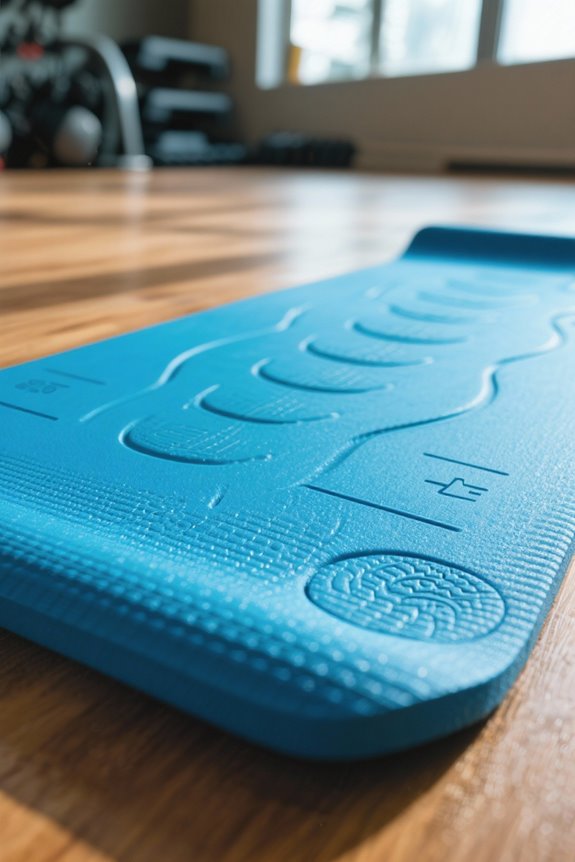
Though often overlooked, core strengthening techniques are foundational for maintaining proper posture on an exercise mat. Core engagement and muscle activation are key. Let’s start by engaging the transverse abdominis; we pull our lower abdomen inward, stabilizing the spine during exercises. Activating the pelvic floor muscles with a gentle lift between the pubic bone and tailbone supports lumbar stability. Multifidus engagement is achieved by gently contracting muscles alongside the spine, aiding vertebral alignment. Plank variations, such as forearm planks and side planks, build endurance and lateral stability, crucial for posture. We can raise the difficulty by lifting an arm or leg, enhancing coordination. Incorporating these techniques, we support our spine, reduce back pain, and improve overall mobility. For enhanced grip support during mat exercises that require hand placement, workout gloves can provide additional stability and prevent hand fatigue.
Stretching Exercises for Improved Posture
In our journey to maintain proper posture on an exercise mat, we’ve explored core strengthening techniques that stabilize and support our alignment. Now, let’s delve into stretching exercises that enhance posture by increasing flexibility and counteracting muscle tightness. Dynamic stretching, like the Cat-Cow stretch, mobilizes the spine for better alignment, while static stretching, such as the Hamstring stretch, lengthens muscles tightened by sitting.
Regular stretching improves joint range of motion, reduces stiffness, and lowers injury risk. For example, the Wall Angels stretch targets chest and shoulder muscles, promoting thoracic extension. By holding each stretch for 15–30 seconds and repeating them 2–3 times, we can improve flexibility and help our bodies maintain a neutral spinal alignment, reducing postural distortions. When performing these stretches, choosing a mat with appropriate thickness—typically ranging from 0.5 to 2 inches—provides essential joint support and enhances comfort during your posture-improving routine.
Effective Posture Correction Exercises

When striving for an upright stance and confident presence, effective posture correction exercises are essential to our routine. By integrating alignment techniques and correcting posture habits, we can counteract the effects of daily slouching. Let’s focus on some key exercises: Wall Angels help activate our upper back muscles, while Pectoralis Corner Stretches open our chest, reducing tightness. Shoulder Rolls enhance mobility, and Chin Nods target deep neck flexors to counter forward head posture. Additionally, Pelvic Tilts on the mat engage the core, promoting a neutral spine. These exercises, done consistently, support our posture and help us stand taller, improving both our alignment and overall well-well. The non-slip surfaces of quality exercise mats are crucial for maintaining stability during these posture correction movements, reducing the risk of injury while performing dynamic exercises. Incorporating them into our daily routine can bring about significant, lasting improvements.
Functional Training for Posture Enhancement
Functional training for posture enhancement offers a comprehensive approach to improving our body’s alignment and movement efficiency. By emphasizing multiplanar movements, we engage multiple muscle groups and joints in various planes, mimicking real-life activities. This method prioritizes whole-body integration over isolated exercises, ensuring our bodies work cohesively. Dynamic stability training challenges our balance and coordination, essential for maintaining proper posture in daily tasks. Key exercises like planks and deadlifts target core musculature, spinal extensors, and the glutes, enhancing our postural muscles’ strength and neuromuscular control. Progressing with wall slides and hip hinges further reinforces posterior chain activation, critical for an upright torso. Stretching straps can serve as valuable resistance tools that aid flexibility while helping achieve better form and improving range of motion during these postural exercises. Let’s embrace these exercises to improve our posture and functional movement.
Importance of Consistency in Posture Maintenance
Embracing functional training‘s comprehensive approach naturally leads us to consider the importance of consistency in posture maintenance. By reinforcing postural habits, we train our muscles and nerves through repeated practice on exercise mats, allowing neuromuscular adaptations to occur. Consistent core and postural muscle engagement enhances muscle memory, diminishing the need for conscious corrections. Over time, this consistency reinforcement reduces compensatory movements and imbalances, promoting long-term spinal alignment improvements.
Regular practice not only minimizes injury risks by distributing body weight evenly but also reduces chronic discomfort like back pain. Establishing these postural habits through repetition and routine is key for sustained improvement. As we consistently maintain proper posture, we optimize muscle recruitment, boosting strength and performance while supporting balanced and efficient movement patterns. Incorporating resistance bands into your mat routine can further enhance postural muscle strengthening while providing adjustable resistance that promotes proper form and technique development.
Techniques to Prevent Slouching
Preventing slouching is essential for maintaining effective posture during exercise, and it begins with strengthening and stretching key muscle groups. By focusing on strengthening our back muscles, especially between the shoulder blades, we can keep our shoulders back, preventing the dreaded slouch. Incorporating exercises like seated cable rows helps counteract forward rounding, while core strength stabilizes the spine, promoting alignment strategies. Stretching tight pectoral muscles, with tools like yoga straps, combats slouching by reversing habitual shoulder rounding. Awareness techniques, such as consciously engaging our shoulder blades, build muscle memory and reinforce correct posture. Regularly practicing high plank and side plank exercises develops the strength and endurance necessary for maintaining proper posture. Additionally, incorporating adjustable dumbbells into your routine allows for progressive strength training that can target specific muscle groups responsible for maintaining upright posture. Together, these techniques create a comprehensive approach to slouch-proofing our exercise routine.
Role of Flexibility in Maintaining Posture
After mastering techniques to prevent slouching, we turn our attention to flexibility’s role in maintaining proper posture on an exercise mat. Flexibility techniques, such as static and dynamic stretching, enhance joint mobility, allowing us to maintain a natural spinal alignment and core stabilization. By increasing our range of motion, mobility exercises help muscles maintain optimal length-tension relationships, supporting joint alignment and reducing poor posture. Greater flexibility also addresses muscle imbalances, preventing postural deviations like forward head posture. Consistently practicing flexibility techniques reduces muscle strain, minimizing the risk of overuse injuries and discomfort. It’s important to remember that flexibility complements core and postural muscle strength, enabling us to adapt dynamically during exercise and maintain balanced support, ultimately leading to improved posture. Adding adjustable ankle weights during flexibility exercises can provide additional resistance to strengthen supporting muscles while maintaining proper alignment.
Tips for Monitoring and Adjusting Posture
When it comes to monitoring and adjusting our posture on an exercise mat, technology offers us some impressive tools. Embedded pressure sensors in smart mats give us real-time feedback by detecting body pressure distribution, allowing on-the-fly posture adjustments. This technology identifies misalignments and asymmetrical weight shifts with high spatial resolution, such as 50×50 mm sensing points. Meanwhile, wearable devices like smart bands track body angles and joint positions, enhancing mat-based posture monitoring. Integrating data from both sources increases accuracy, helping us refine our exercise technique and reduce injury risks. Additionally, computer vision systems use skeletal tracking to assess posture, though they require clear sight lines. For those looking to maintain proper posture throughout their workday, stability ball chairs can complement floor-based exercises by promoting core engagement and spinal alignment during desk work. These innovations, when combined, provide a comprehensive approach to posture monitoring and adjustment.
Tools and Equipment for Posture Support
As we delve into the realm of tools and equipment for posture support, it’s essential to consider the role of exercise mats in maintaining proper alignment during our workouts. Choosing the right mat involves evaluating equipment compatibility with our exercise routine. For yoga, we need thin, sweat-absorbent mats for grip, while Pilates demands thicker mats for spine protection. General fitness enthusiasts might prefer dense, padded foam mats for robust support. Proper mat maintenance is crucial; closed-cell foam mats resist moisture, ensuring durability and easy cleaning. Specialized accessories like wedges, blocks, and cushions offer targeted support, enhancing posture by maintaining alignment. By selecting mats with suitable traction, cushioning, and thickness, we ensure our posture remains optimal, reducing joint impact and enhancing our workout experience.
Common Mistakes to Avoid on the Exercise Mat
Navigating the exercise mat can be tricky, but by understanding common mistakes, we can enhance our workouts and prevent injuries. One key posture pitfall is misalignment of the spine and limbs, which stresses joints and reduces muscle engagement. Maintaining alignment awareness is crucial; avoid excessive arching or sagging of the spine, and ensure feet aren’t misplaced during exercises like bridging to prevent undue knee and hip strain. Let’s not forget the importance of controlled movement speed. Rushing through exercises compromises core engagement and increases the risk of injury. Attention to head, shoulder, and neck positioning is essential too—improper alignment can strain the cervical spine and disrupt whole-body balance. By being mindful, we can avoid these common pitfalls and maximize our workout benefits.
Importance of Breathing in Posture Maintenance
Breathing is the unsung hero of posture maintenance, intricately linked to how our bodies align and function. Diaphragmatic breathing plays a crucial role in enhancing our respiratory efficiency, strengthening respiratory muscles, and expanding our chest. By focusing on diaphragmatic techniques, we can take deeper breaths, allowing for better oxygen intake. This not only supports our core muscles but also promotes postural stability by reducing reliance on auxiliary muscles.
When we engage in these breathing exercises, our spinal mobility improves, leading to reduced musculoskeletal strain. Proper breathing ensures our posture remains upright and aligned while on an exercise mat. Let’s remember that improving our breathing habits can significantly impact our overall posture, making our exercise routines more efficient and effective.
How to Incorporate Posture Exercises Into Daily Routine
While breathing techniques lay a solid foundation for posture, integrating specific exercises into our daily routines can amplify these benefits. We should aim to perform posture routines once or twice daily, seeing improvements in 2-4 weeks. Short, targeted sessions of 7 to 10 minutes fit easily into our schedules without much time commitment. Alternating between upper and lower body routines ensures comprehensive benefits. Let’s use daily reminders to incorporate exercises like wall slides or chin tucks during breaks from seated work, counteracting poor posture. By standing and moving every hour, we can work on stretches such as hip flexor or thoracic rotations. At both work and home, these exercises require minimal space and no equipment, making them easy to integrate.
Long-Term Benefits of Good Posture Practices
Good posture isn’t just about looking poised; it’s a fundamental element of our long-term health and well-being. By aligning our bones and joints, we reduce the risk of arthritis and chronic joint pain. Contrary to posture myths, good posture isn’t only about aesthetics—it’s crucial for efficient muscle use, reducing overuse injuries and enhancing balance. This minimizes posture disadvantages like falls in older adults. Improved posture supports better form during exercise, decreasing injury rates. Mentally, it boosts self-confidence and can alleviate symptoms of depression and anxiety. Improved breathing and circulation from proper posture enhance energy levels and cognitive function. Ultimately, it’s an investment in our future, ensuring we remain active, healthy, and vibrant throughout our lives.
Frequently Asked Questions
How Can I Modify Exercises if I Have a Pre-Existing Injury?
We’ve all faced our Achilles’ heel at times. Let’s modify movements and choose safe alternatives like cycling for knee injuries. Consult professionals to tailor exercises, ensuring they’re within pain-free limits while monitoring symptoms and adjusting as needed.
What Are the Best Exercises for Beginners to Start With?
Let’s start with bodyweight workouts like planks, push-ups, and leg raises. Incorporating foundational stretches such as the cat-cow and child’s pose will enhance flexibility and prepare our bodies for more challenging exercises as we progress.
How Often Should I Replace My Exercise Mat for Optimal Support?
We’d replace our exercise mats more often than we’d like, ideally every 6-24 months, depending on usage. Mattresses’ durability can’t match deteriorating exercise mat materials like PVC, leading to replacement when grip fades or wear shows.
Can Posture Exercises Help Alleviate Chronic Pain?
Yes, they can! Let’s integrate posture improvement exercises into our routine to help alleviate chronic pain. By focusing on posture correction and core stabilization, we’ll improve alignment and reduce discomfort, ultimately enhancing our overall well-being.
How Do I Choose the Right Mat Thickness for Posture Exercises?
We’ve got a million options, but choosing the right mat thickness boils down to balancing exercise support and comfort. For joint-intensive exercises, a 6-8mm mat works wonders. Thinner mats (3-5mm) suit standing postures needing stability.