As an Amazon Associate, we earn from qualifying purchases. Some links on this site are affiliate links at no extra cost to you. Our recommendations are based on thorough research and editorial judgment.


Drop Sets Explained: Progressive Resistance Band Technique

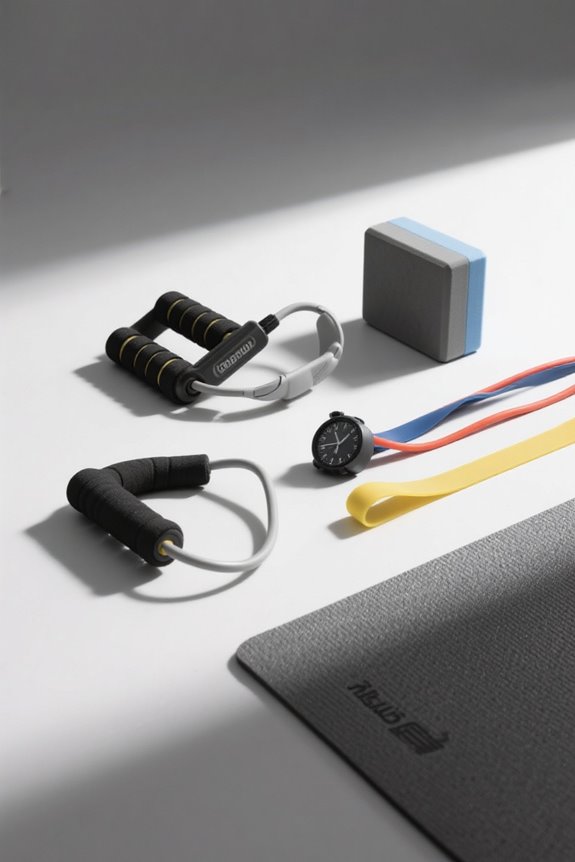
Professional fitness photography featuring premium resistance bands arranged in progressive resistance levels on a pristine white gradient backdrop. Shot with Canon EOS R5 and RF 50mm f/1.2L at f/2.8, the composition showcases color-coded bands from light to heavy resistance, perfectly coiled with chrome carabiners and foam handles. Dramatic studio lighting creates soft shadows that emphasize texture and build quality. Sharp focus highlights the durable latex material and reinforced stitching. Commercial-grade product shot demonstrates the complete progressive training system in vibrant blues, greens, and blacks against minimalist background.
# Drop Sets Explained: Progressive Resistance Band Technique
Let’s demystify drop sets—a technique boosting muscle growth with resistance bands. By gradually reducing tension, often a 10%-30% decrease, we maintain muscle engagement and target various motor units for optimal fiber activation. This efficient approach enhances hypertrophy and endurance. Drop sets require utilizing bands with different tension levels, beginning with the heaviest to near failure, then adjusting. Such precise resistance modulation acts to amplify overall performance, hinting at even deeper insights awaiting.
Key Takeaways
- Drop sets involve reaching muscular failure and continuing exercise with reduced resistance, enhancing muscle activation and growth.
- Resistance bands allow for quick tension adjustments, making them ideal for performing drop sets effectively.
- Bands engage muscles throughout the movement, optimizing fiber recruitment and fatigue levels for efficient hypertrophy.
- Perform drop sets by starting with the heaviest band and gradually reducing tension to maintain muscle stress.
- Integrating drop sets into workouts increases training volume and muscle fatigue, targeting various motor units.
Understanding Drop Sets
Let’s dive into the world of drop sets, an advanced resistance training technique that’s truly worth exploring. Historically, drop sets have evolved as a staple for bodybuilders seeking to maximize muscle fatigue by working to failure, then reducing weight to continue the effort. Despite their efficacy, misconceptions abound, with some believing they’re unsuitable for beginners or only effective with heavy weights. In reality, drop sets can be adapted for various fitness levels and equipment, including resistance bands.
The core concept involves reaching muscular failure, then continuing with reduced loads, typically decreasing by 10% to 30%. This method targets different motor units, enhancing muscle activation. Understanding the history and clearing up misconceptions helps us appreciate drop sets for their ability to intensify workouts efficiently. Similar to how boxers benefit from multi-layer foam padding in their gloves for enhanced protection during training, drop sets provide layered intensity that progressively challenges muscles through different phases of fatigue.
Benefits of Drop Sets With Resistance Bands

When it comes to maximizing the benefits of drop sets, incorporating resistance bands offers an adaptable and practical approach that’s hard to ignore. With their ability to adjust tension swiftly, resistance bands provide an equipment variety that enhances performance monitoring during workouts. They’re perfect for those of us looking to efficiently build hypertrophy and save time, as drop sets with bands can achieve muscle growth in less than half the time of traditional workouts. The elastic tension keeps muscles engaged, optimizing fiber recruitment and fatigue, crucial for strength and endurance gains. Whether we’re at home or in a gym, the versatility of bands makes them suitable for different environments, ensuring a safe, effective workout for individuals at any fitness level. The portability of resistance bands allows for convenient workouts at home or while traveling, with lightweight designs that include anti-snap technology for enhanced safety during intense drop set sessions.
Recommended Products


𝗖𝗢𝗟𝗢𝗥 & 𝗦𝗜𝗭𝗘: Luxury Series Features a White Frame, Fabric Color: Sunny Yellow with Silver Gray and Blue Stripes, Size: 14' Wide x 10' Projection Full Extension. Advaning Awnings are 100% Fully Pre-Assembled and Ready for Installation.

【Wide Protocol Compatibility】 SMA26 Plus GNSS RTK capable of receiving and broadcasting signals compatible with CSS(Lora),Transparent, TT450S,Trimtalk, TRMMARK3, SOUTH, SATEL standard radio protocols. ensuring compatibility with a wide range of rover&base stations
How to Perform Band Drop Sets

Performing band drop sets requires precision and preparation to optimize muscle engagement and growth. First, we need to focus on band selection; choosing resistance bands with varying tension levels helps us adjust seamlessly. Securely anchoring our bands or using designated handles ensures safety and maximizes effectiveness. Managing tension is crucial; starting with shorter bands increases resistance, allowing us to adjust as needed. We begin with the heaviest band, performing reps to near failure, then reduce tension by removing or unhooking a band. This quick transition keeps muscles under constant stress, enhancing growth. By continuously managing tension through strategic band selection and adjustments, we can perform effective drop sets that challenge our muscles and drive results. Adding a balance ball trainer with resistance bands can further enhance the instability challenge, forcing your core to work harder while performing drop sets and creating additional muscle activation throughout the movement.
Recommended Products

Dual-Use Design: This inflatable island features a two-part structure that works as both a floating water lounge and a standalone land canopy. Use the full setup on lakes, pools, or seaside areas, or set the canopy alone on grass or beaches for flexible outdoor use
Download and print new PDF Size-Guide to ensure the watch fits your wrist. Please, precisely follow all the instructions mentioned in the PDF for a seamless and accurate printing.

OLYMPIC WEIGHTS: One 415 lb Set: (2) 2.5 lb, (4) 5 lb, (4) 10 lb, (4) 25 lb, (2) 35 lb and (4) 45 lb of TRI-GRIP Rubber Coated Weight Plates. Total Weight 415 lbs. Olympic barbell clamps NOT included.
Resistance Adjustment Techniques

Understanding resistance adjustment techniques is crucial for maximizing the effectiveness of our band workouts. By refining our technique, we can manipulate band resistance to suit our strength levels and goals. We might stack multiple bands or select different thicknesses to incrementally increase resistance. Adjusting anchor points or grip positions allows us to change leverage, enhancing our muscle engagement. We can also modify our body position or joint angles to alter tension during exercises, ensuring optimal muscle stimulation. Gradually replacing lighter bands with heavier ones, monitoring performance, and employing partial reps helps us maintain effective resistance without risking injury. Using these methods, we can systematically progress, combining incremental resistance changes with increased repetitions for comprehensive overload. Quality resistance bands made from natural latex construction provide the durability and consistent resistance needed for effective progressive training techniques.
Recommended Products

VERSATILE EXERCISE BANDS FOR HOME, CLINIC & GYM USE – These latex-free workout bands are perfect for physical therapists, chiropractors, athletic trainers, fitness professionals, and home users seeking effective resistance training equipment. Use for rehab therapy, muscle strengthening, flexibility improvement, injury recovery, balance training, and full-body workouts.

HEATED OTTOMAN DISGUISE — VIBRATION PLATE FOR HOME USE: The RelaxaVibe is a 4D vibration plate hidden inside a premium upholstered ottoman; press the built-in heat button to enjoy warmth on tired muscles while seated, then remove the cover to reveal a full-body vibration machine

Complete Pilates Studio at Home:Reformer + Pilates box enables 100+ exercises (e.g., box jumps, seated stretches, balance training), transforming your routine from classical reformer to full-body functional training
Sample Drop Set Protocols

Having refined our resistance adjustment techniques, let’s explore sample drop set protocols to elevate our training. Our sample drop set strategies cover several drop set variations, each tailored to optimize muscle fatigue and growth. The Multi-Stage Resistance Band Drop Set begins with high tension, gradually reducing load with minimal rest, pushing us to near failure. The Variable Band Tension Drop Set, perfect for limited equipment, decreases tension by stepping closer to the anchor. The Time-Based Drop Set Superset pairs exercises for a timed, high-intensity challenge. For those focusing on specific muscles, the Band Size Drop Set offers quick band changes. Lastly, the Combined Weight and Band Drop Set merges weights with bands for extended sets, maximizing hypertrophy potential. Like anti-burst features in yoga balls that prevent unexpected deflation during intense workouts, proper resistance band selection ensures consistent tension throughout your drop sets without equipment failure.
Exercises Suitable for Band Drop Sets
Band drop sets are a powerful tool in our strength training arsenal, offering versatility and effectiveness across various exercises. For upper body focus, we can use bicep curls, pull-ups, and pushups with bands to introduce band difficulties and enhance muscle endurance. Exercise variations like bent-over rows and banded rear delt flies target the back and shoulders effectively.
For the lower body, front squats and deadlifts with bands allow us to adjust resistance swiftly, while bodyweight paused squats and glute bridges focus on quads and glutes. Full-body routines benefit from superset combinations of dumbbells and bands, integrating movements like the Pallof press and band-resisted push-pull exercises. These variations maximize muscle activation and fatigue, making band drop sets a dynamic part of our workouts.
When selecting bands for drop sets, consider options with color-coded resistance levels that allow for quick transitions between different intensities during your workout.
Recommended Products

HANDLE SHARP METAL & GLASS WITH CONFIDENCE: ANSI/ISEA 105 Cut Level A6 protection shields hands from sheet metal, glass, stamped parts, blades, and razor-edged materials that lower-rated gloves can't stop. Also rated ANSI Level 3 Abrasion and Level 2 Puncture Resistance.

Ultimate Cut Protection: These cut-resistant sleeves conform to the highest ANSI A9 cut resistance standard, making them the top choice for supreme cut protection. Utilizing lightweight shell technology, these sleeves are over 50% lighter than comparable A9 sleeves while delivering identical cut protection. The shield graphic is color-coded for easy cut level identification even from a distance

Adjustable Fitness Benches: The Quick-Change adjustable bench lets you switch between 20 different positions using the easy letter & number system lets you quickly switch between over 50 workouts.
Safety Considerations
When incorporating resistance bands into our workouts, ensuring safety is crucial to prevent injuries and maximize effectiveness. Adhering to safety guidelines like inspecting bands for wear and tear, such as nicks or tears, before each use is essential. Proper storage in a dry place prevents degradation, while using non-latex options can help those with allergies. To prevent injury, secure anchor points firmly and ensure bands match the weight load to avoid overstretching. Proper technique and form are vital, so let’s focus on maintaining correct posture and controlled breathing. Incorporating a dynamic warm-up and cool-down stretching reduces muscle strain. We should also listen to our body signals, stopping if pain occurs, and stay hydrated to support recovery. Additionally, beginners should be aware that there is a learning curve when transitioning from traditional weights to resistance bands, requiring patience and practice to master proper techniques.
Comparing Band and Traditional Drop Sets
Comparing band and traditional drop sets reveals intriguing differences in how we can adjust load and control intensity during workouts. Traditional drop sets quickly change weights by 10-20% increments, offering rapid mechanical adjustments. In contrast, resistance band drop sets provide band versatility and training adaptability by altering band tension or distance from the anchor point. This allows for continuous load variation, maintaining a fluid resistance curve.
Both methods aim for muscle failure through progressive resistance reduction, but bands excel in prolonged time under tension, enhancing metabolic stress. While traditional sets suit gym environments with multiple weights, bands offer portability and require minimal equipment, ideal for small spaces. Band drop sets excel in adaptability, making them perfect for diverse workout settings. For those training in compact areas, adjustable squat racks with integrated resistance band anchor points can maximize workout versatility while maintaining space efficiency.
Recommended Products

INDUSTRY LEADER: For 30+ years, Body-Solid has held the widest array of products designed to meet the demands of the ever-changing fitness industry (home gym, free weight machines, treadmills, bikes, ellipticals, weight plates, kettlebells, dumbbells, flooring, accessories and more). Our products are cutting edge and reliable and are built for Life……Your Life.

【Ultra-Space Efficient】Entire smith machine fits in just 11 sq ft (approx. 1㎡), delivering full gym functionality even in compact home spaces. Perfect for home gyms and limited spaces.

Integrating Drop Sets Into Workouts
Integrating drop sets into our workouts can significantly amplify muscle fatigue and growth, especially when strategically placed at the end of a session. By utilizing progressive overload, we can start with the heaviest bands or stacked combinations, sequentially dropping to lighter bands. This allows us to continue performing reps past initial fatigue points, enhancing workout variations. It’s crucial to limit drop sets to 1-3 per workout to prevent overtraining, focusing on maintaining intensity through minimal rest between band changes. Incorporating them after compound lifts ensures targeted muscle exhaustion, while using them in supersets or circuits boosts workout density and caloric burn. Adjusting body position can simulate dropping load when limited to one band, maintaining stimulus effectiveness. For optimal drop set effectiveness, bands with varied resistance levels ranging from 5 to 130 pounds accommodate all fitness enthusiasts and allow for precise load adjustments throughout the technique.
Maximizing Time Under Tension
Time Under Tension (TUT) is a powerful tool in our workout arsenal, offering a way to amplify muscle growth and strength through precise control of movement phases. By focusing on the duration a muscle is under strain—calculated by multiplying the time spent in each movement phase by the number of repetitions—we can enhance muscle hypertrophy. For instance, controlling our tempo with a 3-second concentric, isometric, and eccentric phase results in 9 seconds of TUT per rep. Anecdotal recommendations suggest 40–60 seconds of TUT per set for hypertrophy, although scientific consensus varies. Emphasizing TUT, especially in the eccentric phase, boosts muscle activation and metabolic stress, leading to increased myofibrillar protein synthesis and hormonal responses, which are key for muscle growth. Resistance bands with multiple resistance levels enable precise TUT control by allowing gradual intensity adjustments throughout the movement phases.
Enhancing Muscular Endurance
As we shift our focus from maximizing time under tension to enhancing muscular endurance, drop sets stand out as a remarkable technique for achieving endurance goals. By reducing the weight load and continuing the exercise, we can extend time under tension, leading to significant endurance benefits. This method quickly induces muscle fatigue, promoting muscle recruitment across various fiber types. By targeting different fibers through varying rep ranges, drop sets improve endurance efficiently.
Moreover, drop sets are time-efficient, allowing us to increase training volume within shorter sessions. They enhance metabolic stress and neuromuscular fatigue, crucial elements for building endurance. As we implement drop sets, we can expect improved blood flow and oxygenation, further boosting our muscular endurance. This technique offers a practical approach to endurance training.
Practical Tips for Effective Drop Sets
When it comes to integrating drop sets into our workouts, it’s crucial to prepare thoroughly for effective results. Timing strategies are essential; we should keep resistance bands organized and within reach to minimize transition time. This helps maintain intensity and reduces rest periods between sets. Incorporating rep variations, like controlled tempos or pauses, enhances muscle engagement and growth potential.
Using a foot plate or anchor system ensures stability, allowing us to adjust band tension smoothly. We start with the highest resistance, dropping progressively by switching bands or altering hand positions. Let’s not forget a proper warm-up with mobility exercises to prepare our muscles. By focusing on these practical tips, we can maximize the benefits of resistance band drop sets safely and efficiently.
Frequently Asked Questions
Can Beginners Perform Drop Sets With Resistance Bands Safely?
Diving into drop sets with resistance bands as beginners can be like walking a tightrope. It’s doable with safety in mind, ensuring resistance band effectiveness by starting with basics, mastering form, and having guidance from a trainer.
How Do Drop Sets Affect Muscle Recovery Time?
Drop sets can increase muscle fatigue, affecting recovery time. Our recovery strategies should focus on balancing intensity and rest, ensuring we allow enough time between sessions to manage soreness and optimize our overall training progress.
Are There Specific Brands of Bands Recommended for Drop Sets?
We recommend Iron Bull Strength, Living.Fit, Fringe Sport, Fit Resistance Bands, and Mark Bell SlingShot for drop sets. Comparing these brands, focus on band quality, durability, and resistance range to suit your specific workout needs effectively.
What Are Common Mistakes to Avoid During Band Drop Sets?
Let’s not bite off more than we can chew with band drop sets. We should focus on proper band selection and technique tips to avoid common pitfalls like inadequate resistance, poor form, and inconsistent tension.
Can Band Drop Sets Be Combined With Other Training Techniques?
Yes, we can combine band drop sets with various training techniques like supersets, pyramid training, and tempo manipulation. These band combinations offer diverse training variations, enhancing efficiency, intensity, and promoting both muscle strength and hypertrophy.