As an Amazon Associate, we earn from qualifying purchases. Some links on this site are affiliate links at no extra cost to you. Our recommendations are based on thorough research and editorial judgment.


Understanding Rest-Pause Training With Limited Equipment

We’re exploring rest-pause training, a strategic technique where short rest intervals allow us to intensify our workouts with limited equipment. By lifting 70-90% of our one-rep max near failure, we rest briefly (10-40 seconds), and then continue. This boosts workout density and muscle engagement, enhancing both strength and hypertrophy. It’s perfect for when we’re restricted to dumbbells and bodyweight exercises. Dive deeper into these methods and maximize your fitness gains!
Key Takeaways
- Rest-pause training involves lifting 70-90% of one-rep max with brief rests to maximize workout efficiency.
- It enhances workout density, ideal for limited equipment settings like adjustable dumbbells.
- Exercises include compound lifts for maximum hypertrophic impact, adaptable to bodyweight and dumbbell variations.
- Short rest intervals allow partial recovery, increasing reps and maintaining load for optimal training stimulus.
- Proper form and recovery strategies, including sleep and nutrition, are essential for safety and performance.
Fundamentals of Rest-Pause Training
When we dive into the fundamentals of rest-pause training, it’s essential to understand how this method leverages short, strategic pauses to maximize workout efficiency. By incorporating brief rest periods, we allow our phosphocreatine (PCr) stores to replenish, enabling greater mechanical tension and metabolic stress. This results in higher force production and more reps per set, fostering a robust hypertrophic stimulus. Our training protocol often involves lifting 70-90% of our one-rep max, performing initial sets to near-failure, then pausing for 10-40 seconds. These brief recoveries sustain muscle engagement and prolong the use of near-maximal loads, simulating multiple sets of high intensity. This structured approach not only enhances muscle adaptation but also maximizes workout density, making it efficient for limited equipment settings. With adjustable dumbbells that can quickly transition from 5 to 90 pounds, rest-pause training becomes even more practical since weight modifications between micro-sets can be accomplished in seconds without disrupting the protocol’s timing.
Benefits of Rest-Pause Training

Rest-pause training offers numerous benefits, making it a potent tool in our workout arsenal. It significantly boosts our total lifting volume, thanks to short rest intervals that let us push past normal fatigue points. This increased volume enhances muscle engagement and helps manage muscle fatigue. By allowing us to sustain near-maximal effort, we tap into superior hypertrophic stimulus, which is crucial for muscle growth. Rest-pause also improves neuromuscular efficiency, engaging both slow- and fast-twitch fibers for enhanced endurance adaptation. With greater motor unit recruitment and increased EMG amplitude, our muscles work harder, encouraging strength and hypertrophy. Additionally, rest-pause training supports hormonal advantages, optimizing the anabolic environment for muscle growth and recovery. For home workouts, this technique pairs perfectly with adjustable dumbbells that can quickly change weight settings to match your decreasing strength throughout each rest-pause set. Overall, it’s a time-efficient approach for achieving significant strength and size gains.
Rest-Pause Training With Minimal Equipment

Even with just a pair of dumbbells or a kettlebell, rest-pause training can be a game-changer in maximizing muscle growth and strength gains. By focusing on rest pause advantages, we can enhance exercise progression even with minimal equipment. The method involves executing a single set to failure, resting briefly (10–30 seconds), and repeating. This approach maximizes volume and allows significant gains without machines. Whether using free weights or a loaded backpack, rest-pause provides flexibility. Compound and isolation exercises both benefit, and shorter rests increase metabolic stress. It’s crucial to monitor form and control, as fatigue raises injury risk. By adjusting rest duration or mini-set numbers, we can tailor intensity for optimal results, ensuring effective workouts in any setting. For home gym enthusiasts, adjustable dumbbells offer the versatility to perform rest-pause training across different weight ranges, allowing progressive overload as strength increases throughout the training cycle.
Recommended Products

ADJUSTABLE DUMBBELLS SET: Elevate your fitness and performance with strength-training equipment that adjusts with you. These PowerBlock dumbbells have a range of 5-90 pounds per hand, a knurl grip grip handle, and easy weight identification.

The Original NUOBELL : Premium 5–80 lb Adjustable Dumbbells for Home Gym Training - These authentic SMRTFT NUOBELL adjustable dumbbells deliver smooth weight changes and dependable performance across the full 5–80 lb range. A true adjustable dumbbells set built for serious home gym athletes.

Twist lock system. Turn the handle to select your weight and lift dumbbell out of the cradle to enjoy a fluid workout.
Targeting Muscle Hypertrophy With Rest-Pause

Although traditional training methods have their place, targeting muscle hypertrophy with rest-pause training offers a unique blend of intensity and efficiency that can significantly enhance our results. By pushing our muscles beyond typical failure points with short rest intervals, we increase mechanical tension stimuli, a key hypertrophy signal. This approach elevates crucial factors like insulin-like growth factor-1 (IGF-1) and favorable follistatin/myostatin ratios, which correlate with enhanced muscle growth. Rest-pause training allows brief muscle recovery, letting us perform more high-quality reps and sustain hypertrophic stimuli. The larger total training volume achieved contributes to increased muscle cross-sectional area, a vital hypertrophy marker. Ultimately, rest-pause creates an environment where muscle protein synthesis surpasses degradation, promoting substantial muscle growth. When implementing this training method, proper grip performance becomes essential for maintaining form and maximizing the effectiveness of each rep during these intense sessions.
Enhancing Strength and Conditioning

In the pursuit of strength and conditioning, rest-pause training emerges as a compelling strategy that maximizes both efficiency and effectiveness. By integrating hypertrophy strategies, we can achieve significant strength gains with improved training efficiency. Rest-pause involves using heavy loads, typically 70-90% of our one-rep max, with brief 10-20 second pauses. This method enhances muscle activation by 13%, allowing us to push muscles to near failure multiple times within a single set. The short rest intervals maintain higher repetition velocity, enhancing muscular performance and endurance. Additionally, this approach reduces joint and nervous system stress due to lighter weights, making it ideal for limited equipment scenarios. By incorporating rest-pause, we ensure effective strength gains and conditioning without compromising joint health. Adjustable step platforms can serve as versatile equipment for rest-pause training, offering customizable heights from 3 to 12 inches to accommodate various exercise intensities and fitness levels.
Optimizing Workout Duration and Intensity
Rest-pause training isn’t just about building strength; it also helps us manage our workout duration and intensity efficiently. By adjusting rest duration, we can tailor our sessions to meet specific goals. For hypertrophy, shorter rests of 30-90 seconds maintain metabolic stress, while for strength, longer rests of 3-5 minutes allow full recovery. Intra-set rest-pause, with brief 10-20 second intervals, enables us to push beyond initial muscle failure, increasing reps without extending workout time. This intensity modulation is key for maximizing mechanical tension and metabolic stimuli. Short rests boost growth hormone levels, enhancing hypertrophic adaptations. By strategically managing rest intervals, we maintain high volume and intensity, optimizing our workout within limited timeframes. When working with limited equipment, adjustable kettlebells provide customizable weight options that complement rest-pause protocols by allowing quick intensity adjustments between sets.
Recommended Products
![Adjustable Kettlebell Set [Bells of Steel] Kettle Bell Weight Set, Steel Shell, Internally-Loaded for Full Body Workouts, Competition Standard 35mm Handle](https://m.media-amazon.com/images/I/41etKpoFKgL._SL500_.jpg)
What's in the Package: Everything in the 12–20.5kg Adjustable Kettlebell set plus expansion plates: 2 × 4 kg plates, 1 × 3 kg plate, 1 × 2 kg plate

KETTLEBELLS ADJUSTABLE WEIGHT: Utilize this PowerBlock kettlebell set that feels like solid iron with the advantages of adjustability. This kettlebell has a range of 35-62 pounds and easy weight identification for a great workout.

AVAILABLE IN 3 SIZES | ADJUSTABLE KETTLEBELL. With weight options ranging from 10-30lbs for the 30lb kettlebell,10-40lbs for the 40lb kettlebell, and 10-50lbs for the 50lb kettlebell, the Polyfit Adjustable Kettlebells serve as the perfect all-in-one fitness solution for various workout routines and skill levels.
Reducing Injury Risk With Rest-Pause
When it comes to reducing injury risk, rest-pause training offers a smart approach we can all embrace. By recruiting more muscle fibers, we can ease the load on weaker or overused ones, minimizing damage. Gradual progression in weights or reps ensures that our muscles adapt without sudden stress, helping with injury identification and prevention. Rest-pause training boosts endurance, building resilience against fatigue-induced injuries. Using controlled rest intervals aids muscle recovery, and although soreness might increase initially, recovery modalities like cool-down stretching can mitigate it over time.
Maintaining proper form and adjusting exercises for existing injuries are crucial. Monitoring our progression and making injury-specific adjustments can prevent overexertion. Additionally, incorporating forearm trainers into rest-pause routines can enhance grip strength while supporting rehabilitation from wrist injuries, arthritis, and carpal tunnel. With these strategies, rest-pause training effectively supports injury risk reduction.
Compound Lifts for Rest-Pause Training
Let’s explore how compound lifts can be seamlessly integrated with rest-pause training to maximize gains. Compound lift variations like squats, bench presses, deadlifts, and rows are ideal for this method due to their ability to recruit multiple muscle groups, promoting high mechanical tension. By using rest-pause mechanics, we can push these lifts beyond initial muscular failure, enhancing fiber recruitment and metabolic stress. We should aim for weights allowing 6–10 reps to near failure, rest for 10-20 seconds, then complete additional reps. Performing 2-3 mini-sets within one rest-pause set maximizes hypertrophy and strength. Prioritizing heavy loads of 70-90% of one-rep max, combined with controlled tempo and pauses, increases time under tension, optimizing muscle growth and systemic hormonal responses. When working with limited equipment at home, adjustable dumbbells provide the versatility needed to perform compound movements across the full spectrum of rest-pause training intensities.
Recommended Products

Freight Delivery: You must provide an accurate phone number and delivery address on the order so the freight carrier can contact you to schedule the delivery.

What's included: 5, 10, 15, 20, 25, 30, 35, 40, 45, 50, 55, 60, 65, 70, 75 lb pairs of urethane coated dumbbells and two 3-tiered racks

The Original NUOBELL — Trusted, Safe, and Built to Perform : Our patented design supports the full 5–100 lb range safely and smoothly, giving you the performance and durability expected from the #1 premium adjustable dumbbell.
Adapting Bodyweight and Dumbbell Exercises
While many perceive bodyweight and dumbbell exercises as less effective than their barbell counterparts, these versatile tools can actually be optimized for significant muscle growth when we apply rest-pause training principles. By incorporating bodyweight variations like feet-elevated push-ups or dumbbell adaptations such as drop sets, we can achieve efficient workouts with minimal equipment. Rest-pause techniques, focusing on momentary failure followed by short rests, maximize time under tension and enhance metabolic stress. Multi-joint movements—push-ups, pull-ups, dumbbell rows—offer the best results, though isolation exercises can also shine when progressed correctly. With strategic modifications, like adjusting tempo or leverage for bodyweight and load for dumbbells, we ensure progressive overload and muscle hypertrophy, all while maintaining a practical approach for home or limited-equipment settings. Modern adjustable dumbbells can provide weight ranges from 5 to 55 pounds with quick one-second adjustments, making them particularly effective for rest-pause training where rapid weight changes between sets enhance workout efficiency.
Recommended Products
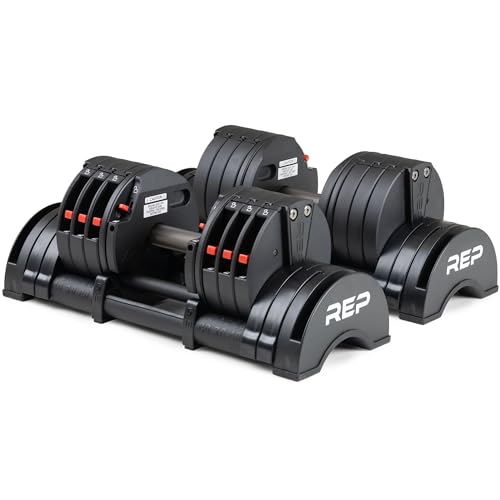
SPACE-SAVING DESIGN: Adjustable dumbbell set replaces multiple dumbbells and fits easily in home gyms with limited space. Adjust from 5 to 40 lbs in 2.5 lb increments using included microplates.

𝗙𝗨𝗟𝗟𝗬 𝗔𝗗𝗝𝗨𝗦𝗧𝗔𝗕𝗟𝗘 𝟳–𝟱𝟮.𝟱 𝗟𝗕 𝗗𝗨𝗠𝗕𝗕𝗘𝗟𝗟 𝗦𝗘𝗧: This all-in-one dumbbell system replaces multiple traditional weights, offering smooth adjustments from 7 to 52.5 lb—ideal for strength training, HIIT sessions, and full-body home workouts.

Pair of adjustable dumbbells with quick and easy weight adjustments from 5 to 50 lbs each
Implementing Rest-Pause Intervals
Implementing rest-pause intervals in our training routine can significantly enhance our workout efficiency and muscle growth. This rest pause technique involves short 10 to 20-second intervals within a set, allowing partial recovery without full rest. By pushing past conventional muscle failure, we can increase total reps and maintain the load, maximizing training stimulus. Single and double rest-pause sets offer variations in intensity, extending sets to include multiple “mini-sets.” We start by performing reps to near failure, rest briefly, then continue. This approach facilitates workout adaptations, enabling heavier lifting for more total reps. Whether we’re using dumbbells, barbells, or even bodyweight exercises, this technique is invaluable, especially when equipment or time is limited. Equipment like dip bars can be particularly effective for rest-pause training since they support high weight capacities and provide stable platforms for intense bodyweight movements.
Recommended Products

INDUSTRY LEADER: For 30+ years, Body Solid has held the widest array of products designed to meet the demands of the ever-changing fitness industry (home gym, free weight machines, treadmills, bikes, ellipticals, weight plates, kettlebells, dumbbells, flooring, accessories and more). Our products are cutting edge and reliable and are built for Life……Your Life.

【Solid Build Empowers Every Pull-ups 】Sportsroyals Power Tower creates an unshakable foundation that turns every rep into a confident, secure movement. Its strength comes from a 2mm thick steel frame and a H‑type base. Supported by 8 anti‑slip covers, it reliably holds 450 lbs for unwavering performance.
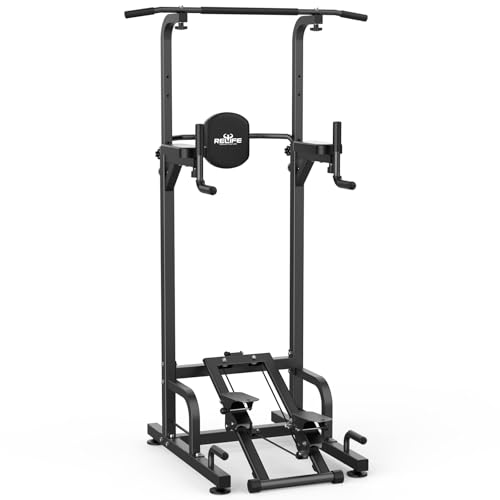
Sturdiness and Durability, Supports up to 450 lbs, safety locknut and 4 sturdy suction cups for added stability. The Relife power tower features a robust pull up bar and stays steady without any wobbling or shaking, providing confidence and safety during your workout, whether you're doing pull-ups, push-ups, chin-ups,dips or other exercises.
Physiological Impact and Recovery Strategies
Incorporating rest-pause training into our routines can significantly elevate physiological stress and muscle fatigue, thereby enhancing muscle growth and endurance. This method induces higher mechanical stress, elevating our Rate of Perceived Exertion to around 8.5, compared to 6 in traditional sets. With short rest intervals, we experience increased metabolite accumulation, such as blood acidity, pushing our muscles to adapt physiologically. These adaptations promote hypertrophy through elevated metabolic stress, enhancing anabolic signaling pathways.
For effective recovery, it’s crucial we implement recovery techniques to manage fatigue and maintain hormonal balance. Strategies like adequate sleep, hydration, and nutrition are vital. By focusing on these recovery methods, we can optimize the benefits of rest-pause training while minimizing fatigue and maximizing our muscle-building potential.
Periodization and Long-Term Training Balance
As we explore the concept of periodization and its impact on long-term training balance, it’s important to understand how this structured approach complements the physiological demands of rest-pause training. By systematically manipulating variables like load, volume, and intensity, we can maximize long term adaptation. Periodization principles guide us through cycles—macro, meso, and micro—targeting specific goals, preventing overtraining, and reducing injury risks. Even with limited equipment, adjusting microcycles by alternating rep ranges, tempos, and rest intervals ensures progression without heavy loads. Integrating supersets and circuits aligns with these principles, driving adaptation. This dynamic application not only supports consistent improvements but also aligns fitness peaks with our goal dates, ensuring we hit our targets effectively.
Frequently Asked Questions
Can Rest-Pause Training Be Combined With Other Training Methods?
Yes, we can combine rest-pause training with other methods for hypertrophy gains and strength adaptation. By integrating it with traditional sets, drop sets, or progressive overload, we maximize muscle growth and enhance overall training efficiency.
What Are Common Mistakes to Avoid in Rest-Pause Training?
Let’s not get caught in the storm of incorrect form or drown in excessive volume. We need to focus on maintaining technique, managing load wisely, and ensuring rest intervals are optimal to maximize rest-pause training benefits.
How Often Should Rest-Pause Training Be Incorporated Weekly?
We should incorporate rest-pause training 1-3 times weekly, depending on our training goals and experience. Balancing rest-pause frequency with adequate recovery is crucial to prevent overtraining and ensure optimal muscle adaptation and growth.
Does Rest-Pause Training Suit Beginners or Only Advanced Lifters?
Rest-pause training suits both beginners and advanced lifters, but with different approaches. Beginners should prioritize lighter loads and technique, while advanced lifters can embrace the challenges of shorter rests and higher intensities for growth.
How Can Rest-Pause Training Be Adjusted for Different Fitness Goals?
Let’s sculpt our fitness goals like artists with a chisel. For hypertrophy focus, use lighter weights and short rests; for strength emphasis, lift heavier with brief pauses. Tailor rest-pause training to your desired masterpiece.