As an Amazon Associate, we earn from qualifying purchases. Some links on this site are affiliate links at no extra cost to you. Our recommendations are based on thorough research and editorial judgment.

How to Train for Muscle Hypertrophy With Dumbbells

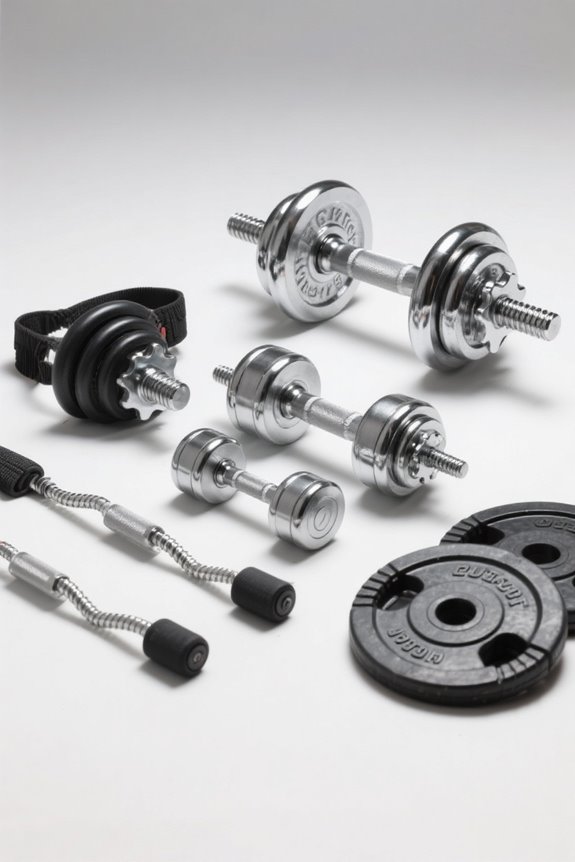
To train for muscle hypertrophy with dumbbells, we focus on progressive overload and variety. Increasing the load, reps, or adjusting the tempo helps maximize growth, typically using loads at 75%-85% of your one-rep max. Ensuring your exercises incorporate compound movements, like presses or rows, enhances metabolic stress. Aim for 6-12 reps per set and 3-6 sets per session, with 60-second rests. Dumbbells provide versatility, and if we explore further, we’ll discover helpful strategies.
Key Takeaways
- Use adjustable dumbbells for progressive overload by gradually increasing weight, reps, or sets within a 6-12 repetition range.
- Focus on compound exercises like dumbbell presses and rows to engage multiple muscle groups and enhance hypertrophy.
- Incorporate eccentric training by slowing down the lowering phase to maximize muscle tension and promote growth.
- Implement drop sets by reducing weight immediately after muscle fatigue to extend time under tension and stimulate hypertrophy.
- Address muscle imbalances with unilateral dumbbell exercises, ensuring the weaker side matches the stronger side’s capacity.
Key Drivers of Muscle Hypertrophy
When it comes to understanding the key drivers of muscle hypertrophy, there’s quite a bit to unpack. We know that mechanical tension, muscle damage, and metabolic stress all play significant roles in hypertrophy signaling. Mechanical tension, exerted during resistance exercises with moderate-to-heavy loads (60-85% of 1RM), is our primary growth driver, stimulating anabolic pathways that promote protein synthesis. Meanwhile, muscle damage, though it involves microtrauma and soreness, can optimize adaptations if balanced with recovery. It’s not as crucial as once thought but still contributes by releasing growth factors. Metabolic stress, generated through moderate loads and short rest intervals, enhances growth by increasing fatigue and stimulating additional muscle fibers. For those seeking versatile training options, resistance bands can provide adjustable resistance levels that complement traditional weight training by targeting multiple muscle groups while minimizing joint stress. Together, these factors create a comprehensive hypertrophy strategy.
Principles of Progressive Overload

Although the concept of progressive overload might seem straightforward at first, it’s a cornerstone of effective muscle training that demands our attention. By gradually increasing stress on our muscles through overload mechanisms, we can drive adaptation strategies that lead to hypertrophy. This involves creating microscopic tears in muscle fibers, which repair themselves to become larger and stronger. Without progressive overload, our training results plateau, halting muscle growth.
In dumbbell training, we can apply progressive overload by incrementally increasing the weight lifted, upping reps, or adding sets. Reducing rest time between sets or varying the tempo can also enhance overload. It’s crucial to keep increases to 10% or less per week to prevent injury and ensure safe adaptation. Tailoring these strategies to individual needs maximizes gains. Modern adjustable dumbbells offer weight ranges from as light as 5 pounds to as heavy as 200 pounds, making it easier to implement precise progressive overload without needing multiple fixed-weight sets.
Importance of Eccentric Phases
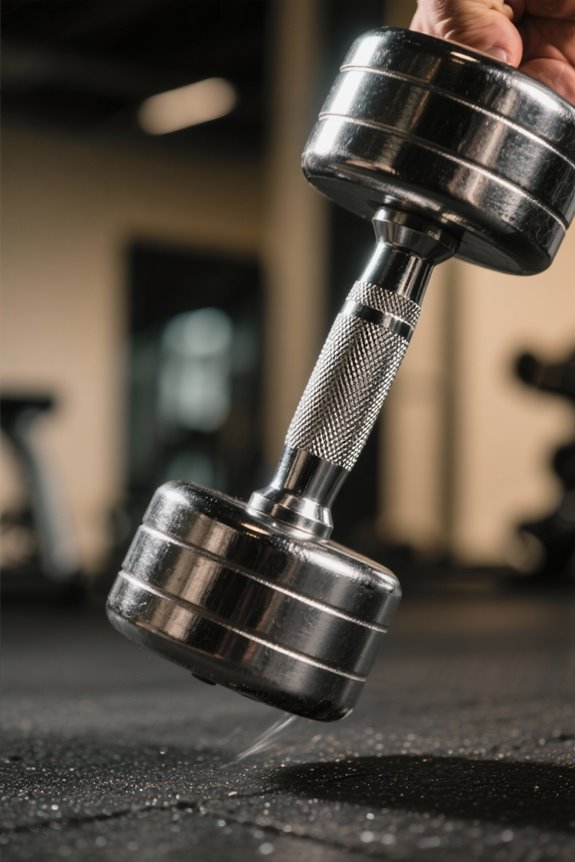
As we continue our journey toward effective muscle training, let’s focus on the often-overlooked eccentric phase of exercise, an element that can greatly enhance our hypertrophy efforts. The eccentric advantages are undeniable; lowering a dumbbell engages our muscles to generate 20–60% more force than during lifting. This increased force, coupled with less energy and oxygen consumption, makes eccentric movements highly efficient. Importantly, the muscle repair process is accelerated due to the microdamage occurring during these phases, which is crucial for growth. Eccentric-focused training can boost muscle growth by about 10% compared to 6.8% in concentric training. By slowing the eccentric tempo, even with lighter loads, we maximize hypertrophy, making it vital to incorporate these techniques into our dumbbell routines. Just as natural cork surfaces enhance grip performance when they become wet during intense sessions, our muscles adapt and strengthen through the controlled stress of eccentric movements.
Training to Muscular Failure
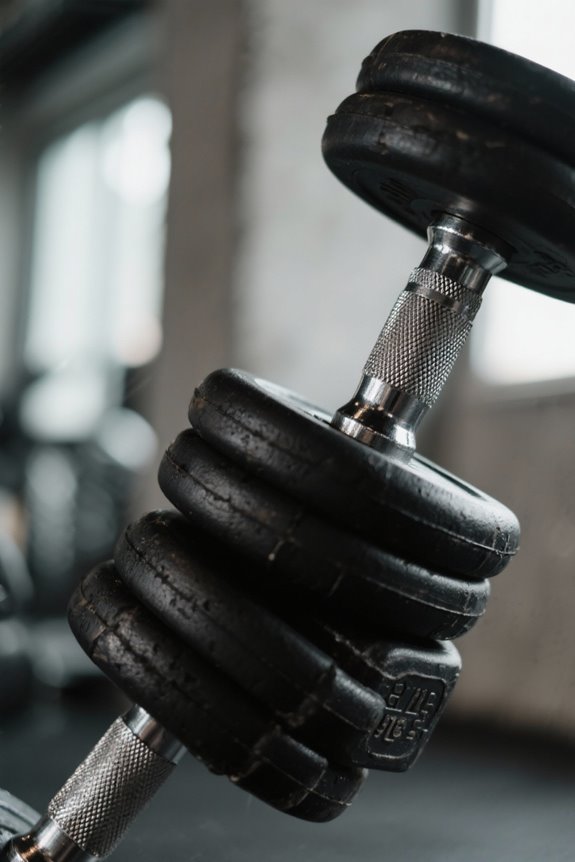
Training to muscular failure is a strategy we can use to push the limits of our muscle growth potential. By performing an exercise until we can’t complete another repetition, we target full motor unit recruitment and achieve maximum muscle fiber engagement. This process results in microtears, leading to hypertrophy as fibers repair. However, the method comes with failure risks, like increased injury potential due to excessive fatigue and compromised form. That’s why fatigue management is crucial—incorporating failure training occasionally helps avoid overtraining syndrome. For experienced lifters, this technique can break through plateaus, enhancing neuromuscular efficiency and strength. By balancing failure training with submaximal efforts, we can stimulate growth while managing recovery, optimizing our long-term muscle-building goals. When training to failure with dumbbells, having adjustable weights like those that range from 6lbs to 22.5lbs allows you to precisely match resistance to your strength levels and progressively overload your muscles.
Utilizing Drop Sets and SST
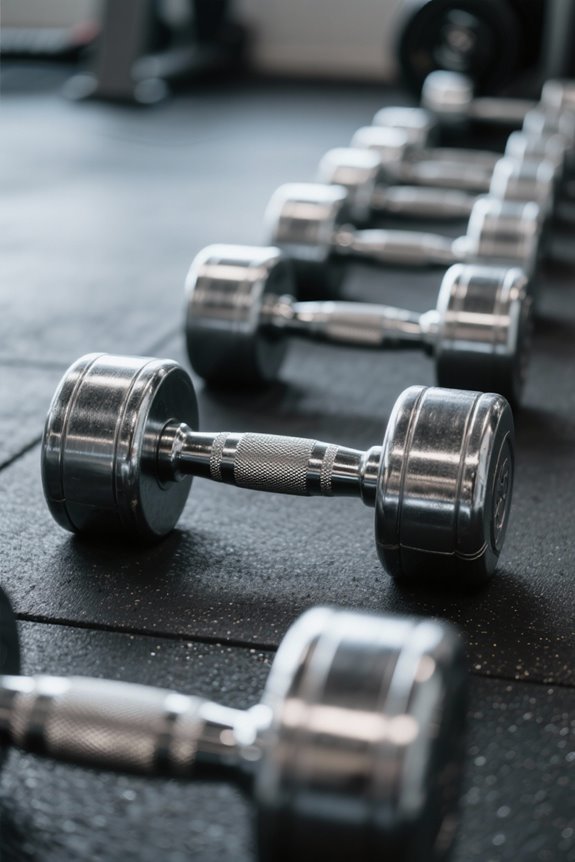
When we aim to maximize hypertrophy efficiently, drop sets and Superset System Training (SST) become potent tools in our training arsenal. Drop set techniques, where we perform an exercise to failure and immediately reduce the weight, allow us to extend sets and maintain muscle fiber recruitment. This method enhances muscle fatigue and increases time under tension, both crucial for hypertrophy. By focusing on fast-twitch fibers, which have great hypertrophic potential, drop sets ensure intense yet efficient workouts. Additionally, these techniques compress the hypertrophy stimulus into shorter durations, making them ideal when time is limited. While drop sets excel at muscle growth, they might not be as effective for strength gains compared to traditional methods. Nevertheless, they remain a valid, efficient strategy for achieving muscle hypertrophy. For those seeking adjustable resistance without the need for multiple dumbbell weights, resistance tube bands can provide similar drop set functionality through their variable resistance levels.
Recommended Products

Patented Smith Bar & Weight Multiplier System - Selectorized smith bar with weight stack system that multiplies resistance up to 330 lb. No need for a spotter or olympic weight plates.

Upgraded Speediance Gym Monster: Strength Training, Now at a New Level! Featuring a powerful 2.1-channel speaker, 11 adjustable height levels, AeroRow Rowing Bench, a state-of-the-art cooling system, and an upgraded screen chip, this all-in-one gym immerses you in your workouts, ensuring each session is both engaging and effective

CONTENTS: 5lb to 75lb Urethane Dumbbell Set (15 dumbbell pair total) with 3-tier commercial dumbbell rack.
Effective Exercise Selection
To effectively target muscle hypertrophy, selecting the right exercises is crucial for maximizing gains while maintaining balance and preventing injury. By incorporating strategic exercise combinations, we can ensure that all targeted muscles are engaged, leading to comprehensive development. For the chest, the Dumbbell Chest Press activates pectorals, triceps, and shoulders, offering a full range of motion. Dumbbell Rows are essential for the back, engaging biceps and forearms. Shoulder hypertrophy is best achieved with the Dumbbell Shoulder Press, while Dumbbell Bicep Curls and Tricep Extensions isolate arm muscles. For legs, Dumbbell Squats, Lunges, and Bulgarian Split Squats effectively target quads, hamstrings, glutes, and calves. Unilateral exercises like Dumbbell Lunges enhance stability and coordination, offering balanced muscle development. When setting up your home gym, consider investing in an adjustable dumbbell set that ranges from 20-90 lbs to accommodate progressive overload and varying exercise requirements.
Recommended Products

2100 lbs Weight Set with Dumbbell Rack: Includes 20 pairs of rubber hex dumbbells from 5 to 100 lbs. Dumbbell pairs in 5, 10, 15, 20, 25, 30, 35, 40, 45, 50, 55, 60, 65, 70,75, 80, 85, 90, 95 and 100 lbs. offer a versatile range of strength training exercises that's perfect for home gyms or professional settings. These hand weights provide the right free weight for different fitness levels and exercises, helping you reach your fitness goals faster

What you will get: Two adjustable dumbbell 90lbs(80lbs with 10lb additional plates) and One Upgrade 4in1 Weight Bench. They will be shipped out in three separate packages.

The Original NUOBELL — Trusted, Safe, and Built to Perform : Our patented design supports the full 5–100 lb range safely and smoothly, giving you the performance and durability expected from the #1 premium adjustable dumbbell.
Benefits of Compound Exercises
As we move from selecting effective exercises to understanding their multifaceted benefits, let’s explore the advantages of compound exercises in muscle hypertrophy. Compound exercises, like dumbbell squats or presses, engage multiple muscles and joints simultaneously, enhancing muscle recruitment. This multi-joint action maximizes training efficiency, stimulating several muscle groups at once and supporting functional strength.
The hormonal response from compound exercises is impressive, stimulating greater increases in anabolic hormones such as testosterone and growth hormone. These hormones boost muscle protein synthesis, driving effective muscle growth. By recruiting larger muscle groups, compound movements create stronger endocrine responses than isolation exercises.
Additionally, compound exercises lead to greater caloric expenditure, elevating metabolic demands. This not only aids fat loss but also contributes to enhanced muscle definition and strength. For serious weightlifters performing compound movements with heavy loads, a leather lifting belt can provide crucial lumbar support and reduce injury risk during intense training sessions.
Recommended Products


Size Guide: Measure your waist where the belt will sit (usually just above the navel) while bracing your abdominal muscles. For best results, choose a size where your measurement falls in the middle of the guide, allowing for easy adjustment based on fit preference, & clothing layers.
Addressing Muscle Imbalances
Addressing muscle imbalances isn’t just about aesthetics; it’s crucial for optimal performance and injury prevention. Through muscle assessment, we can spot differences in strength and flexibility that often result from repetitive movements or poor posture. Imbalances, like between quads and hamstrings or left and right biceps, can lead to pain and limit mobility. Our corrective strategies involve using unilateral dumbbell exercises, such as single-arm presses, which help target weaker muscles independently. We should adjust weights to match the weaker side’s capacity, ensuring gradual improvement without overcompensation. Incorporating full range of motion and controlled movements enhances joint stability. Additionally, combining stretching for tight muscles with strengthening underactive ones restores balance, maintaining symmetry and preventing future issues. For those seeking portable alternatives or supplementary training options, resistance bands can effectively complement dumbbell work by providing variable resistance levels and supporting rehabilitation exercises.
Exercise Variety for Growth
When it comes to muscle growth, incorporating a variety of exercises is crucial for maximizing hypertrophy. By selecting diverse dumbbell movements, we can target different muscle fibers and joint angles, optimizing regional hypertrophy. For instance, alternating exercises allows us to stimulate the proximal, middle, and distal sections of muscles more effectively than sticking to the same routine. This variation not only enhances muscle fiber recruitment but also ensures comprehensive development across the entire muscle. Different grips, angles, and planes of movement challenge our bodies in unique ways, preventing plateaus and engaging stabilizer muscles. By continuously introducing new exercises, we ensure that all muscle regions are stimulated, promoting balanced growth and adaptation. Adjustable dumbbells with 5 lb increments provide the perfect solution for progressive overload, allowing you to customize resistance precisely as your strength increases across different exercises and muscle groups. Let’s embrace this variety for optimal muscle gains!
Training Volume and Frequency
To maximize muscle hypertrophy, understanding the right training volume and frequency is key. We should aim for 12 to 18 hard sets per muscle group each week. This range allows for optimal growth without overloading our muscles. Exceeding 20 sets weekly generally doesn’t provide extra benefits. Our per-session volume should typically be 6 to 8 sets to avoid diminishing returns. If we prefer higher volumes, we can increase our training frequency to about 1.5 to 2 sessions per week per muscle group. This frequency helps distribute our efforts, preserving intensity and ensuring recovery. While dumbbells are excellent for hypertrophy training, incorporating curl bars can enhance arm-focused sessions by reducing wrist strain during high-volume bicep and tricep work. By managing our training volume and frequency effectively, we can maximize muscle growth using dumbbells, keeping our workouts both efficient and productive.
Optimal Training Intensities
Understanding optimal training intensities is crucial for maximizing muscle hypertrophy, and it involves more than just lifting heavy weights. We need to focus on finding the optimal load, which is typically 75% to 85% of our one-repetition maximum (1RM). This range ensures we’re applying enough mechanical tension for growth. Repetition ranges of 6 to 12 per set are recommended, allowing us to balance intensity with volume effectively. Performing 3 to 6 sets per exercise, with rest intervals of 60 seconds or less, helps increase metabolic stress, enhancing hypertrophy. Tempo matters too; a 2-0-2 cadence promotes muscle damage and growth. By maintaining consistent intensity and progressively overloading, we can achieve the ideal conditions for muscle development.
Comparing Free Weights and Machines
Although the debate between free weights and machines has been ongoing, both types of equipment offer unique advantages for muscle hypertrophy. When we consider free weights vs machines, it’s clear that each has strengths. Free weights demand stabilization, which enhances muscle activation by engaging more muscle groups. This can lead to improved growth and strength gains in exercises like bench presses and squats. On the other hand, machines provide a controlled environment, making them safer and more efficient, especially for beginners. They offer a fixed range of motion, which helps maintain form but may limit muscle engagement. Hormonal responses, such as testosterone increases, tend to be higher with free weights, adding another layer to consider. Ultimately, personal preference and goals should guide our choice.
Recommended Products

Home Gym Equipment Weight Set:Includes 5, 10, 15, 20, 25, 30, 35, 40, 45, 50, 55, 60, 65, 70, 75, 80, 85, 90, 95, and 100lb dumbbell pairs, (2) of 3-tier racks and (2) of mats. You can use these solid dumbbells in a wide range of exercises, also a perfect choice for both beginners or athletes.

Freight Delivery: You must provide an accurate phone number and delivery address on the order so the freight carrier can contact you to schedule the delivery.

💪 Best Home Gym Equipment: Includes 5, 10, 15, 20, 25, 30, 35, 40, 45, 50, 55, 60, 65, 70, 75, 80, 85, 90, 95, and 100lb dumbbell pairs, (2) of 3-tier BLUE RACKs and (2) of MATs. You can use these solid dumbbells in a wide range of exercises, also a perfect choice for both beginners or athletes.
Practical Advantages of Dumbbells
Dumbbells offer a range of practical advantages that make them a versatile and effective tool for muscle hypertrophy. We can perform exercises with a greater range of motion compared to barbells, which is crucial for maximizing muscle growth. For instance, a dumbbell chest press provides a deeper stretch, helping us target muscles more effectively. Plus, dumbbell adjustments allow us to customize exercises to our anatomical needs, optimizing muscle activation.
Moreover, dumbbells increase muscle activation by requiring each limb to work independently, engaging more muscle fibers, including stabilizers. This not only helps address muscle imbalances but also enhances coordination. With their portability and the option for exercise customization, dumbbells support varied, accessible workouts, allowing us to train safely and effectively even when exercising solo.
Recommended Products

The Original NUOBELL — Trusted, Safe, and Built to Perform : Our patented design supports the full 5–100 lb range safely and smoothly, giving you the performance and durability expected from the #1 premium adjustable dumbbell.

Twist lock system. Turn the handle to select your weight and lift dumbbell out of the cradle to enjoy a fluid workout.

32 Dumbbells in 1 for Total Body Workout – Designed for both men and women, the Nuobell adjustable dumbbells offer a range of adjustable weights from 5 to 80 lbs, perfect exercise equipment for a complete home workout.
Considerations in Hypertrophy Research
When we dive into the considerations in hypertrophy research, it’s important to recognize the key factors driving muscle growth: mechanical tension, metabolic stress, and muscle damage. We should also consider measurement variability, which can affect the reliability of hypertrophy studies. Different methods, like ultrasonography or MRI, are used to assess muscle growth, but they can yield varying results due to technical inconsistencies. Nutritional confounding is another critical factor, as diet plays a significant role in muscle development but is often not controlled in studies. Additionally, our training history and genetic response greatly influence individual hypertrophic outcomes, making it challenging to apply a one-size-fits-all approach. Understanding these considerations helps us better interpret research findings and optimize our training strategies.
Frequently Asked Questions
How Does Nutrition Impact Muscle Hypertrophy With Dumbbell Training?
Think of our muscles as engines—nutrition fuels them. Protein timing and a calorie surplus ignite growth and repair. By strategically consuming nutrients, we keep our hypertrophy engines running smoothly, ensuring optimal gains from our dumbbell workouts.
What Is the Role of Rest and Recovery in Dumbbell Hypertrophy Training?
We must prioritize rest duration and recovery techniques to optimize dumbbell hypertrophy training. By allowing muscles to repair and adapt, we’re enhancing growth, minimizing injury risk, and maintaining the energy needed for progressive overload and effective workouts.
Can Dumbbell Training Be Effective for Advanced Lifters?
Yes, dumbbell training’s effective for advanced lifters! Studies show similar hypertrophy results to cables. We can tailor advanced techniques and customization options, like drop-sets and varying loads, to maximize muscle growth and overcome plateaus efficiently.
How Important Is Consistency in Achieving Hypertrophy With Dumbbells?
Consistency’s crucial for achieving hypertrophy with dumbbells. We need consistent training to stimulate muscle growth effectively. By sticking to a regular routine and adjusting variables like volume and intensity, we’ll see significant gains over time. Let’s stay committed!
Are There Specific Warm-Up Routines Recommended for Dumbbell Hypertrophy Sessions?
Yes, we should start with dynamic stretches and mobility exercises, like arm circles and lunges, to prepare our bodies for dumbbell hypertrophy. These increase blood flow and activation, ensuring we’re ready for effective training.